· 9 min read
Filipino Pork Barbecue Recipe: Sweet-Savoury Skewers for Australian BBQs
Make Filipino pork barbecue with a sweet, tangy marinade, caramelised skewers and practical grilling and food-safety guidance.
Filipino pork barbecue recipe: the short answer
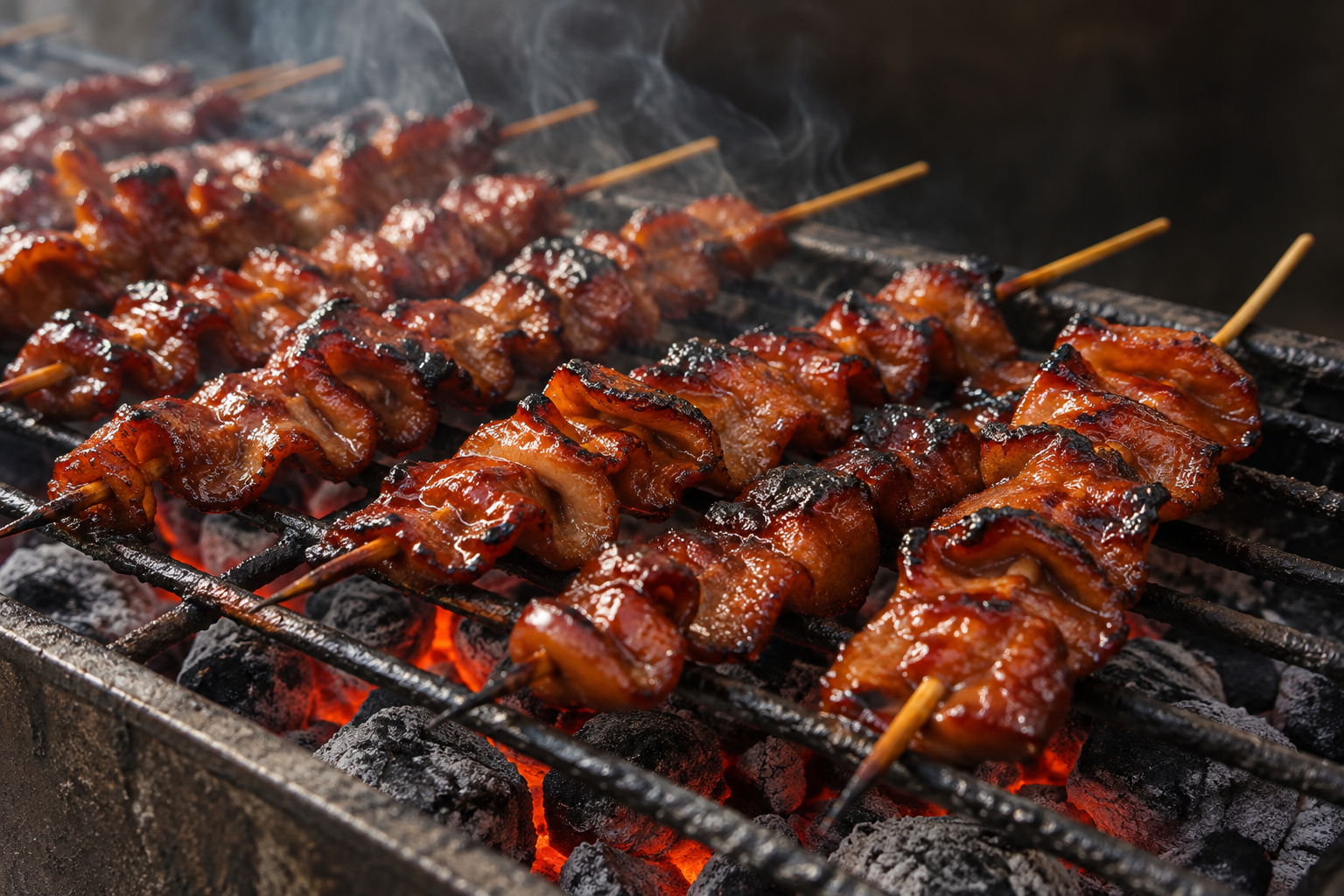
Filipino pork barbecue is made by threading thin strips of marinated pork onto bamboo skewers and grilling them until cooked through, glossy and lightly charred. The familiar flavour is sweet, savoury and tangy rather than aggressively hot. Soy sauce provides salt and umami; calamansi or lemon brings acidity; sugar and ketchup help the surface caramelise; and garlic, onion and black pepper build the savoury base.
This Australian kitchen guide follows the proportions of Peter Kuruvita’s SBS Food pork-belly skewer recipe, with one important handling adjustment: reserve clean marinade for basting before raw pork enters the bowl. Families, vendors and regions make barbecue differently, so this is a dependable version rather than a claim that there is one official formula. Allow 15 minutes to prepare, at least 30 minutes to marinate and about 10 minutes to grill 20 skewers serving roughly six people.
Learn what calamansi is →Start with the beginner’s guide to Filipino food →
What makes Filipino pork barbecue distinctive?
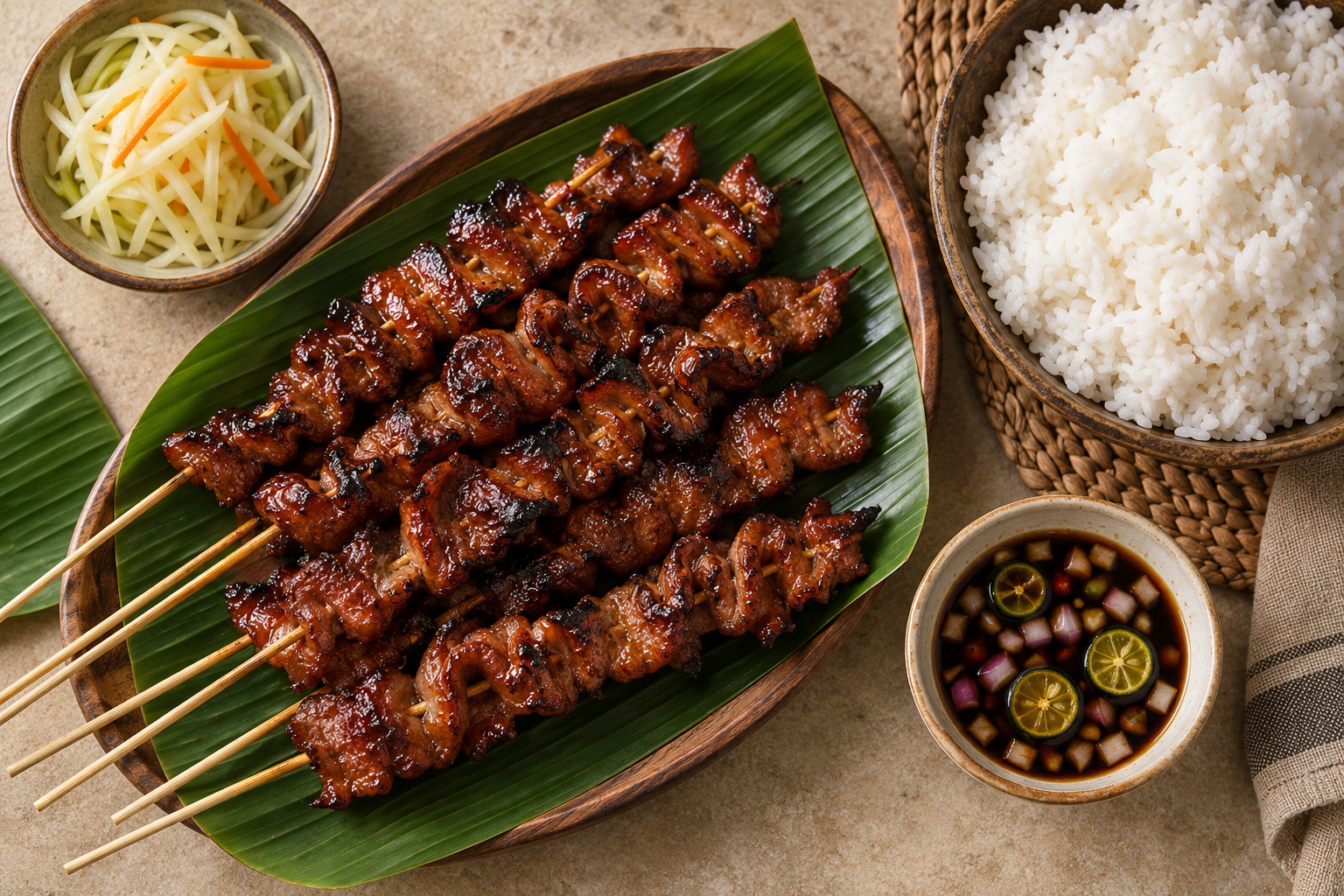
Inihaw means grilled or barbecued food, while ihaw-ihaw commonly refers to grilled meat on skewers. SBS Food’s reporting describes pork as a popular choice and connects the skewers with street-side cooking over charcoal. It also notes familiar accompaniments: rice, atchara or achara—pickled green papaya—and sawsawan, the broad Filipino category of dipping sauces. These are common patterns, not rules binding every cook or gathering.
The marinade is the clearest point of difference from a plain Australian pork skewer. SBS describes Filipino barbecue marinades built from soy, acidity, sugar, calamansi, banana ketchup and sometimes lemon-lime soft drink. Banana ketchup contributes sweetness and colour; calamansi adds an aromatic sour note. A hot grill then concentrates the wet marinade into a sticky coating, with a little controlled charring providing contrast.
See why Filipino food is not always spicy →Read why rice matters in Filipino culture →
Ingredients for about 20 skewers
You will need 1 kg pork belly; 250 ml soy sauce; one head of garlic, peeled and finely chopped; one medium brown onion, finely chopped; 60 ml calamansi or lemon juice; one teaspoon ground black pepper; 60 ml brown or white sugar; 125 ml banana ketchup or tomato ketchup; and 125 ml lemon-lime soft drink, which is optional. You will also need about 20 bamboo skewers soaked in water for 30 minutes.
Use banana ketchup if you want the flavour and colour most closely associated with this style. Tomato ketchup is the alternative specified in the SBS recipe, but it produces a different result. Calamansi is similarly distinctive, while lemon provides accessible acidity when calamansi is unavailable. Check the labels on soy sauce and ketchup rather than assuming their salt, sugar, gluten or allergen content is identical between brands.
Use the Filipino grocery guide for Bunbury →Visit Hernandez Asian Delights →
Choosing and slicing the pork
Pork belly supplies the richness used in the source recipe and tolerates high grill heat well. Ask for a boneless piece so it can be cut into long, even strips. If the skin is attached, remove it for this preparation or ask the butcher to do so; the skewers cook too quickly for thick skin to become crisp. Keep some fat between the lean layers because it helps the thin pork remain succulent.
Chill the pork before slicing so it is firm but not frozen solid. Cut long strips approximately 5 mm thick and around 5 cm wide, following the SBS method. Consistency matters more than perfect dimensions: uneven pieces finish at different times, and thick folds may remain undercooked while exposed edges burn. Use a clean, sharp knife and a board reserved for raw meat, then wash the equipment and your hands with hot soapy water.
Make the marinade and keep a clean baste
Whisk the soy sauce, garlic, onion, citrus juice, pepper, sugar, ketchup and optional soft drink in a large non-reactive bowl until the sugar begins to dissolve. Before adding the meat, transfer roughly 125 ml to a separate clean container. Refrigerate this untouched portion; it is the only marinade you should brush onto the skewers while grilling. This simple step avoids carrying raw-pork contamination to nearly cooked food.
Add the sliced pork to the remaining marinade and turn until every strip is coated. Cover and refrigerate for at least 30 minutes. For deeper flavour, it can marinate for several hours; SBS’s inihaw explainer advises overnight but not longer. Do not marinate on the bench. If making the recipe in stages, label the clean baste clearly so nobody tips it back into the raw-meat bowl.
Thread the pork onto bamboo skewers
Soak bamboo skewers while the pork marinates. Drain them, then weave one strip onto each skewer in several loose folds, piercing through the centre each time. The pork should sit securely without being compressed into a tight lump. Leave a handle at the bottom and a small gap at the pointed end so the meat does not slip into the fire. Wear food-safe gloves if preferred, but gloves never replace clean hands.
Arrange the raw skewers on one tray and carry them to the barbecue with the clean baste and a separate platter for cooked food. Do not return finished skewers to the raw tray. FSANZ specifically advises separating raw meat from ready-to-eat food and never putting cooked meat onto a plate that held it raw. Tongs that touched raw pork should be washed or exchanged for a clean pair before removing cooked skewers.
How to grill Filipino pork barbecue
Prepare a charcoal or gas barbecue for medium-high direct heat. The cooking grate should be clean and lightly oiled. Place the skewers over the heat in one layer, leaving enough space to turn them. Grill for about 10 minutes in total, turning every two or three minutes. Brush sparingly with the reserved clean marinade during the early turns, then stop basting with enough time for the final coating to cook and set.
Move a skewer temporarily to a cooler area if the sugary coating flares or darkens too fast. The aim is caramelised edges, not a black crust over raw meat. Check the thickest folded section with a clean thermometer: FSANZ says cooking food to 70°C in the centre will generally help ensure safety. Because every barbecue, cut and skewer differs, temperature and doneness—not a fixed ten-minute promise—determine when the pork is ready.
Charcoal, gas and indoor cooking
Charcoal gives the smoke and live-fire character closely associated with inihaw, but a gas barbecue is easier to regulate and still produces excellent browning. On either type, create a less intense zone beside the main heat. That escape area is useful because sugar, ketchup and rendered pork fat can cause rapid flare-ups. Keep the lid open while actively turning thin skewers unless the barbecue manufacturer directs otherwise.
If outdoor grilling is unavailable, use a heavy ridged pan under good ventilation or a lined oven tray beneath the grill element. Cook in batches so the meat sears instead of steaming, turn frequently and verify the centre is cooked. The result will not have charcoal smoke, so describe it as an indoor adaptation rather than identical inihaw. Never use a charcoal barbecue inside a home, garage, tent or other enclosed area.
How to stop the glaze burning
A blackened surface usually means the heat is too fierce or the skewers have stayed still too long. Sugar caramelises quickly, while ketchup thickens and catches. Start over a settled fire rather than high flames, turn regularly and apply only a thin baste. If the coating colours before the centre is ready, shift the sticks to the cooler zone until the pork reaches a safe temperature.
Pale skewers usually have the opposite problem: a crowded grill, wet surface or heat that never recovers. Let excess marinade drip back into the raw bowl before threading, preheat the grate and work in batches. Do not compensate by coating the cooked pork with raw marinade. Discard the marinade that held the pork; the separate clean portion is for basting, and any clean remainder can be simmered before serving only if you want an extra cooked sauce.
Serving the skewers
Serve Filipino pork barbecue hot, after a brief rest, with steamed rice. Atchara adds crisp acidity beside the rich pork. A simple sawsawan can combine vinegar and soy sauce with calamansi or lemon; chopped chilli, garlic and onion are optional and should be labelled for guests. Make a fresh dipping sauce in a clean bowl rather than reusing the meat marinade.
For a larger Filipino spread, pair the skewers with pancit bihon, lumpiang Shanghai and a vegetable dish, but balance the number of rich and salty components. Pork crackle can add another popular pork option when that suits the occasion, though it has a completely different texture and preparation. Label each dish and provide separate serving utensils so guests can choose confidently.
Make Filipino pancit bihon →Make crispy lumpiang Shanghai →Explore Hernandez pork crackle →
Allergens and dietary information
This recipe contains soy and may contain wheat or gluten, depending on the soy sauce, ketchup and other packaged ingredients selected. Sauces can also carry sesame or other allergens through their recipe or manufacturing environment. Read the ingredient list and allergen declaration on every package. A product labelled gluten-free is a safer starting point for a medically required gluten-free meal, but preparation and shared-equipment cross-contact still need consideration.
The recipe is pork-based and is therefore unsuitable for guests who avoid pork for religious, cultural or personal reasons. Do not present a poultry substitution as the same recipe: chicken has different cooking requirements and FSANZ recommends at least 75°C in the centre for all poultry. When catering, record dietary information before the event and keep labels, utensils and service areas clear. Never promise an allergy-safe dish without verified ingredients and controls.
Food safety, holding and leftovers
Keep raw marinated pork at 5°C or colder until the barbecue is ready. Wash hands after handling it and protect ready-to-eat rice, salads and garnishes from raw meat, juices, boards, trays and utensils. Use a clean thermometer in the thickest fold. Once cooked, serve promptly or hold the skewers above 60°C. Outdoor tables in warm weather are not controlled storage, even if the food still smells appealing.
FSANZ’s two-hour/four-hour guidance is cumulative: perishable food left between 5°C and 60°C for less than two hours can return to the fridge; after two to four hours it should be eaten immediately; after four hours it should be discarded. Refrigerate suitable leftovers promptly in shallow containers and use them within a few days. Reheat only the amount needed until piping hot, understanding that reheating cannot undo earlier unsafe handling.
Planning pork barbecue for a Bunbury gathering
Skewers are convenient for a shared table, but multiplying a home recipe is not only arithmetic. Grill space, refrigeration, transport, smoke rules and serving time all affect the result. For a home event, prepare the marinade and slice the pork ahead, then thread the sticks while cold. Plan batches so cooked skewers reach the table hot instead of waiting while the remaining raw pork is handled nearby.
For weddings, workplace functions or large family celebrations, discuss the venue and guest needs with the caterer before deciding the menu. Hernandez Asian Delights can confirm current Bunbury catering options, quantities, lead times, pricing and availability for the date; this article does not imply that pork barbecue is always on the catering menu. A clear enquiry should include guest count, location, service time, dietary requirements and whether the venue permits the proposed cooking setup.
Explore Hernandez catering →Request catering for your event →Read the Bunbury Filipino catering guide →Plan Filipino wedding catering in Bunbury →
Frequently asked questions
What cut of pork is best for Filipino barbecue?
The sourced recipe uses boneless pork belly, whose layers of meat and fat remain succulent over direct heat. Slice it thinly and evenly so folded sections cook at the same rate. Other families and cooks use different cuts, but cooking time and moisture will change.
Can I use lemon instead of calamansi?
Yes. The SBS recipe specifies calamansi juice or lemon juice. Lemon provides the needed acidity and is easy to find in Australia, although it does not reproduce calamansi’s exact aroma and flavour. The Hernandez calamansi guide explains the difference in more detail.
Is banana ketchup essential?
Banana ketchup is characteristic of many Filipino barbecue marinades and contributes sweetness and colour. Tomato ketchup is the alternative in the sourced recipe, but it changes the flavour. Check either product’s label for allergens, gluten ingredients, salt and storage directions.
How long should pork barbecue marinate?
Allow at least 30 minutes in the refrigerator. Several hours gives the marinade more time to season the thin slices, while the SBS inihaw explainer advises overnight but not longer. Keep the pork cold and never marinate at room temperature.
Can I reuse the pork marinade as a dipping sauce?
Do not serve marinade that has held raw pork. Reserve a clean portion before adding the meat for basting, and make the dipping sauce separately with clean ingredients and utensils. Discard the raw marinade to reduce cross-contamination risk.
Keep exploring Filipino food and culture



Taste it in Bunbury
Bring Filipino flavour to your next gathering.
Explore catering from Hernandez Asian Delights or visit Michael and the team at 36 Charles Street, Bunbury.