· 9 min read
Is Filipino Food Spicy? An Australian Guide to Heat and Flavour
Is Filipino food spicy? Learn which dishes are mild or hot, how Filipino flavour works, and how to order confidently in Australia.
Is Filipino food spicy? The short answer
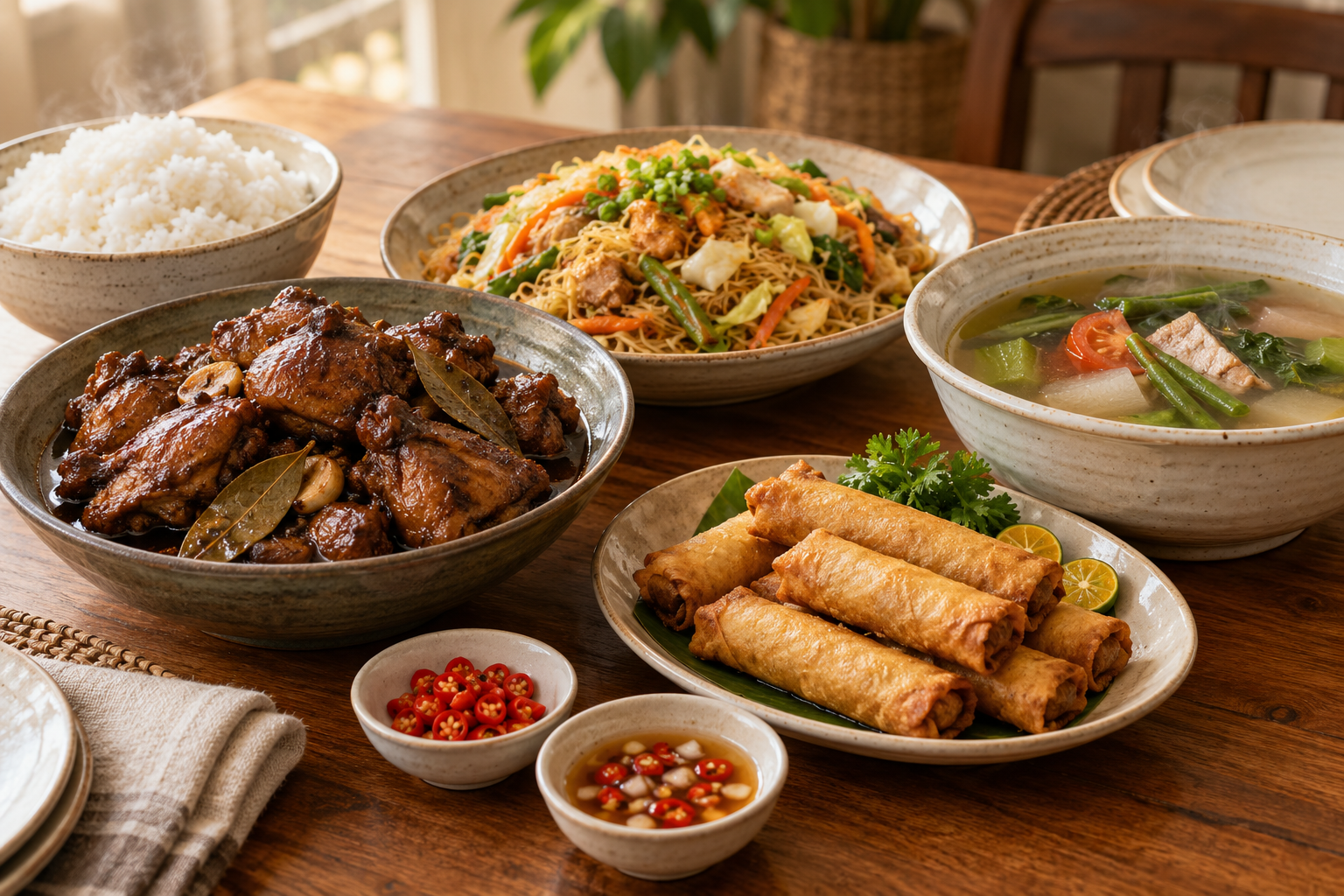
Filipino food is not uniformly chilli-hot. Many familiar dishes are mild, savoury, sour, sweet or salty rather than fiery. Chicken adobo, pancit bihon and lumpiang Shanghai, for example, can be made with little or no chilli. Other dishes—notably Bicol Express and some versions of caldereta, sisig, laing and grilled food with chilli-rich dipping sauce—can deliver a definite burn.
The useful answer is therefore ‘sometimes’. Heat depends on the dish, region, recipe and cook, and condiments often let each diner change the intensity at the table. Two versions with the same name may not have the same chilli level. If you are ordering in Australia, ask how that kitchen prepares the particular dish rather than assuming that all Filipino food is mild or all of it is hot.
This guide separates chilli heat from the broader idea of spice, identifies approachable dishes and hotter possibilities, and explains how sawsawan—dipping sauce—can put flavour control in the diner’s hands. It describes common patterns, not a heat rating for every Filipino recipe.
Start with a beginner’s guide to Filipino food →Explore 12 questions Australians ask about Philippine culture →
‘Spicy’ can mean seasoned or chilli-hot
Australians sometimes use ‘spicy’ to mean food containing aromatic seasonings, and sometimes to mean food that burns because it contains chilli. The distinction matters here. Filipino cooking makes generous use of garlic, onion, black pepper, bay leaves, ginger and other aromatics, but none automatically makes a dish chilli-hot.
Adobo is a good example. Published versions commonly combine vinegar, soy sauce, garlic, bay leaves and black pepper. Those ingredients create a deeply seasoned braise, yet the dish need not contain chilli at all. Calling it ‘spicy’ in the broad sense may be fair; promising a chilli kick would not be.
Before ordering, it is clearer to ask, ‘Is this hot from chilli?’ than simply, ‘Is it spicy?’ You can also ask whether fresh chilli, chilli flakes or a hot sauce is cooked into the dish, added as a garnish or served separately. That one question prevents most mismatched expectations.
What flavours define Filipino food when chilli does not?
No single flavour can represent a cuisine shaped by many regions, local crops, trade and household traditions. The Philippine Department of Agriculture describes Filipino food as local, regional and seasonal, with a complex flavour profile and an affinity for rice, fermented dipping sauces and condiments. That diversity is the strongest reason to avoid a blanket heat rating.
Sourness is especially important. SBS Food’s Filipino pantry guide describes acidity as central to the cuisine because it lifts flavours, balances sweetness and saltiness, and cuts through rich food. Tamarind, guava, green mango, calamansi and native vinegars can all supply tartness. Sinigang foregrounds sourness; adobo uses vinegar in a braise; calamansi may be squeezed over food just before eating.
Salty and savoury notes may come from soy sauce, fish sauce or fermented seafood products such as bagoong. Sweetness can appear in marinades, sauces, cured meats and desserts. Bitterness, richness and smoke also matter. A meal can therefore taste bold and layered without being chilli-hot—and a hot dish can still balance chilli with coconut milk, acidity, sweetness or savoury depth.
Instead of asking only ‘How hot is it?’, notice the contrast between a rich main and sharp vinegar, the freshness of citrus against grilled meat, or the way plain rice carries a strongly seasoned sauce.
Learn what calamansi tastes like →Understand bagoong and its uses →
Milder Filipino dishes to try first
Chicken adobo is a practical starting point for cautious diners. Its familiar elements—chicken, soy, vinegar, garlic and black pepper—create savoury and tangy flavour rather than compulsory chilli heat. Recipes vary, so still ask the cook, but heat is not essential to the dish’s identity.
Pancit bihon, made with rice noodles, vegetables and meat or seafood depending on the version, is another often-approachable choice. The noodles absorb stock and seasoning; chilli may be absent, offered as a condiment or added by an individual cook. A squeeze of calamansi or lemon can brighten the plate without increasing heat.
Lumpiang Shanghai—small fried spring rolls commonly filled with seasoned pork—is frequently served with a dipping sauce. The roll itself can be mild even when one accompanying sauce is hot. Ask which sauce is sweet, sour or chilli-based, then taste a small amount before dipping the whole roll.
Rice, simply cooked vegetables and many noodle or braised dishes can help build a gentle plate, but dish names alone are not guarantees. A family may add chilli to a recipe that another household keeps mild. Identify one or two mild mains, keep condiments separate and try unfamiliar sauces gradually.
Which Filipino dishes can be genuinely hot?
Bicol Express is the clearest warning against saying Filipino food is never hot. The Philippine Information Agency describes it as a chilli-pepper stew with coconut milk and pork, while government reporting on the Bicol region identifies chilli as a staple associated with regional dishes. The creamy coconut base may round the heat, but it does not make the chillies disappear.
Laing, a dish based on dried taro leaves and coconut milk, can also be prepared with substantial chilli, particularly in Bicolano cooking. Caldereta often includes chilli or chilli flakes, although the amount ranges from gentle warmth to a stronger burn. The Hernandez beef caldereta recipe deliberately treats the level as adjustable rather than universal.
Sisig varies widely. Some versions include fresh chillies or arrive sizzling with chilli visible on top; others lean more heavily on citrus, onion and savoury pork. Inihaw, or grilled food, may be only slightly hot in its marinade but served with sawsawan containing chopped chilli. Even sinigang can include whole green chillies, though its defining sensation is generally sourness rather than heat.
Words such as ‘Bicol’, ‘chilli’, ‘siling labuyo’, ‘spicy’, ‘hot’ or ‘dynamite’ on a menu are useful cues to ask more. They are not a standardised Australian heat scale. A kitchen’s ‘medium’ may feel mild to one diner and intense to another.
Why region and household matter
Philippine cuisine is regional. Ingredients, climate, agriculture, fishing, migration and local preferences shape what is cooked and how it is seasoned. The Department of Agriculture’s Filipino Food Month material explicitly presents the cuisine as local and regional, while its Eastern Visayas program highlights distinctive provincial produce and food traditions.
Bicol is especially associated with coconut milk and chilli, but it would be inaccurate to treat one region as the heat setting for the whole country. Iloilo, Cebu, Pampanga, Ilocos, Mindanao and many other places have their own celebrated dishes and flavour priorities. Regional labels can offer context, yet cooks still adapt food to available ingredients and personal taste.
Households create another layer of variation. A cook may leave chillies whole so they perfume a sauce without releasing maximum heat, slice them through the pot, or omit them for children. Another may place vinegar and chopped chilli on the table. Recipes change across generations and diasporas, including Filipino-Australian kitchens using ingredients readily available here.
Sawsawan lets diners adjust the flavour
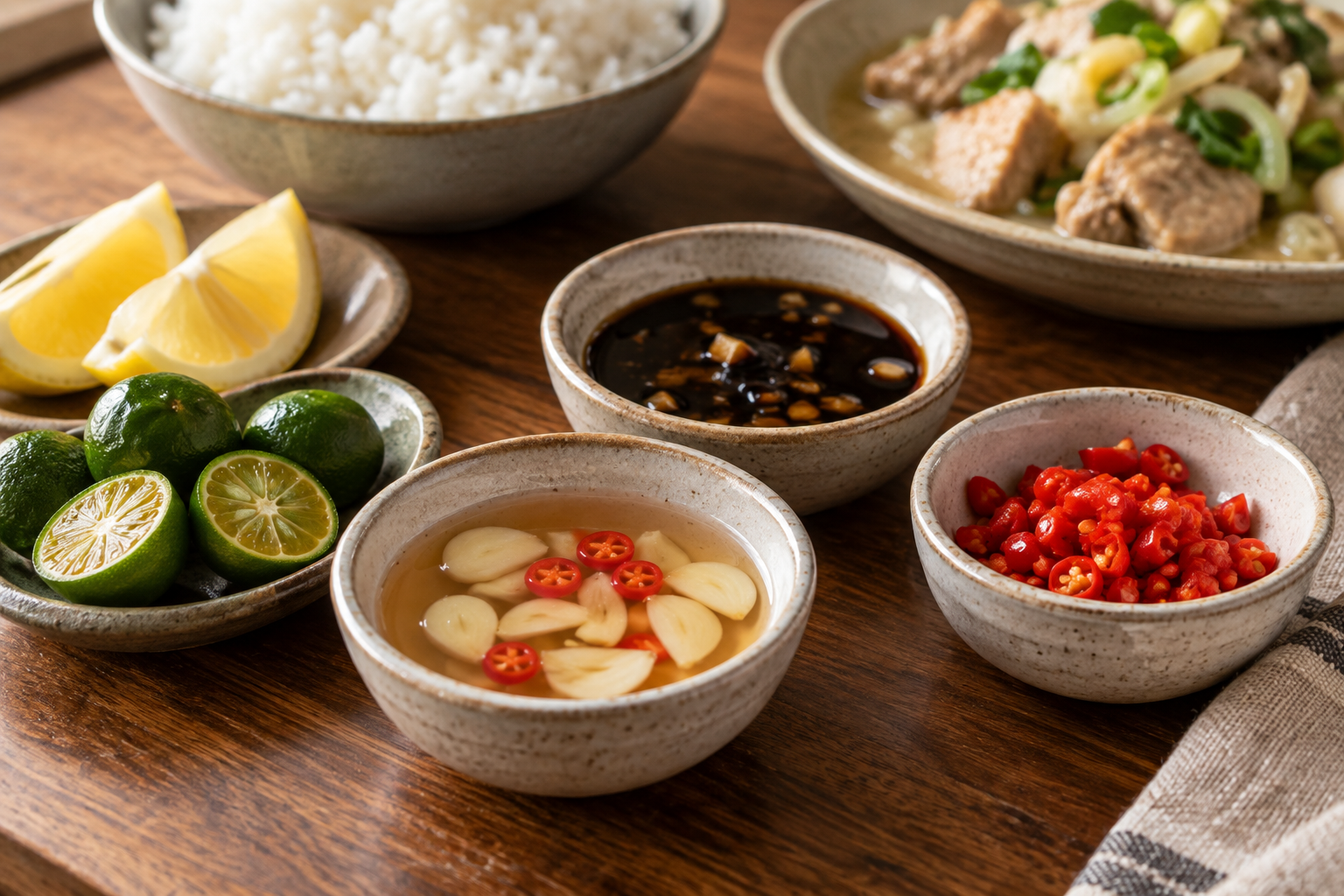
Sawsawan is the broad Filipino idea of a dipping sauce or condiment served with food. It is not one fixed recipe. SBS Food notes that the sauce served with inihaw can vary by province according to locally favoured vinegar; a combination of soy sauce, vinegar, calamansi and chilli is one familiar example. Garlic, onion, sugar, pepper or other ingredients may also appear.
Serving sauce at the table can separate the base dish from an optional chilli kick. A cautious diner might begin with plain food, add a little citrus or vinegar, then try a small drop of chilli sauce. Someone who enjoys heat can spoon in more chopped chilli without changing everyone’s plate.
Do not assume every dark dipping sauce is soy sauce or every vinegar is mild. Ask what is in each bowl, particularly if you need to avoid an allergen. Use a clean spoon instead of transferring food between shared sauces, and keep a genuinely chilli-free sauce separate if different preferences are being accommodated.
How to order when you prefer mild flavours
Start by naming your preference plainly: ‘I enjoy flavour, but I do not tolerate much chilli.’ Ask which dishes contain chilli in the recipe and which receive it only at the end. If a dish is cooked in a shared batch, it may not be possible to remove heat after the fact; choosing a naturally mild option is more realistic than asking the kitchen to undo it.
Request chilli and hot sawsawan on the side where the kitchen can reasonably provide that option. Order rice and a mix of dishes rather than relying on one unfamiliar main. Taste condiments in tiny amounts. Milk or coconut milk in a recipe can soften the overall impression of heat, but neither guarantees that a dish will feel mild.
For children, older guests or a mixed group, choose a mild base menu and make hotter condiments clearly optional. Avoid describing the food as ‘bland’ simply because the chilli is separate; acidity, garlic, pepper, smoke and fermentation can carry plenty of intensity.
Mild does not mean allergen-free
Chilli level and allergen status are separate questions. A mild Filipino dish may still contain soy, wheat, fish, crustaceans, molluscs, egg, milk, peanuts, tree nuts, sesame or another ingredient relevant to a diner. Soy sauce can contain wheat; bagoong may contain shrimp or fish; spring-roll wrappers and sauces vary by brand and recipe.
Food Standards Australia New Zealand advises people with food allergy to disclose the specific allergy and clearly ask about allergen content when eating away from home. It also warns that buffet and bulk-service settings can introduce cross-contact risks. Do not use ‘not spicy’ as shorthand for safe, child-friendly, gluten-free or suitable for a particular diet.
If the answer matters medically, ask the business directly about the current recipe, ingredient labels and preparation environment. Menus and suppliers can change. A blog guide can help frame the conversation, but it cannot certify an individual dish.
Planning a mixed-heat Filipino meal in Bunbury
For a Bunbury family gathering, workplace lunch or South West celebration, design the menu around choice. Combine mild or adjustable mains with rice or noodles, label any chilli-hot dishes, and serve hot condiments separately. One genuinely hot dish can satisfy chilli lovers without making the whole table inaccessible.
When discussing catering, share the number of guests, preferred heat level and any allergies or dietary requirements early. Ask which current dishes are naturally mild, which can be adjusted and which are prepared in a fixed batch. Confirm availability and ingredients for the date of your event rather than relying on a general description online.
Hernandez Asian Delights offers Filipino catering and an Asian grocery store in Bunbury. The store can help home cooks explore pantry ingredients, while catering enquiries should be tailored to the event. Current packages, menu choices and suitability must be confirmed directly with the Hernandez team.
Explore Hernandez catering experiences →Request a Bunbury catering quote →Visit the Hernandez Asian grocery store →Read the Filipino catering menu-planning guide →
Frequently asked questions
Is most Filipino food hot from chilli?
No. Filipino cuisine is not uniformly chilli-hot. Many dishes focus on sour, savoury, salty or sweet balances, while some regional dishes and condiments use substantial chilli. Always ask about the specific recipe because heat varies by cook.
What mild Filipino dishes are good for beginners?
Chicken adobo, pancit bihon and lumpiang Shanghai are often approachable because they can be made without chilli. The accompanying sauce or household recipe may add heat, so confirm with the cook rather than relying only on the dish name.
What are some spicy Filipino dishes?
Bicol Express is a well-known chilli-forward pork and coconut-milk stew. Some versions of laing, caldereta, sisig, inihaw and street foods can also be hot. Recipes and serving styles vary substantially.
Can Filipino food be made less spicy?
Sometimes. If chilli is added at the table, simply keep it separate. A dish cooked as one chilli-hot batch may not be adjustable after preparation, so ask which naturally mild choices are available before ordering.
Does mild Filipino food mean it is allergy-safe?
No. Chilli heat says nothing about allergens. Mild dishes may contain soy, wheat, fish, shellfish, egg, milk, peanuts, sesame or other relevant ingredients. Disclose the specific allergy and ask the food business about ingredients and cross-contact.
Keep exploring Filipino food and culture



Taste it in Bunbury
Bring Filipino flavour to your next gathering.
Explore catering from Hernandez Asian Delights or visit Michael and the team at 36 Charles Street, Bunbury.