· 9 min read
What Is Simbang Gabi? A Filipino Christmas Tradition Explained
Discover what Simbang Gabi means, when the nine Filipino Christmas Masses are held, what foods follow and how the tradition continues in Australia.

What is Simbang Gabi? The short answer
Simbang Gabi is a Filipino Catholic Christmas tradition consisting of nine Masses offered in preparation for Christmas. The best-known form is celebrated before dawn from 16 to 24 December. Many parishes also hold anticipated evening Masses from 15 to 23 December, particularly where work, travel or local conditions make a pre-dawn gathering difficult.
The words are often translated as ‘Night Mass’, while Misa de Gallo means ‘Mass of the Rooster’. Both names point to worship held while the day is still dark or just beginning. It is more than a countdown to Christmas: the Masses belong to Advent, focus attention on the coming of Christ and bring families and parish communities together in prayer.
For Australians encountering the tradition for the first time, the important distinction is that Simbang Gabi is a religious observance with a strong cultural life around it. Parol lanterns, Filipino songs and food after Mass can make the gathering festive, but worship remains its centre. Not every Filipino is Catholic or observes Simbang Gabi, and participating families may follow different local schedules.
When are the nine Masses held?
Traditional dawn Masses run from 16 December through 24 December. In 2025, the Archdiocese of Manila described the recognised pattern as dawn or morning Masses on those dates, with anticipated evening celebrations from 15 to 23 December. The two timetables are ways of completing the same nine-day preparation; they are not eighteen separate days that a person is expected to attend.
Exact start times are decided locally. A dawn Mass in the Philippines may begin around four or five in the morning. An Australian parish may use evenings so families can attend after work and avoid long pre-dawn travel. The Roman Catholic Archdiocese of Perth documented a nine-night celebration at Lockridge, explaining that an evening timetable made the Filipino tradition more compatible with life in Australia.
Do not rely on last year’s poster or assume every parish will hold all nine services. Check the current parish bulletin, diocesan calendar or organiser’s announcement for dates, language, location and accessibility. Christmas Eve Mass is a separate liturgical celebration even when a local program places the final dawn observance and Christmas services on the same date.
Where did Simbang Gabi come from?
The tradition has colonial-era Catholic roots and has been practised in the Philippines for centuries. The Holy See describes it as a Filipino novena in preparation for Christmas, with the faithful gathering for nine dawn Eucharistic celebrations. The Archdiocese of Perth connects the Philippine practice with Spanish and Mexican missionaries in the seventeenth century, while Philippine government and diplomatic sources describe its adaptation for agricultural communities.
A commonly repeated explanation is that early Mass allowed farmers and fishers to worship before starting work. Philippine diplomatic material says Spanish friars introduced the early schedule so farmers could attend before going to the fields. Church bells, and in some communities music, helped call people while it was still dark. The useful historical point is not that every town followed an identical custom, but that the unusual hour fitted worship around daily labour.
Over time, the practice moved beyond the Philippines. Pope Francis noted at a Filipino community Mass in Saint Peter’s Basilica in 2019 that migration had carried Simbang Gabi across national borders. Its continuation in Rome, Canberra, Perth and many other places shows how a local devotional practice can become both a religious homecoming and a public expression of Filipino heritage.
What does the tradition mean to participants?
Simbang Gabi is a novena, meaning a sequence of prayer over nine days. In Catholic practice it is preparation rather than a substitute for Christmas itself. The Mass readings, prayers and music direct attention towards Christ’s birth, while devotion to Mary is also prominent. The Archdiocese of Manila says the celebrations pray for perseverance in faith and invoke Mary’s intercession.
The discipline of waking early or returning on successive evenings can be meaningful in its own right. People make time, travel together and share a repeated rhythm during a busy season. For Filipino migrants, the familiar pattern can connect childhood memories, present-day parish life and family members living far away. The Philippine Embassy in Canberra has described Simbang Gabi as a tradition that brings Filipinos together even when they are far from home.
Some families pass on a popular belief that completing all nine Masses allows a wish to be granted. That belief is part of the folklore surrounding the season, not a guarantee or the central purpose of the liturgy. It is more accurate to describe the nine days as sustained prayer and preparation than as a transaction for obtaining a desired result.
Why dawn, darkness and the parol matter
The movement from darkness towards sunrise gives the dawn observance much of its atmosphere. Streets are quiet, church lights are visible and the community gathers before ordinary work begins. The hour is practical, historical and symbolic at once: waiting through darkness fits the Advent theme of hope and expectation.
A parol, the star-shaped Filipino Christmas lantern, is frequently carried or displayed. The Archdiocese of Perth describes it as representing the Star of Bethlehem. Its light also has a practical connection with people making their way to church before sunrise. Designs now range from simple bamboo-and-paper forms to elaborate electric displays, so no single material or level of decoration defines an authentic celebration.
Songs, processions and decorations vary between parishes. A choir may sing in Filipino, English or local Philippine languages. These cultural elements support the celebration, but visitors should not treat the church as a tourist set. Photography, recording and movement during Mass should follow the parish’s rules and respect people who are praying.
Food after Simbang Gabi
Food is closely associated with the social life after Mass. Philippine diplomatic guidance names bibingka, puto bumbong and suman sa ibos among the delicacies served with hot coffee or tea. Bibingka is a baked rice cake with many regional and household versions. Puto bumbong is a purple steamed rice preparation traditionally cooked in bamboo tubes. Suman describes a broad family of sticky-rice cakes, often wrapped in leaves.
The menu is not fixed. The Philippine Embassy’s 2024 Canberra gathering served arroz caldo and pineapple juice, while its 2023 fellowship included batchoy Tagalog, puto and pineapple juice. A parish in Australia may offer a simple supper, a roster of family dishes or no meal at all. Food is hospitality surrounding the observance, not a required part of the Mass.
Visitors with allergies should ask about the particular dish rather than relying on its name. Rice cakes can contain coconut, milk, egg or other ingredients; savoury dishes may include fish sauce, soy, wheat or seafood. Shared serving utensils create cross-contact. Hosts should label what they can verify and avoid unsupported ‘allergen-free’ claims.
Explore the guide to Filipino kakanin rice cakes →Make Filipino arroz caldo at home →
How Simbang Gabi continues in Australia
Filipino communities have carried Simbang Gabi into Australian parish life while adapting the timetable. In Canberra, the Philippine Embassy joined celebrations on 15 December in both 2023 and 2024. In Western Australia, the Archdiocese of Perth reported a nine-night program at Good Shepherd Church in Lockridge, complete with a parol, Filipino music, fellowship and charitable giving.
Evening Masses are a practical diaspora adaptation, not evidence that the tradition has lost its meaning. Commuting distances, shift work, school schedules and church availability differ from place to place. Philippine diplomatic reporting also notes that urban parishes outside Australia use evening celebrations to accommodate contemporary work patterns.
For Bunbury and South West readers, current arrangements should be confirmed locally each year. Search parish and diocesan announcements close to December, or contact the parish office. Hernandez Asian Delights does not set church schedules and this article does not announce a Bunbury service. That separation matters: cultural information can be stable while dates, venues and organisers change.
How to attend respectfully for the first time
If a parish advertises the celebration as open to the public, arrive early enough to find a seat without disrupting prayer. Dress as you would for any church service, silence your phone and follow the directions of ushers. Stand, sit or kneel with the congregation only when comfortable; a quiet visitor does not need to imitate actions they do not understand.
Simbang Gabi is specifically Catholic, although people from other backgrounds may be welcomed as guests. Sacramental practices have their own church rules, so follow the celebrant or parish’s guidance rather than assuming every part of the service is general participation. If you are unsure, remain respectfully in your place and ask an organiser afterwards.
Stay for fellowship when invited, introduce yourself and let hosts explain their own family or regional customs. Learn names rather than reducing everything to ‘Filipino Christmas food’. If photographs are permitted, ask before including identifiable people, especially children. A thoughtful guest pays attention to worship first and the festive details second.
Planning a Simbang Gabi gathering in Bunbury
A family or community meal connected with Simbang Gabi should begin with the actual parish program. Confirm the service time, venue access and whether food is permitted on church property. Do not advertise a religious event, attach a parish name or imply church endorsement without the organiser’s approval. Decide who is responsible for setup, serving, allergen information and cleanup.
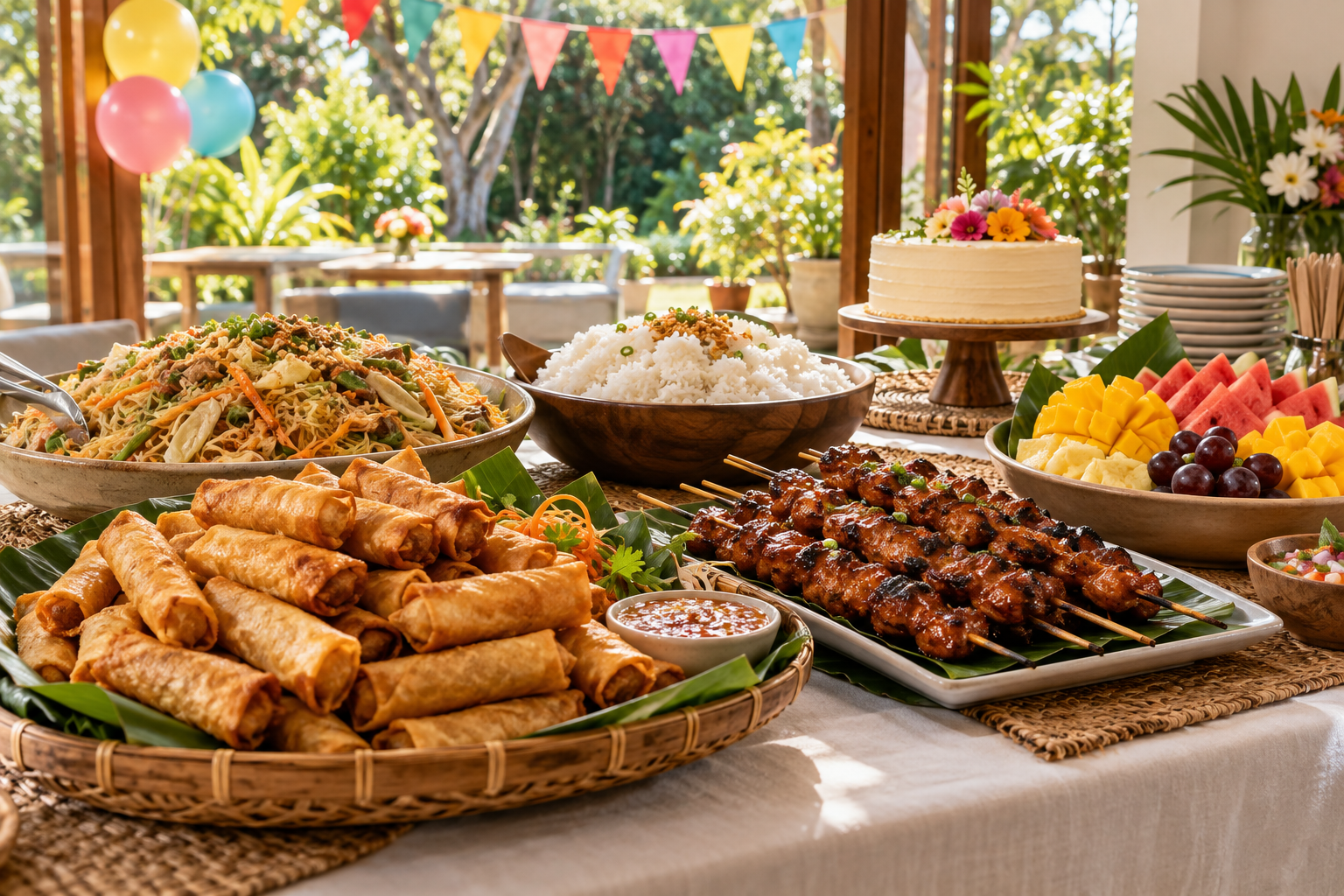
For a small fellowship, warm arroz caldo, rice cakes and drinks can be easier to serve than an elaborate buffet. A larger family gathering may include noodles, rice, savoury mains and pork crackle, but the menu should match the venue, guest needs and safe holding equipment. Ask Hernandez Asian Delights about current catering and product availability rather than assuming any item or service is included.
The store can help people explore Filipino ingredients and familiar seasonal foods. Catering enquiries should state the date, location, headcount, service time and known dietary requirements. Clear planning keeps the meal supportive of the gathering instead of distracting from its religious purpose.
Visit the Hernandez Asian Delights store →Enquire about Filipino catering in Bunbury →View the current pork crackle page →
A tradition of faith, memory and community
Simbang Gabi endures because it joins repeated prayer with the experience of gathering. Its nine Masses create a deliberate path towards Christmas; the pre-dawn hour, parol light, music and shared food give that path a distinctly Filipino character. Migration has changed locations and timetables without removing the tradition’s centre.
For Australians, understanding Simbang Gabi starts with taking its religious purpose seriously and recognising that practices vary. Check local details, attend as a respectful guest and listen to the people who keep the tradition. The result is a clearer view of Filipino Christmas as lived faith and community, not simply a long festive season.
Frequently asked questions
What does Simbang Gabi mean in English?
Simbang Gabi is commonly translated as ‘Night Mass’. It refers to a Filipino Catholic series of nine Masses preparing for Christmas. The related name Misa de Gallo means ‘Mass of the Rooster’, reflecting the traditional pre-dawn hour.
What dates are Simbang Gabi?
Traditional dawn Masses are held from 16 to 24 December. Anticipated evening celebrations are commonly held from 15 to 23 December. Exact dates and times depend on the parish, so check the current local announcement rather than relying on a previous year’s schedule.
Is Simbang Gabi the same as Misa de Gallo?
The names are often used for the same Filipino Christmas novena, especially the dawn form. Local usage can differ, and some church material also uses Misa de Aguinaldo. The practical point is to follow the terminology and timetable published by the organising parish.
Can non-Catholics attend Simbang Gabi?
Many parishes welcome respectful visitors, but it remains a Catholic Mass and sacramental participation follows church rules. Check whether the local event is open, arrive quietly, follow parish directions and remain in your place during any part you are unsure about.
What food is eaten after Simbang Gabi?
Bibingka, puto bumbong, suman, hot drinks and arroz caldo are well-known possibilities, but there is no compulsory menu. Australian communities may serve different foods or hold no meal. Always ask about ingredients and allergen cross-contact for the specific gathering.
Keep exploring Filipino food and culture


Taste it in Bunbury
Bring Filipino flavour to your next gathering.
Explore catering from Hernandez Asian Delights or visit Michael and the team at 36 Charles Street, Bunbury.