· 9 min read
Filipino Lumpia Recipe: Crispy Lumpiang Shanghai for Australian Kitchens
Make a reliable Filipino lumpia recipe with pork, vegetables and crisp spring-roll wrappers, plus rolling, frying, allergy and food-safety guidance.
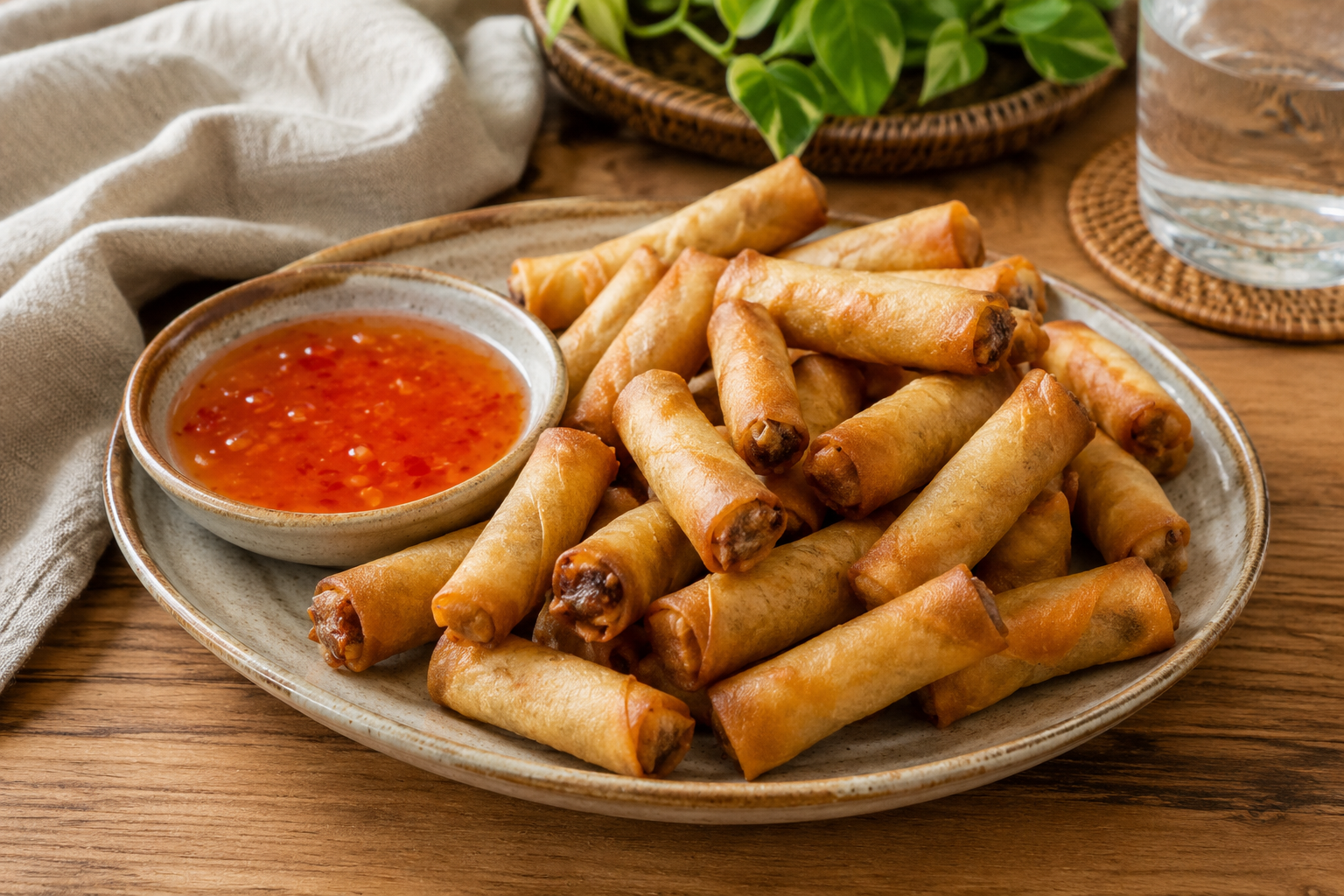
Filipino lumpia recipe: what you are making
This recipe makes crisp pork-filled lumpiang Shanghai. The filling combines pork mince with onion, carrot, garlic, spring onion and simple seasoning. It is wrapped in small spring-roll wrappers, sealed with egg and fried until golden. Rest briefly, then serve with sweet chilli sauce.
The recipe follows Melissa Fox’s family-style lumpia published by SBS Food. Her version cooks the pork filling before wrapping, then fries the assembled rolls for crispness. This guide keeps that structure and adds Australian food-safety checks: cook minced pork to at least 75°C in the centre, keep raw and ready-to-eat foods separate, and control the time the filling spends outside refrigeration.
Lumpia is a broad category, not one fixed national recipe. Fresh lumpia, vegetable-filled rolls and sweet turon are different preparations. Here, ‘lumpia’ refers specifically to a practical lumpiang Shanghai-style pork recipe for six to eight people. Families may season, size and fold their rolls differently.
Read the beginner’s guide to Filipino food →Cook Filipino chicken adobo →
What is lumpiang Shanghai?
Lumpiang Shanghai is a fried Filipino spring roll with a savoury meat filling, commonly pork. The rolls are usually narrow and easy to share, which helps explain their familiar place on party tables. SBS Food describes lumpiang Shanghai as a meat-filled party favourite while noting that Filipino lumpia also includes fresh, vegetable and sweet forms.
The National Museum of the Philippines identifies lumpia wrappers as edible cooked-starch wrappers used for fresh lumpia, fried spring rolls, lumpiang Shanghai and turon. That common wrapper connects several dishes, but the fillings and cooking methods make them distinct. Turon contains fruit and sugar; lumpiang sariwa uses a soft fresh wrapper; lumpiang togue centres on vegetables such as bean sprouts.
The word ‘authentic’ is less useful than naming the version and source. This is a pork lumpiang Shanghai recipe based on one published family method. It should not be presented as the only Filipino approach. Some cooks mix the filling raw and cook it inside the wrapper; others pre-cook it, as this recipe does. Do not switch between those methods without changing the cooking and safety checks.
Ingredients for six to eight people
For the filling, you need 1 tablespoon olive oil, half a finely chopped brown onion, half a grated carrot, 2 minced garlic cloves, 500 g pork mince, half a teaspoon soy sauce, 1 teaspoon salt, half a teaspoon black pepper, half a teaspoon garlic powder and a quarter cup thinly sliced spring onions. This reflects the SBS recipe’s measured filling.
For wrapping and frying, use 1 packet small spring-roll wrappers, 1 lightly whisked egg, 2 cups vegetable oil and sweet chilli sauce for serving. Wrapper pack sizes differ, so the final number of rolls depends on the wrapper dimensions and how much filling you place in each. The source method uses about 1 tablespoon filling per roll.
Buy wrappers labelled for spring rolls rather than rice-paper rounds used for Vietnamese-style cold rolls. Keep the packet covered while working because thin wrappers dry quickly. If the wrappers are frozen, thaw them according to the manufacturer’s instructions. Do not add water to the filling merely because it appears firm; excess moisture makes sealing and crisp frying harder.
Build a Filipino pantry in Bunbury →
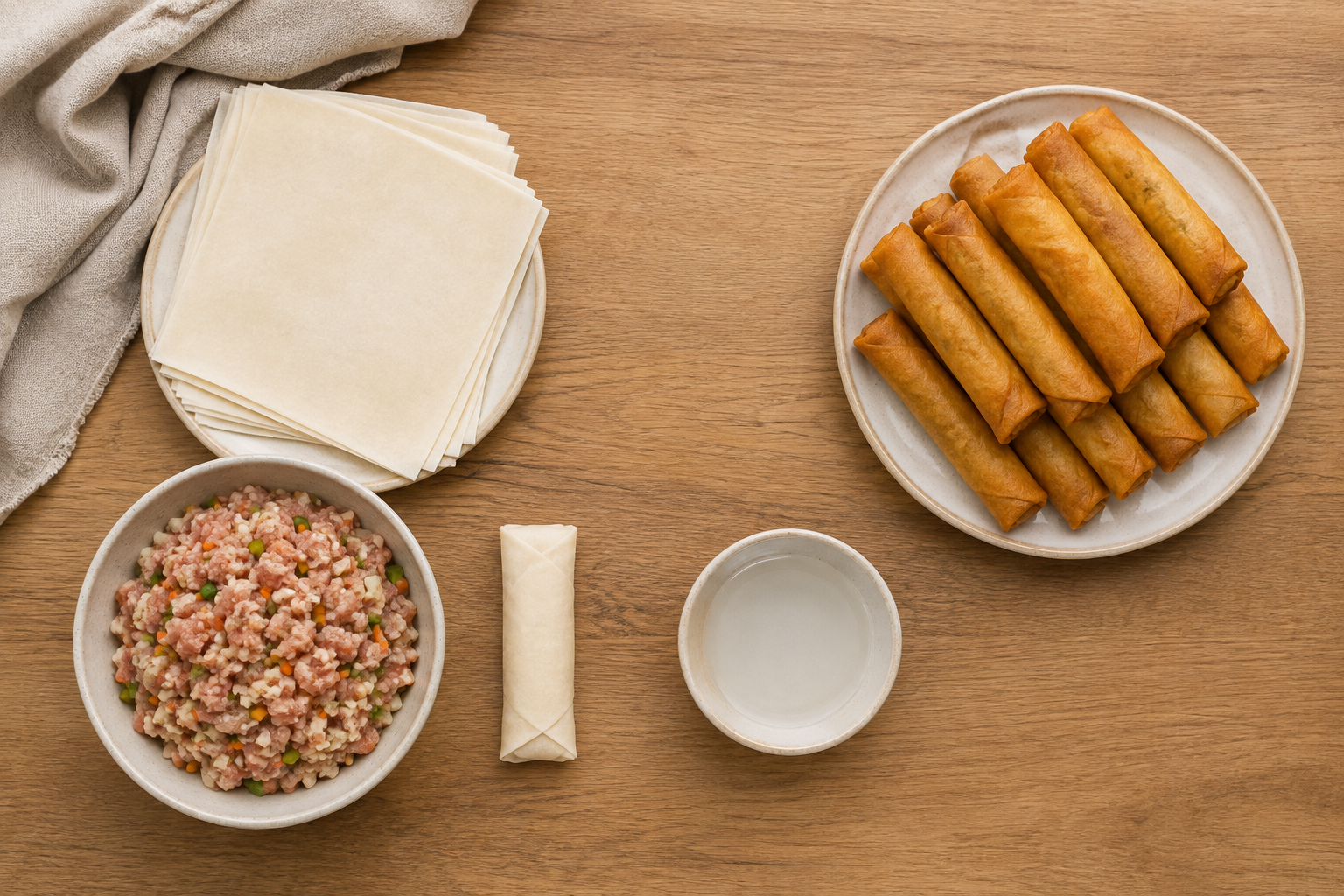
How to make the pork filling
First, prepare every ingredient and set out separate utensils for raw pork and ready-to-eat food. Heat the olive oil in a large frying pan over medium heat. Add the onion, carrot and garlic, then cook for a few minutes until the onion becomes translucent and the vegetables begin to soften without browning heavily.
Add the pork mince and break it into small pieces with a clean cooking utensil. Cook it thoroughly rather than stopping when the outside changes colour. Food Standards Australia New Zealand recommends that minced meat, including pork mince, reaches at least 75°C in the centre. Check the filling in several places with a clean food thermometer.
Stir in the soy sauce, salt, black pepper, garlic powder and spring onions. Cook for another two minutes, following the SBS method, then transfer the filling to a clean shallow container so it cools more evenly. Do not place cooked filling back in the bowl or on the board that held raw pork.
The filling must be cool enough not to soften or steam the wrappers, but it should not sit on the bench indefinitely. Keep preparation organised, roll promptly and refrigerate the filling if there is a delay. Food that has spent time between 5°C and 60°C accumulates that time under the FSANZ two-hour/four-hour guidance.
How to roll lumpia neatly
Place one wrapper on a clean, dry board in a diamond shape, with a point facing you. Keep the unused wrappers under their packet covering or a barely damp clean cloth so they remain flexible. Spoon roughly 1 tablespoon of cooled filling into a short sausage shape across the lower-middle area. Leave clear edges for folding.
Lift the bottom corner over the filling and roll forward once, keeping the cylinder snug without tearing the wrapper. Fold one side towards the centre, roll once more, then fold the other side in. Brush the final corner lightly with whisked egg and finish rolling so the seam sits closed against the cylinder.
Consistency matters more than speed. Rolls of similar thickness fry at a similar rate, while an overfilled roll can split and release filling into the oil. If a wrapper tears, use a fresh one rather than patching a large hole. Place completed rolls seam-side down on a clean tray, spaced apart, and keep them away from any raw-meat equipment.
How to fry lumpia until crisp
Heat the vegetable oil in a small, deep, stable saucepan, leaving plenty of space above the oil. Keep the pan handle turned inward and never add wet utensils or water. A kitchen thermometer gives more control; if you do not have one, follow the source recipe’s visual method and fry a test roll before committing a full batch.
Lower a few rolls into the oil carefully and avoid crowding. SBS cooks the rolls for approximately three to four minutes, until golden brown. Turn them when needed so the wrapper colours evenly. Because the filling was already cooked to 75°C, the frying stage is mainly crisping and reheating, but the centre should still be hot when served.
Lift each batch with tongs or a slotted spoon and drain on a rack or absorbent paper. Let the rolls stand for a couple of minutes: the wrapper becomes easier to handle, while the filling can remain very hot. Never leave hot oil unattended, and if oil begins smoking, turn off the heat and move the pan only when it is safe to do so.
For the crunchiest result, serve soon after frying. Holding rolls in a covered container traps steam and softens the wrapper. If you need a short wait, arrange them in one layer on a rack rather than stacking them tightly.
Troubleshooting common lumpia problems
If rolls burst, they may be overfilled, rolled unevenly, poorly sealed or placed into oil before the seam has held. Reduce the filling and keep the shape compact. Large vegetable pieces can also press through the wrapper, so chop the onion finely and grate the carrot as specified.
If the rolls are greasy, the oil may have cooled after too many were added at once. Cook in small batches and allow the oil to recover between batches. If the wrapper browns before the centre is hot, the oil may be too hot or the rolls too thick. A test roll helps establish the right batch size and heat for your pan.
If the wrapper stays pale and soft, the oil may be too cool or the rolls may be crowded. Moist filling is another cause. Cook off excess liquid in the pan and cool the filling before wrapping. Do not compensate by frying much longer at low heat; correct the moisture and oil temperature for the next batch.
Allergens and food safety
This recipe commonly contains wheat in the spring-roll wrappers, soy in the soy sauce and egg in the seal. Individual brands can contain additional allergens, and some soy sauces contain wheat. Read every ingredient list and the bold ‘Contains’ statement. Do not describe the finished rolls as gluten-free, egg-free or suitable for an allergy unless every ingredient and the preparation environment have been checked.
Keep pork mince at 5°C or colder until needed. Wash and dry hands before cooking and after handling raw meat. Clean benches and utensils, and prevent raw pork or egg from contacting cooked filling, dipping sauce or finished rolls. Use a clean thermometer to confirm the mince reaches at least 75°C.
For serving, keep hot food above 60°C or manage time carefully. FSANZ’s two-hour/four-hour rule counts the total time potentially hazardous food spends between 5°C and 60°C: under two hours it may be refrigerated again, between two and four hours it should be used immediately, and after four hours it should be discarded. Home cooks can apply the same cautious principle to party platters.
Oil temperature does not replace centre-temperature checks, and golden colour alone cannot prove minced meat is safely cooked. In this version, measuring the filling before wrapping is the clearest control. If you choose a recipe that wraps raw mince, use that recipe’s specific size, frying method and internal-temperature instructions.
Making lumpia ahead and serving a crowd
SBS writer Melissa Fox describes keeping prepared lumpia in the freezer, but safe handling still matters. Cool the cooked filling promptly, wrap with clean equipment, freeze the assembled rolls in a single layer before transferring them to a food-safe container, and keep them frozen hard. Label the container so you know what it contains and when it was prepared.
Do not thaw rolls on the bench. Follow the wrapper manufacturer’s advice and a tested cooking method for frozen or refrigerated rolls. Water and ice around hot oil can spit dangerously, so ensure the exterior is free of loose ice. Regardless of preparation route, serve the pork filling piping hot and manage platter time carefully.
For a party, lumpia works well beside pancit, rice, vegetables and other shared dishes. Offer dipping sauce in several small bowls to reduce queues and double-dipping. Place a clear allergen note near the platter, and use separate utensils for food prepared to meet different dietary needs.
Estimate portions as part of the whole menu rather than announcing a universal number per guest. A cocktail event, children’s party and full Filipino buffet all create different demand. Frying in batches also affects timing, so decide who will cook, drain, plate and monitor food while guests arrive.
Make pancit bihon for a shared table →Explore Filipino catering packages →Request a tailored catering quote →
Finding lumpia ingredients and Filipino food in Bunbury
Spring-roll wrappers, pork mince, vegetables and sauces are widely recognisable ingredients, but wrapper size and stock vary. Read the packet before buying and keep frozen wrappers cold on the trip home. Hernandez Asian Delights can confirm what Filipino groceries are currently available rather than this article promising a particular brand or pack size.
Hernandez Asian Delights is at 36 Charles Street, Bunbury. Phone 08 9768 0755 before travelling for a specific ingredient or ask about current catering options for a gathering. If your menu also includes pork crackle, keep it as a separately labelled dish so guests can distinguish it from pork-filled lumpia and understand the service plan.
Visit the Hernandez store →Discover Hernandez pork crackle →
Frequently asked questions
What is the difference between lumpia and lumpiang Shanghai?
Lumpia is a broad Filipino category that includes fresh, fried, vegetable and sweet rolls. Lumpiang Shanghai is a small fried version with a savoury meat filling, commonly pork. This recipe is specifically for lumpiang Shanghai-style rolls.
Can I use Australian spring-roll wrappers for lumpia?
Yes, use thin small spring-roll wrappers and follow their thawing and handling directions. Do not substitute rice-paper rounds intended for cold rolls and expect the same texture or frying behaviour.
Can Filipino lumpia be prepared ahead?
Yes. This recipe pre-cooks and cools the filling before wrapping. Assemble the rolls with clean equipment, refrigerate them promptly for short-term use or freeze them safely, then follow a tested frying method. Do not leave meat-filled rolls at room temperature for extended periods.
What temperature should pork lumpia reach?
FSANZ recommends cooking minced meat, including pork mince, to at least 75°C in the centre. In this method, confirm the filling reaches 75°C before cooling and wrapping, then fry the rolls until golden and hot throughout.
What sauce goes with lumpiang Shanghai?
Sweet chilli sauce is used in the SBS recipe. Families and cooks may prefer other sweet, sour, spicy or savoury sauces. Check bottled sauces for allergens and serve them separately so guests can choose.
Keep exploring Filipino food and culture



Taste it in Bunbury
Bring Filipino flavour to your next gathering.
Explore catering from Hernandez Asian Delights or visit Michael and the team at 36 Charles Street, Bunbury.