· 9 min read
Filipino Grocery Store Bunbury: A Beginner’s Pantry Guide
Looking for a Filipino grocery store in Bunbury? Use this practical guide to shop for pantry essentials, read labels and start cooking Filipino food.
Filipino grocery store Bunbury: where to begin
If you are searching for a Filipino grocery store in Bunbury, Hernandez Asian Delights is at 36 Charles Street, Bunbury WA 6230. The store is a local place to begin exploring Filipino and broader Asian groceries, ask about unfamiliar ingredients and connect those ingredients with dishes you want to cook. Because stock can change, phone 08 9768 0755 before travelling if you need a particular brand, size, fresh item or frozen product.
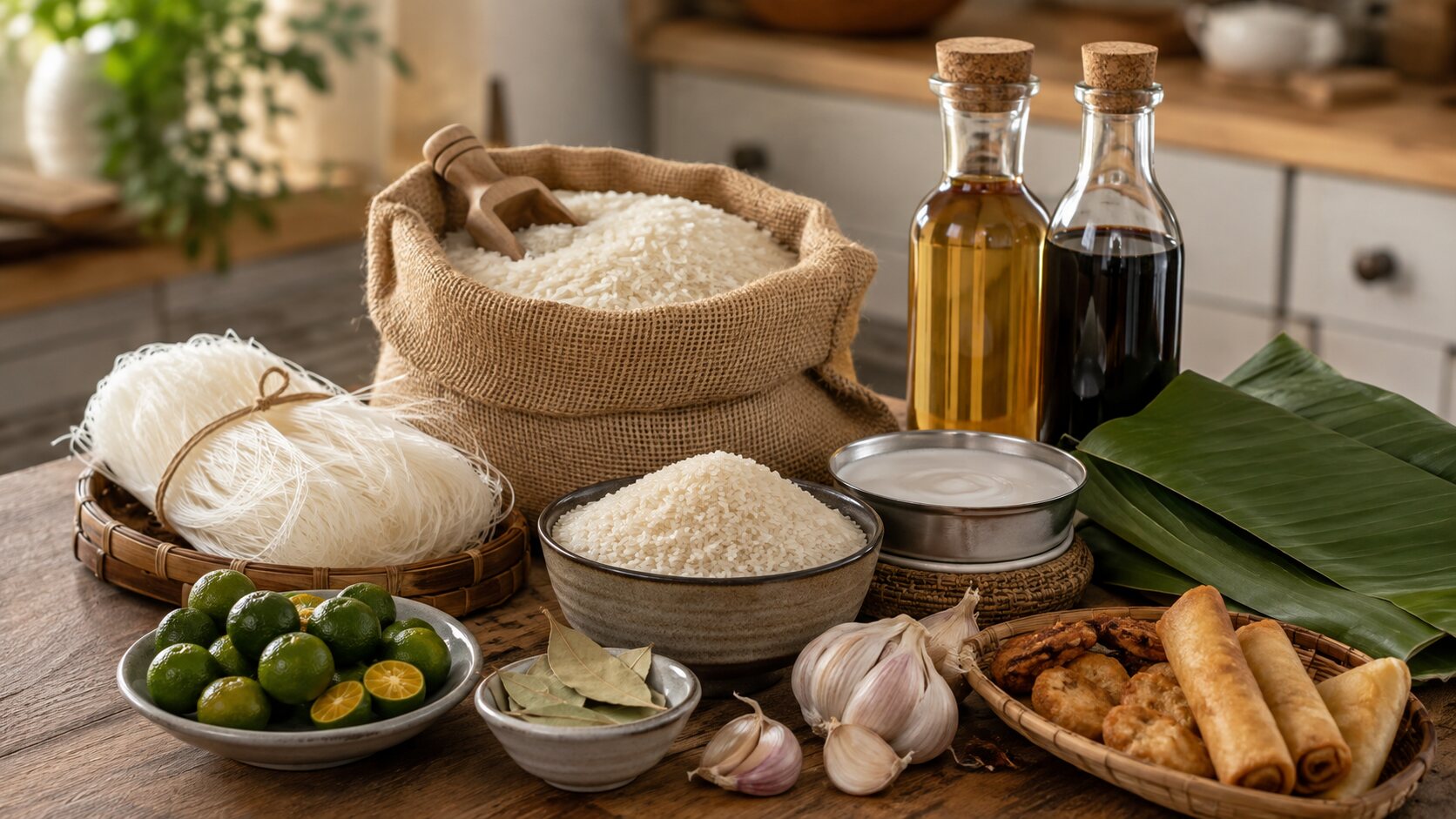
A first Filipino grocery shop does not need to fill an entire cupboard. Start with rice, one suitable vinegar, soy sauce, garlic, bay leaves and black pepper. Those basics can take you towards adobo and several everyday flavour combinations. Add rice noodles, coconut milk, fish sauce or bagoong only when you have a recipe and understand how you will use them. A focused basket costs less, creates less waste and makes labels easier to compare.
This guide explains the role of common pantry ingredients rather than promising what is on the shelf today. Filipino cuisine is regional, seasonal and shaped by family preference. The Philippine Department of Agriculture describes it as local and regional, with dishes changing according to available ingredients. Treat this list as a starting map, then let a trusted recipe and the store team help you choose the right product.
Plan your visit to the Hernandez store →Read the beginner’s guide to Filipino food →
Make a dish-first shopping list
The easiest way to shop is to choose one dish before you enter the store. A vague plan to ‘cook Filipino food’ can leave you comparing several vinegars, noodles and sauces without knowing what matters. A written recipe tells you whether you need cane vinegar or another vinegar, light or regular soy sauce, fresh or dried noodles, coconut milk or coconut cream, and whether a condiment belongs in the pot or beside the finished meal.
For chicken adobo, a practical list might include chicken, rice, vinegar, soy sauce, garlic, bay leaves and black pepper. For adobong kangkong, it might include water spinach, garlic, vinegar and soy sauce, with the exact list guided by your chosen version. Pancit is a family of noodle dishes rather than one formula, so check whether the recipe calls for bihon, canton or another noodle before purchasing a packet that merely looks familiar.
Write down both the English and Filipino term from your recipe. Suka means vinegar, toyo means soy sauce, patis means fish sauce and gata refers to coconut milk. These words help identify a category, but products within it are not always interchangeable.
Rice and noodles: the foundations
Rice accompanies many Filipino meals, and SBS Food identifies it as a staple in the Filipino diet. Long-grain jasmine rice is a useful everyday choice for savoury dishes. Glutinous rice, sometimes called sticky or sweet rice, behaves differently and is commonly used for particular snacks and desserts. It is not a simple one-for-one substitute for ordinary steamed rice, so buy it only when the recipe specifies it.
Noodle labels deserve the same attention. Bihon usually refers to thin rice noodles, while canton commonly refers to wheat-based egg noodles. Sotanghon is made from starch such as mung bean or another starch depending on the product. Check the packet rather than relying on appearance, particularly if wheat, egg or another allergen matters. Cooking and soaking instructions also vary by thickness and manufacturer.
For a first pantry, ordinary rice is more versatile than a collection of specialist grains. Add one noodle for a specific recipe, store both as directed and learn how each cooks before committing to a large quantity.
Vinegar, soy sauce and the Filipino love of contrast
Sour, salty and savoury flavours often work together in Filipino cooking. SBS Food describes suka, or vinegar, as intrinsic to the cuisine and identifies cane, coconut and palm vinegars among important varieties. Vinegar can appear in braises, marinades, pickles and sawsawan, the dipping sauces adjusted at the table. It does not follow that every vinegar tastes alike: acidity, sweetness, aroma and colour can change a finished dish.
Cane vinegar is a useful first Filipino vinegar when a recipe calls for it. Coconut vinegar has its own character and may be specified in regional or family recipes. If an Australian recipe offers apple cider or white vinegar as an alternative, follow that tested guidance rather than substituting at random. Never use a product intended for cleaning. When tasting a braise such as adobo, allow the vinegar time to cook and integrate before deciding it is too sharp.
Toyo, or soy sauce, brings salt, colour and depth. SBS notes that light soy sauce is common in Filipino cooking, but labels and salt levels differ among products. Dark soy, sweetened sauce and concentrated seasoning are not automatic substitutes. Read the recipe and ingredient statement, measure in millilitres when precision matters, and taste a small amount before adding extra salt.
A simple vinegar-and-soy dipping sauce may also include garlic, chilli or calamansi, but the ratio varies. Put strong condiments on the side when serving people who are new to the cuisine. That gives each guest control without suggesting that Filipino flavours must be weakened for Australian diners.
Coconut milk, fish sauce and bagoong
Coconut is used across the Philippines in different forms, including milk, flesh and oil. Coconut milk can enrich vegetables, seafood, meat, stews and sweets, while coconut cream is usually richer and is not always interchangeable at the same quantity. Shake the container if instructed, note whether the product is sweetened, and use the version named in the recipe. Once opened, refrigerate it and follow the manufacturer’s directions.
Patis is fish sauce: a salty liquid seasoning used in cooking and at the table. Bagoong is a broader category of fermented seafood condiments, including fish and shrimp preparations. SBS describes bagoong alamang as shrimp paste and explains that bagoong can add depth to dishes such as pinakbet. These ingredients are concentrated and distinctive, so start with the measured amount in a reliable recipe rather than pouring freely.
Fish sauce and shrimp paste raise obvious questions for people with seafood allergies, and formulations can contain other declarable allergens. Do not infer suitability from the front label, the colour of the sauce or a remembered brand. Read the current ingredient and allergen statements every time. If you are cooking for another person, keep the packaging available and prevent cross-contact in the kitchen.
Fresh, frozen and flavour-building ingredients
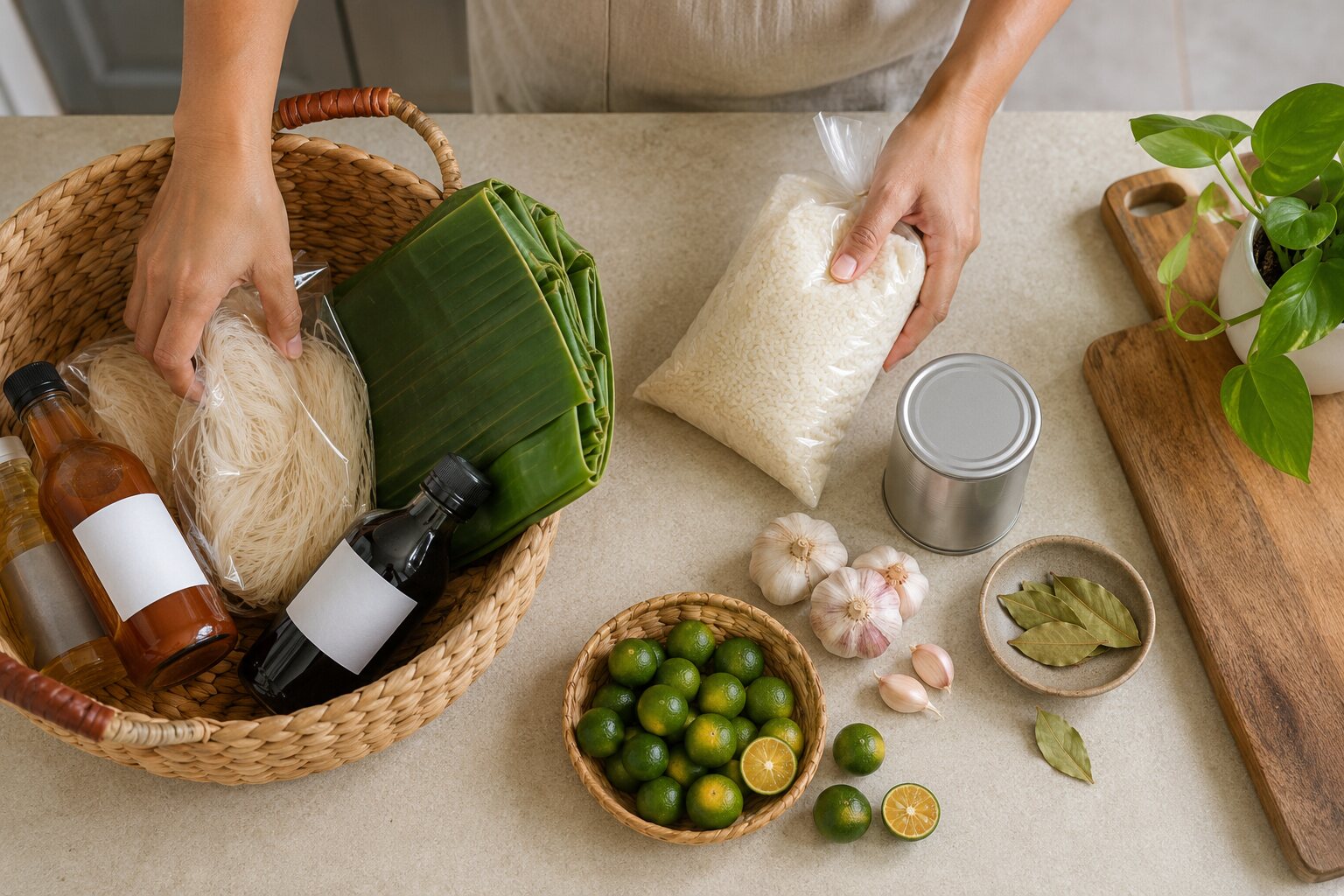
Garlic, onion and tomato form a familiar aromatic base in many Filipino dishes. Bay leaves and whole black peppercorns are central to numerous adobo recipes. Ginger, chilli, spring onion and leafy greens may be useful depending on the dish. Fresh produce changes with season and supply, so decide what your recipe truly needs and ask the store team about practical alternatives rather than treating a substitute as culturally identical.
Calamansi brings a fragrant sour note to drinks, marinades and dipping sauces. Fresh fruit is not always easy to find in Australia, and availability must be confirmed. Bottled or frozen products may differ in sweetness and added ingredients. Our calamansi guide explains its flavour, how it is used and why a lime is an approximation rather than the same fruit.
Frozen aisles can contain vegetables, seafood, meats, wrappers and prepared foods that are difficult to keep in ambient storage. Check that the package is intact and frozen, take it home promptly and follow the label. A cooler bag is useful when the trip home is long or the South West weather is warm.
Understand calamansi before you shop →Try the easy adobong kangkong guide →
How to read Australian food labels
Australian retail food labels are there to answer practical questions. Check the product name, ingredient list, allergen declaration, date marking, storage instructions, preparation directions, nutrition information and country-of-origin statement as relevant. Ingredients are generally listed by weight from greatest to smallest at the time of manufacture, so the list can reveal whether a sauce is mainly soy, sugar, vinegar, water or another ingredient.
Food Standards Australia New Zealand introduced plain English allergen labelling to make declared allergens easier to identify. The requirements became mandatory on 25 February 2024, with a transition for some older labels until 25 February 2026. Look for the bold ‘Contains’ summary as well as the ingredient list. Declarable allergens include wheat, soy, fish, crustaceans, molluscs, sesame, egg, milk, peanuts and specified tree nuts.
A ‘may contain’ statement concerns possible unintended allergen presence. If a label is damaged, unclear or covered by another sticker, ask for help and do not guess. People with diagnosed allergies should follow their medical advice and allergy-management plan.
Most packaged retail food also requires country-of-origin information under Australia’s Country of Origin Food Labelling Information Standard. The ACCC explains that terms such as ‘grown in’, ‘product of’ and ‘made in’ have defined meanings. The origin panel is useful information, but it does not tell you whether a food is ‘authentic’, whether your family will like it or whether it suits a particular recipe. Those are separate questions.
Why buying locally is simpler than importing food yourself
A product seen overseas or online cannot automatically be mailed or carried into Australia. The Department of Agriculture, Fisheries and Forestry warns that food, plant material and animal products can carry biosecurity risks. Travellers must declare relevant goods, postal descriptions must be accurate, and some products are prohibited or subject to conditions. Raw rice, for example, is not permitted as a traveller import, while processed rice products have specific conditions.
BICON, the Australian Government’s Biosecurity Import Conditions system, is the authoritative place to check a commodity, country of origin and intended use. Conditions can change, and different ingredients can trigger different rules. Commercial food imports must also meet Australian food-safety and labelling requirements. Check BICON before buying overseas or packing food for a flight.
Shopping through an Australian retailer avoids assuming an overseas purchase will pass the border. It also gives you a local place to compare formats, ask questions and select a sensible quantity.
A sensible first Filipino pantry basket
For most beginners, start with seven items: jasmine rice, cane vinegar or the vinegar specified by your recipe, regular or light soy sauce, garlic, bay leaves, black pepper and one packet of noodles chosen for a planned dish. If your recipe needs them, add coconut milk and fish sauce. Buy bagoong only when you know which type the recipe calls for and everyone eating can safely consume its ingredients.
Your first meals might be chicken adobo with rice, a vegetable adobo or a noodle dish from a tested recipe. Learn one method at a time and notice how your vinegar, soy sauce and noodles behave. Those observations will make the next shop more informed.
Before visiting Hernandez Asian Delights, call 08 9768 0755 if one exact item will determine whether you can cook. Ask about the product category and size, not only a brand name, because an alternative may suit the same tested recipe. For ready-made food or catering, use the enquiry form so Michael can confirm current menus, quantities, timing and dietary information directly.
Explore Filipino catering in Bunbury →Ask Hernandez about catering and menu options →See Michael’s pork crackle page →
Frequently asked questions
Where is Hernandez Asian Delights in Bunbury?
Hernandez Asian Delights is at 36 Charles Street, Bunbury WA 6230. If you need a specific grocery item, phone 08 9768 0755 before travelling because stock and availability can change.
What should I buy first at a Filipino grocery store?
Choose a dish first, then buy only what its recipe needs. A useful starter basket for many home cooks is rice, vinegar, soy sauce, garlic, bay leaves and black pepper, plus one noodle or coconut product for a planned recipe. Check labels and recipe-specific requirements rather than assuming similar products are interchangeable.
What is the difference between patis and bagoong?
Patis is a liquid fish sauce used as a seasoning. Bagoong is a category of fermented seafood condiments that can include fish or shrimp pastes and sauces. They differ in texture, strength and use, and both may contain declarable allergens, so follow the recipe and read the current label.
Can I bring Filipino ingredients into Australia myself?
Not automatically. Australian biosecurity conditions depend on the item, ingredients, processing, packaging, country of origin and intended use. Declare relevant food and check the Australian Government’s BICON system before travelling or ordering from overseas.
Does Hernandez Asian Delights stock every ingredient in this guide?
This guide explains common categories and does not promise current stock. Products can change, so contact the store on 08 9768 0755 before visiting for a particular brand, size, fresh item or frozen product.
Keep exploring Filipino food and culture



Taste it in Bunbury
Bring Filipino flavour to your next gathering.
Explore catering from Hernandez Asian Delights or visit Michael and the team at 36 Charles Street, Bunbury.