· 9 min read
What Is Calamansi? An Australian Guide to the Filipino Citrus
What is calamansi? Learn how this small Filipino citrus tastes, how it is used, what Australians can substitute and how to source it responsibly.
What is calamansi? The short answer
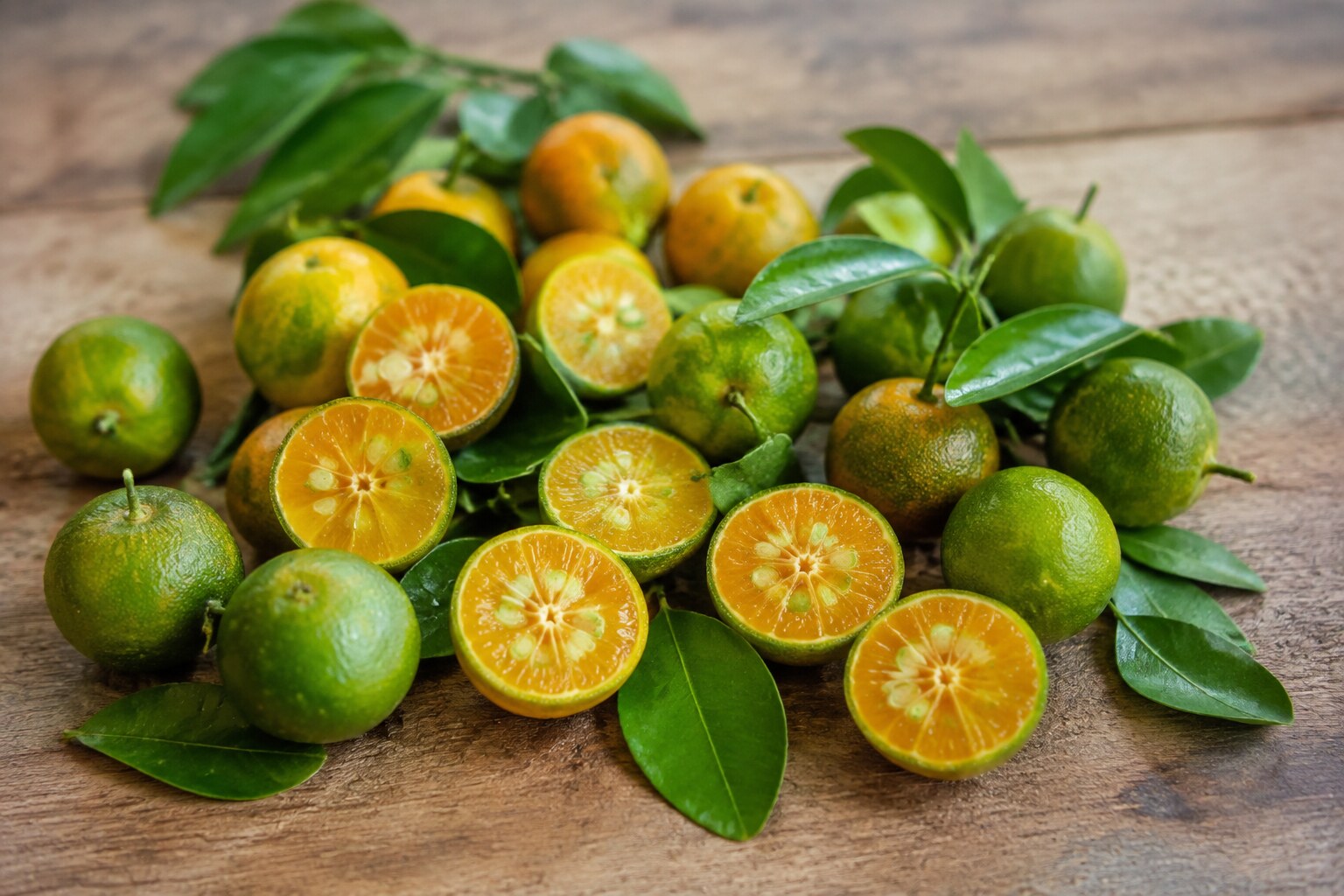
Calamansi is a small, tart citrus fruit closely associated with Filipino cooking. It is squeezed over noodles, grilled food and seafood; mixed into dipping sauces and marinades; made into drinks and concentrates; and used wherever a cook wants fresh acidity with a fragrant citrus character. The fruit may be green, yellow-green or orange depending on its stage of ripeness, while the juice remains distinctly sour. It is not simply a miniature lemon or lime, although either can help when fresh calamansi is unavailable.
For Australians meeting it through a Filipino grocery, restaurant or family table, the most useful comparison is functional: calamansi does many jobs that lemon or lime does, but it brings its own aroma and flavour. It can brighten a rich dish, sharpen a salty dipping sauce or balance sweetness in a drink. The exact use varies by cook, region and recipe, so taste first and adjust rather than replacing another citrus measure for measure without thought.
Calamansi, calamondin and Citrus microcarpa
The naming can be confusing because citrus taxonomy and horticultural naming have changed over time. The Australian National Botanic Gardens includes the plant in its Rutaceae image collection as Citrus microcarpa. University of Florida horticultural guidance uses the name calamondin or calamansi and also records the older hybrid-style name Citrofortunella microcarpa. Australian nurseries and international recipes may therefore use calamondin and calamansi for the same fruit.
Names alone do not guarantee that two products will taste identical. Freshness, ripeness, variety, processing and added sugar can all affect the result. When buying juice or concentrate, read the ingredient list rather than relying on a front label. When buying a plant, use the botanical name and fruit description to confirm what is being sold. For cooking, the important point is that Filipino recipes calling for calamansi are asking for a specific small, aromatic and sour citrus—not a generic sweet mandarin.
What does calamansi look and taste like?
Calamansi is much smaller than a typical supermarket orange. The fruit is round, with a thin aromatic rind and a segmented, juicy centre that can contain several seeds. Green fruit is common in Filipino kitchens because it supplies the sour juice cooks want, but the skin can turn orange as it matures. A change in rind colour does not mean the fruit will taste like a sweet orange.
The juice is bright, tart and fragrant. Horticultural guidance from the University of Florida describes calamondin as a small sour fruit and suggests using it in roles similar to lemon or lime. That is a useful starting point, but it does not mean the flavours are interchangeable. Calamansi can suggest mandarin-like perfume around a sharp citrus core. In a sauce, that aroma is noticeable even when soy, vinegar, garlic or chilli is present.
Because the fruit is small, recipes may specify a number of fruits rather than a precise juice volume. Sizes and juiciness vary, so a better kitchen habit is to squeeze, strain if needed, measure the juice and adjust the dish by taste. This is especially important when adapting a Filipino recipe written by a home cook rather than a commercial test kitchen.
Why calamansi matters in Filipino cooking
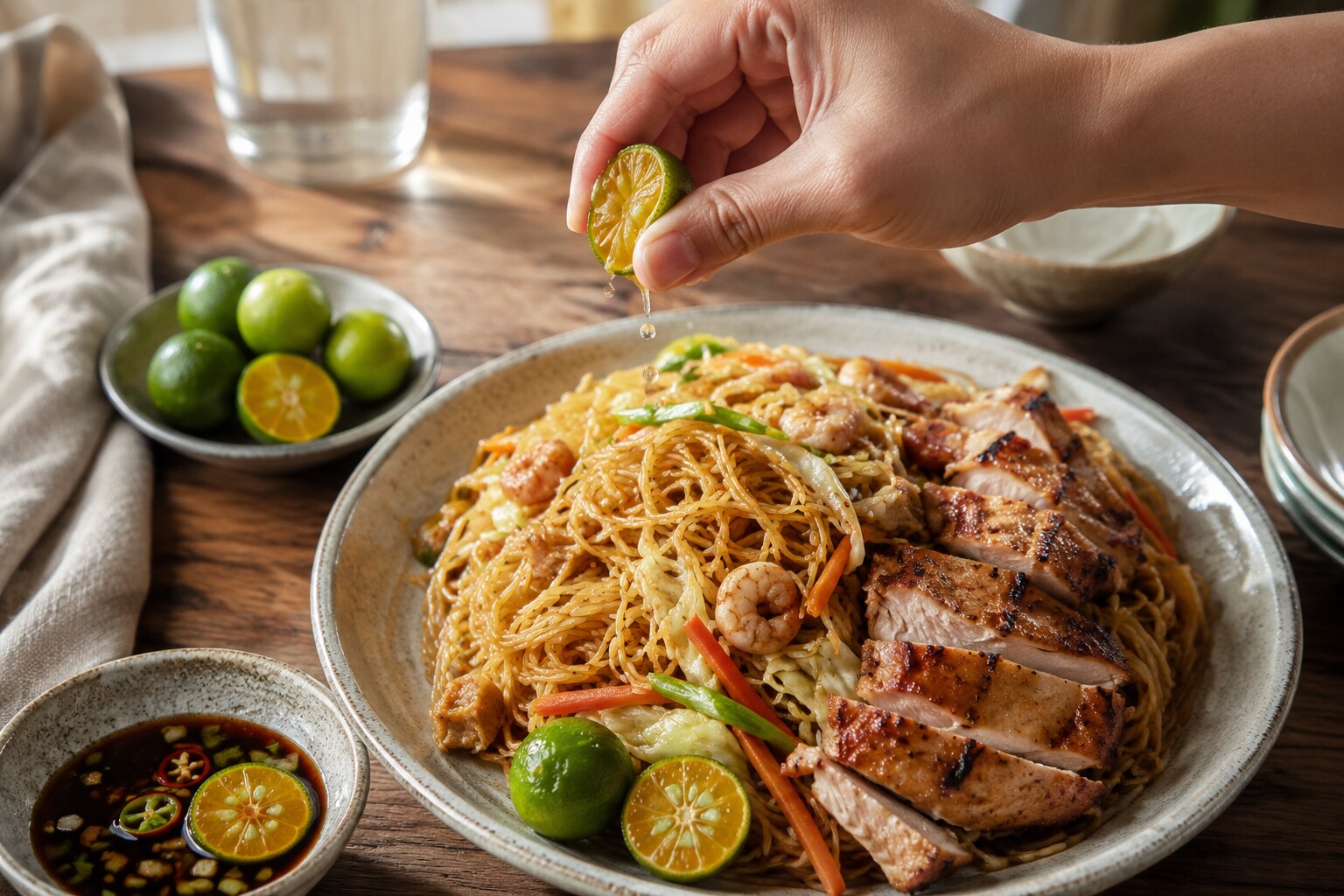
Calamansi works as both an ingredient and a table condiment. A diner can squeeze it over pancit immediately before eating, preserving the fresh aroma that longer cooking would soften. A cook can combine it with soy sauce or other seasonings for a dipping sauce. It can form part of a marinade for grilled food, contribute acidity to drinks and desserts, or cut through fatty and fried textures. These are categories of use rather than one national formula.
Official Philippine cultural programs regularly feature calamansi when presenting Filipino cuisine internationally. A Philippine Consulate General in Toronto cook-along described chicken inasal as marinated with vinegar and calamansi alongside lemongrass and ginger. The Philippine Embassy in Brussels has promoted calamansi among Philippine agricultural products with distinctive flavours. These examples do not prove that every inasal or Filipino dish must contain calamansi; they show how recognisable the fruit is within the wider culinary story.
Filipino cooking is regional and family-based. One household may use calamansi in a dish that another prepares with vinegar or a different souring ingredient. Availability also shapes recipes, especially for families living overseas. Respect the original ingredient when explaining the dish, but recognise that practical substitution has long been part of diaspora cooking.
How is calamansi used?
Calamansi is versatile because acidity changes how other flavours are perceived. It can make a salty sauce feel brighter, give grilled food a fresher finish and balance a sweet drink. Use it deliberately: some applications depend on raw juice added at the end, while others use the juice during marinating or processing. Avoid boiling fresh juice for longer than necessary if the recipe relies on its delicate aroma.
On pancit and savoury noodles
A cut calamansi served beside pancit lets each diner control the acidity. Squeeze a small amount over one portion, mix and taste before adding more. The citrus can lift savoury noodles without turning the whole platter sharply sour. This tableside use is one of the easiest ways for an Australian diner to understand the fruit.
In dipping sauces
Calamansi juice may be combined with soy sauce and, depending on the cook, chilli, garlic or other seasonings. The ratios are not universal. Begin with a small bowl, taste it with the food it is meant to accompany and adjust. Check soy sauce and every added ingredient for allergens; do not assume a dipping sauce is gluten-free or suitable for a particular diet.
With grilled food and marinades
The juice can contribute acidity and aroma to marinades for chicken, pork, seafood or other foods. Follow a tested recipe for time and quantity, because strong acid can change the surface texture of protein. Calamansi can also be squeezed over cooked grilled food just before serving, which produces a fresher effect than a long marinade.
In drinks, concentrates and preserves
The Philippine Department of Science and Technology has supported training and businesses producing calamansi juice, concentrate and related processed foods. At home, the fruit may be diluted and sweetened for a drink or used in preserves, but safe preservation requires a tested method. Do not guess bottling times, sugar levels or shelf life from an ordinary beverage recipe.
What is the best calamansi substitute in Australia?
If a recipe depends on calamansi and none is available, fresh lime is usually the simplest functional substitute for acidity, while a mixture of lime and a little mandarin or orange juice can move the aroma closer to calamansi. Lemon can also work in many savoury applications. None is an exact replacement, and the best choice depends on the dish. Lime may dominate a delicate sauce; orange alone is often too sweet; lemon may be brighter but less fragrant in the same way.
Start with less substitute juice than the recipe requests, taste and add more. If a marinade includes acid, keep the recipe’s method and timing in mind rather than increasing juice because the first taste seems mild. For a tableside squeeze over pancit, the risk is lower because each diner can adjust their own serve. For desserts or preserved products, substitution can affect set, sweetness and food safety, so use a recipe designed for the citrus you actually have.
Bottled calamansi juice or concentrate may be more faithful than another fresh citrus, but check whether it contains water, sugar, preservatives or other ingredients. A sweetened drink concentrate is not a direct substitute for unsweetened juice in a savoury dipping sauce.
Buying and storing calamansi in Australia
Filipino and Asian grocery stores may carry fresh calamansi, frozen juice, bottled juice or concentrate, but stock changes. Ask what form is available and whether the product is sweetened. At Hernandez Asian Delights in Bunbury, the safest approach is to contact the store before travelling if you need a specific ingredient; this article does not claim that calamansi is always in stock.
For fresh fruit, choose pieces that feel sound and heavy for their size, without leaking or extensive soft breakdown. Use them promptly for the strongest aroma. University of Florida extension guidance notes that calamondin fruit does not keep for long after harvest and recommends refrigeration for short-term storage. Exact storage life depends on freshness and handling, so discard fruit showing mould, fermentation, off odours or severe deterioration.
Juice can be frozen in small measured portions for later cooking. Label the container with the date and quantity so a recipe is easier to reproduce. For a commercial bottled product, follow the manufacturer’s storage instructions and use-by information. Once opened, do not assume a concentrate is shelf-stable unless the label says so.
A note on Australian biosecurity
Do not bring fresh calamansi, seeds, cuttings or plants into Australia from overseas simply because the item is for personal cooking or a home garden. Australia regulates plant material to reduce pest and disease risks. The Department of Agriculture, Fisheries and Forestry directs importers to BICON, its database of biosecurity import conditions and food-safety requirements, to check whether an item can enter and whether permits, treatment or other conditions apply.
Conditions can change and depend on the commodity, country of origin and intended use. Check BICON before travel or import and declare relevant goods on arrival. Buying food or plants through an Australian supplier does not remove the need for normal label, food-safety and plant-health checks, but it avoids guessing about personal import rules.
Calamansi as a Philippine crop and product
Calamansi is not only a kitchen garnish. Philippine Statistics Authority crop reports track it as a major fruit crop, with production recorded across several regions. Official MIMAROPA statistics show the scale of cultivation in Oriental Mindoro, while the Department of Agriculture has supported growers there with tens of thousands of seedlings through its High Value Crops Development Program. Production varies by quarter and region, so a single figure should not be treated as a timeless national total.
The fruit also supports value-added products. Department of Science and Technology programs have trained producers in calamansi juice processing and supported small enterprises making juice, concentrate and blended products. That connection between farming, food technology and Filipino flavour explains why calamansi appears in groceries well beyond the Philippines in several forms rather than only as fresh fruit.
For an Australian reader, this broader context matters. Choosing a labelled calamansi product is not simply buying an exotic lime substitute; it connects to a recognised Philippine crop, processing industry and culinary tradition. Read the origin and ingredients, use the product for the job it was made for and avoid health claims that the label or reliable evidence does not support.
Taste calamansi in context
The best way to understand calamansi is alongside food. Try a small squeeze over pancit, compare a calamansi-based dipping sauce with the unsauced bite, or ask how the citrus has been used in a grilled dish. Its role becomes clearer when it balances salt, smoke, richness or sweetness rather than being tasted as an isolated novelty.
If you are planning a Bunbury gathering, ask Hernandez whether calamansi or a calamansi-style condiment is appropriate for the confirmed menu. It can brighten rich items, including grilled pork belly or pork crackle, but availability and ingredients must be checked for the event. A good Filipino catering experience explains unfamiliar flavours while still letting guests choose how much to add.
Plan Filipino catering in Bunbury →Discover Hernandez pork crackle →Read the Bunbury catering menu guide →
Frequently asked questions
Is calamansi the same as lime?
No. Both are tart citrus fruits and lime can substitute in some recipes, but calamansi has its own aroma, rind and flavour. Adjust a substitute by taste rather than assuming an exact one-for-one match.
Are calamansi and calamondin the same fruit?
Horticultural sources commonly use calamondin and calamansi for the same small sour citrus, although scientific naming conventions vary. Check the botanical name, fruit description and product ingredients when buying.
Can I use bottled calamansi juice for Filipino cooking?
Yes, if it suits the recipe, but check whether it is pure juice, diluted, sweetened or preserved. A sweet drink concentrate will behave differently from unsweetened juice in a savoury sauce or marinade.
Where can I buy calamansi in Bunbury?
Filipino and Asian grocers may carry fresh, frozen or bottled forms, but availability changes. Contact Hernandez Asian Delights at 36 Charles Street, Bunbury before visiting if you need a particular calamansi product.
Keep exploring Filipino food and culture



Taste it in Bunbury
Bring Filipino flavour to your next gathering.
Explore catering from Hernandez Asian Delights or visit Michael and the team at 36 Charles Street, Bunbury.