· 9 min read
Filipino Catering in Bunbury: How to Plan a Menu Guests Will Enjoy
Planning an event in Bunbury? Learn how to choose Filipino catering, balance familiar and traditional dishes, manage dietary needs and brief your caterer.
Filipino catering in Bunbury: the short answer
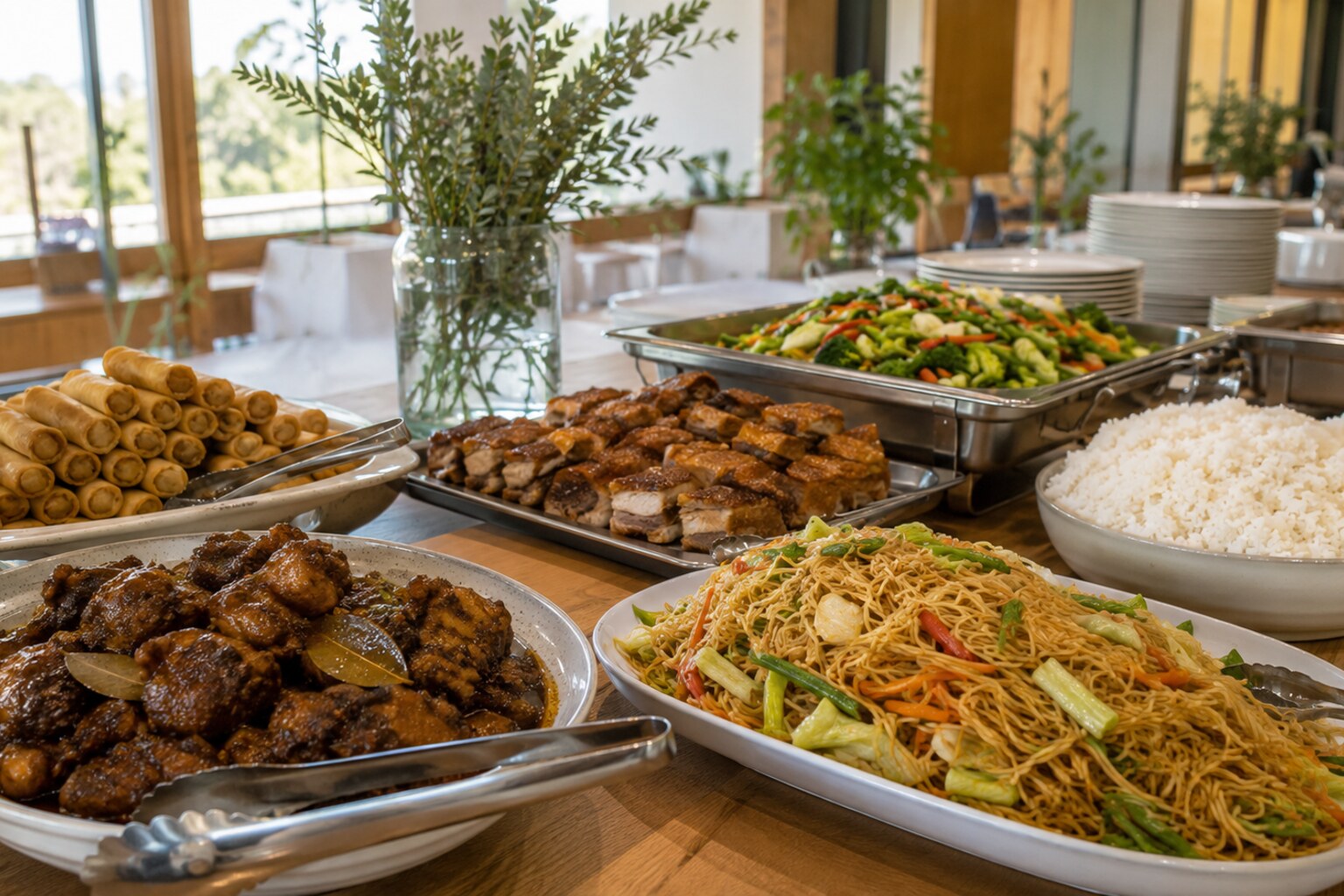
The best Filipino catering menu for a Bunbury event is built around the people attending, not simply the longest possible list of dishes. Start with the occasion, confirmed guest numbers, serving time, venue and dietary requirements. Then choose a mix of one or two approachable mains, rice or noodles, a crisp or fresh side and, if it suits the event, a traditional dish that gives guests something new to discover. This creates variety without making the table confusing.
Filipino food is particularly suited to shared events because dishes such as adobo, pancit, lumpia, rice and grilled meats can be arranged for guests to explore together. However, there is no universal Filipino party menu. Recipes vary by region and family, and the final selection must depend on what the caterer can safely prepare for your date. The practical goal is a generous, balanced meal with clear expectations—not an overfilled menu that creates waste or compromises service.
1. Start with the occasion, not the dishes
A ten-person birthday, a thirty-person staff lunch and a supported community gathering may all enjoy Filipino food, but they do not need the same format. Tell the caterer what the event is, who is attending and what success looks like. A workplace may need a dependable serving window and dishes that are easy to eat during a short break. A family celebration may allow more time for shared platters, conversation and dessert. A community or supported-living event may need accessible service, a calmer setup or individual support information.
Provide a realistic guest count and identify whether children are included. Explain whether the food is the main meal or one part of a larger program. Confirm tables, power, kitchen access, parking and the distance from the delivery point to the serving area. These details are not glamorous, but they affect timing and the way food can be presented. If the venue has its own rules for external catering, waste, heating equipment or access, check them before the menu is finalised.
A useful first brief
A strong enquiry can be short: event type, date, serving time, address, number of adults and children, preferred service style, budget range, dietary needs and two or three dishes or flavours the group enjoys. Add whether you want delivery, collection, setup or serving support. This gives Michael enough context to recommend a practical starting point rather than guessing from a dish list alone.
2. Match the catering experience to your group size
Hernandez Asian Delights currently presents three starting options on its Bunbury catering page. Party Time: Filipino Style is designed for smaller groups of 10–14, with a published starting rate of $35 per person and a ten-guest minimum. Taste the Filipino Difference is positioned for groups of 15–30, starting at $32 per person with a fifteen-guest minimum. The Ultimate Filipino Experience is designed for 20 or more guests, starting at $49 per person with a twenty-guest minimum and a broader hosted experience.
Those figures are starting points published on 21 August 2026, not automatic quotes. Delivery, desserts, drinks, serving staff, setup and special additions may change the total. Menu selection and availability also need confirmation. Use the package size to narrow the conversation, then submit the actual event details so Hernandez can confirm what is possible and provide the final price before any booking is accepted.
Do not choose only on the lowest per-person figure. Compare the service you need. A straightforward workplace delivery has different labour and setup requirements from a hosted cultural event. The better commercial decision is the option that reduces coordination on the day and delivers the guest experience you want, without paying for elements your group will not use.
3. Choose familiar, traditional or a mix
If many guests are trying Filipino food for the first time, begin with recognisable formats and balanced flavours. Lumpia are crisp, easy to share and familiar to people who enjoy spring rolls. Pancit offers a savoury noodle option. Chicken or pork adobo can feel comforting while introducing the distinctive use of vinegar, garlic and seasoning found in many family versions. Grilled items and rice help anchor the meal.
A more traditional selection can introduce sour soups, regional dishes, richer stews or less familiar condiments, subject to the confirmed menu. For a mixed group, the strongest approach is usually not ‘Australian’ versus ‘authentic’. Choose a dependable base that most guests can approach, then add one or two dishes with a clear story. Guests have a safe starting point and still experience something culturally meaningful.
Read the beginner’s guide to Filipino food →See the Hernandez Bunbury store →
4. Build a balanced Filipino catering menu
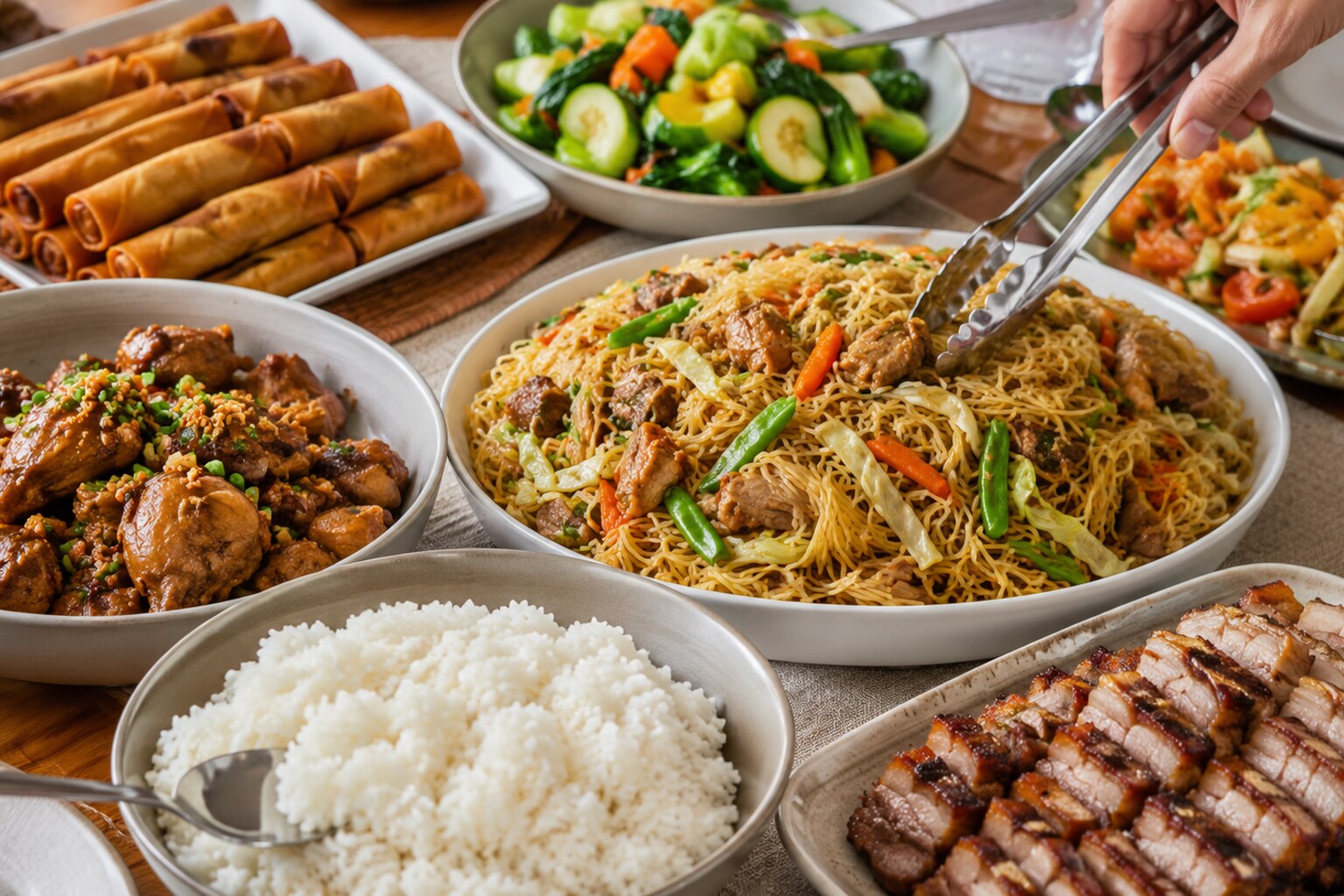
A balanced shared menu has contrast. Pair a saucy or braised main with rice, or a grilled main with noodles and a side that adds freshness or crunch. Avoid selecting several dishes that are all fried, all rich or all based on the same protein. Variety should come from texture, cooking method and flavour as well as the number of trays on the table.
Ask how the dishes are intended to be eaten together. Rice is often the foundation that balances a savoury, tangy or richly seasoned viand. Pancit may act as both a noodle dish and a substantial shared component. Lumpia or pork crackle can add crunch, but they should not be expected to carry the whole meal. A vegetable dish can provide colour and contrast while giving guests another option, although its exact ingredients and dietary suitability must still be confirmed.
A simple menu formula
For many events, begin by discussing one main protein dish, one rice or noodle dish, one vegetable or fresh side and one finger-food item. Larger groups may add a second main, dessert or a signature item. This is a planning formula rather than a guaranteed Hernandez menu. Michael should confirm final dishes, quantities, ingredients, availability and price for the specific event.
Make room for a signature item
A memorable menu often has one item guests talk about afterwards. Hernandez’s homemade pork crackle can fill that role when available and appropriate for the group. Michael has made pork crackle for more than ten years, including his famous plain style and flavoured versions. Treat it as an addition to a balanced meal or a featured snack, then confirm quantity and service with the store.
5. Collect dietary and allergy information early
Ask every attendee for dietary requirements before you approve the menu, and separate personal preference from medical need. A food allergy can cause a serious immune reaction, while coeliac disease and other conditions require their own careful management. Do not assume a dish is gluten-free, vegetarian, halal or free from a particular allergen because its name sounds suitable. Sauces, marinades, stocks, garnishes and shared preparation areas can change the answer.
Food Standards Australia New Zealand requires certain allergens to be declared when present, including wheat, fish, crustaceans, molluscs, egg, milk, lupin, peanut, soy, sesame, specified tree nuts and certain gluten-containing cereals, as well as added sulphites at the regulated level. For unpackaged café or takeaway food, allergen declarations must be displayed with the food or provided to the purchaser on request using the required names. Event organisers should still communicate needs directly and obtain confirmation for the actual menu.
Buffet service deserves extra attention because serving utensils can move between dishes and create cross-contact. The National Allergy Council’s training resources identify buffets as a higher-risk setting for people with food allergies unless strict controls are in place. If a guest has a serious allergy, tell the caterer exactly what it is, ask how cross-contact is managed and agree on a safe service plan. Never promise a guest that a dish is safe unless the caterer has confirmed it.
6. Confirm delivery, collection and serving time
Work backwards from the time guests will eat. Include speeches, meetings, travel, building access and setup—not just the advertised start time. A lunch scheduled for noon may need food in the room earlier, but receiving it too early creates service and temperature-control problems. Give the caterer a reliable contact who will be onsite, reachable by phone and authorised to confirm the handover.
Decide who supplies serving tables, utensils, plates, napkins and waste containers. Confirm whether the booking covers delivery only, collection, setup or serving staff. If the venue is outside central Bunbury, provide the complete address and access instructions so travel and any delivery cost can be reviewed. Hernandez confirms delivery, add-ons and final pricing before the booking; do not rely on assumptions carried over from another event.
7. Plan a safe handover and service
FSANZ advises that potentially hazardous food generally needs to be kept at 5°C or colder or 60°C or hotter. Its guidance lists cooked meat, poultry, seafood, dairy, cooked rice and fresh or cooked pasta among foods that may require temperature control. That matters for Filipino catering because a shared spread can include several of these categories at once. The organiser should follow the caterer’s storage and serving instructions and avoid leaving food unattended at room temperature.
If time rather than temperature is being used as a control, the FSANZ two-hour/four-hour rule counts the food’s total cumulative time between 5°C and 60°C, including preparation, transport and display. Less than two hours allows use or refrigeration; between two and four hours means use immediately and do not return it to refrigeration; after four hours it must be discarded. The caterer controls food before handover, while the organiser needs a clear plan for safe service and leftovers afterwards.
8. Turn the meal into an experience
A good introduction helps unfamiliar guests enjoy the food. Label the dishes, explain which items are savoury, sour, sweet or spicy, and show which condiment belongs with which dish. Keep the explanation brief and accurate. Filipino cuisine represents many regions and family traditions, so avoid presenting one menu as the definitive way all Filipinos eat.
For a more communal format, you might discuss a kamayan-style experience with Hernandez rather than trying to reproduce one from social media. Kamayan refers to eating with the hands and has its own etiquette; participation should remain optional and handwashing, allergies and accessibility must be planned. Whether the event is a simple office lunch or a hosted feast, hospitality and shared discovery create more value than decorative excess.
9. Use this final catering checklist
Before submitting an enquiry, confirm the event date, serving time, venue address, guest count, number of children, package preference, food style, preferred dishes, dietary requirements, allergies, add-ons, accessibility needs, delivery or collection preference and the onsite contact. Include a realistic budget or ask for a recommendation based on the published packages. The more complete the brief, the faster the caterer can identify gaps and provide a useful response.
Before the event, recheck the final menu, quantity, price, payment arrangements, arrival window, service inclusions and allergen information. Make sure the venue is ready and the onsite contact has not changed. A successful Filipino catering experience in Bunbury is not created by ordering the most dishes; it comes from matching the food, service and cultural experience to the people who will share it.
Frequently asked questions
How much notice should I give a Filipino caterer in Bunbury?
Availability varies with the date, group size and requested package. Send the enquiry as early as practical and do not treat the event as booked until Hernandez confirms availability, the menu and final price.
What should I choose for guests new to Filipino food?
Start with familiar formats such as lumpia, pancit, rice, grilled food or a well-explained adobo, then add one traditional dish or condiment. The final choices should be confirmed with Michael for the event.
Can Hernandez cater for allergies or special diets?
The website offers dietary consultation, but suitability is never automatic. List every allergy and dietary requirement in the enquiry, ask about ingredients and cross-contact, and wait for Hernandez to confirm what can be safely provided.
Does a website enquiry confirm my catering booking?
No. The online form is a request. Hernandez Asian Delights will contact you to confirm availability, menu options, service details and the final price before the event is booked.
Keep exploring Filipino food and culture



Taste it in Bunbury
Bring Filipino flavour to your next gathering.
Explore catering from Hernandez Asian Delights or visit Michael and the team at 36 Charles Street, Bunbury.