· 8 min read
What Is a Kamayan Feast? A Respectful Guide for Australians
Learn what kamayan means, how a Filipino communal feast works and how to enjoy the experience respectfully with family, friends or colleagues.
What does kamayan mean?
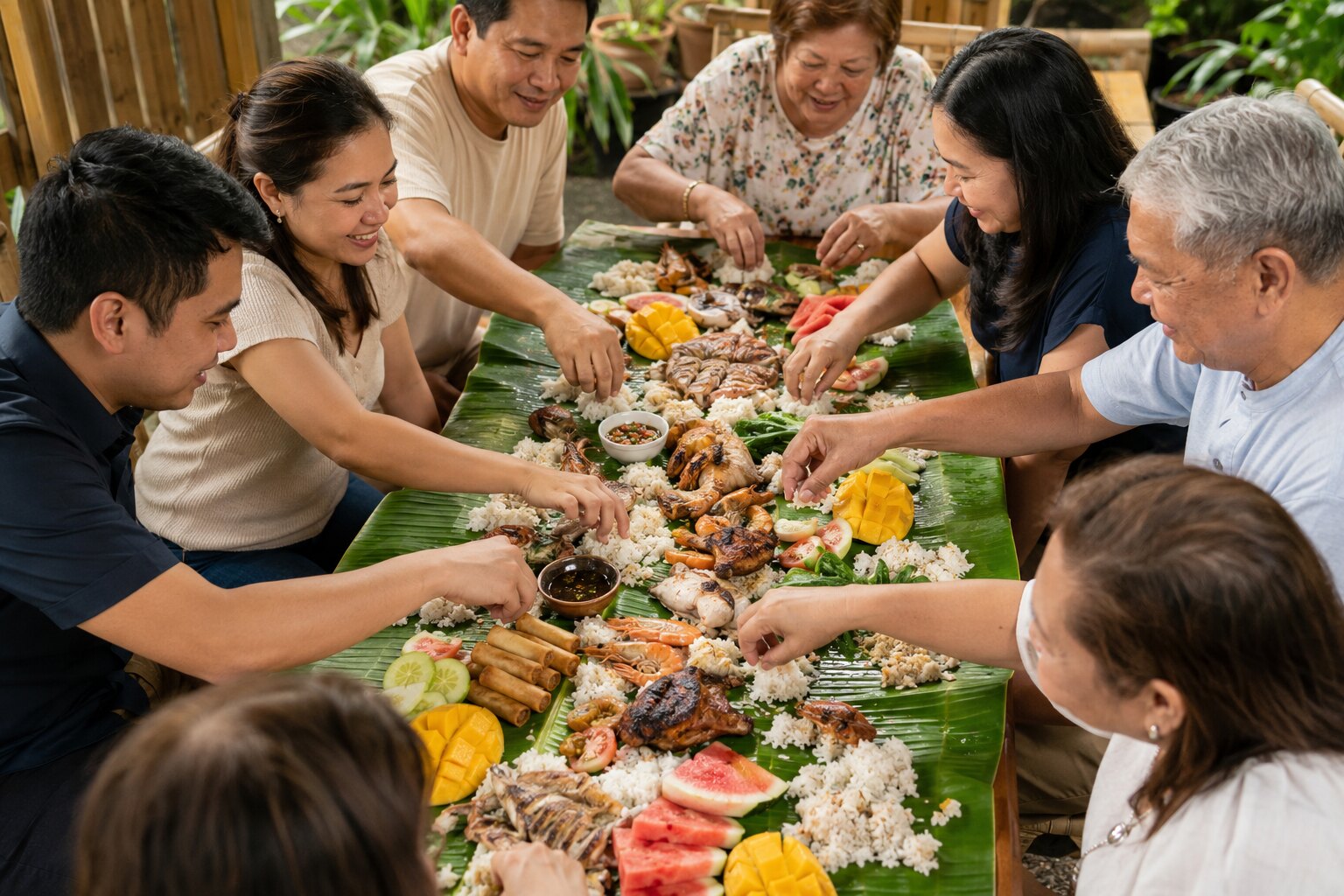
Kamayan comes from kamay, the Filipino word for hand. In its simplest sense, it describes eating with the hands. In a shared feast, food may be arranged family-style—often over banana leaves—and diners use clean hands rather than cutlery. Philippine diplomatic missions use kamayan events to introduce Filipino culinary culture, describing the practice as communal and closely connected with sharing food together.
For Australians encountering it for the first time, the essential point is that kamayan is not a stunt, a competition or an excuse to abandon table manners. It is a social way of eating with its own etiquette. The pleasure comes from sharing a carefully prepared spread, taking modest portions and participating in the rhythm of the group. A host may explain the dishes and demonstrate the hand technique. Follow their lead, ask questions respectfully and remember that different families organise the meal differently.
Kamayan and the modern communal feast
A contemporary kamayan spread can include rice, grilled meats, seafood, vegetables, fruit, noodles and fried items. Banana leaves are frequently used as the serving surface, creating a generous visual centrepiece and making it easy for people to share. The menu is not fixed. A Philippine Consulate event in Honolulu, for example, included pork adobo, eggplant adobo, pancit bihon, grilled chicken, tilapia, squash cooked in coconut milk, fruit and banana lumpia. Another embassy event used adobo, grilled seafood, chicken, fruit and rice.
This variety matters because social media sometimes makes every kamayan look like one standardised banquet. In reality, the food reflects the cook, the region, the guests, the budget and the occasion. Some families eat everyday meals by hand without arranging an elaborate banana-leaf display. Some celebratory spreads combine regional Filipino dishes with foods familiar to the guests. The shared format is more important than reproducing a particular photograph.
Is kamayan the same as a boodle fight?
The terms are often used together, but they are not perfect synonyms. Kamayan broadly refers to eating with the hands. A boodle fight commonly refers to a communal feast laid out along a table, historically associated with the Philippine military. The Philippine Embassy in Kuala Lumpur describes the boodle fight as symbolising camaraderie and equality, with participants sharing food arranged over banana leaves. Outside military settings, the term is widely used for festive communal spreads.
If a Filipino host calls the event kamayan, use that description. If they call it a boodle fight, follow their wording. Avoid imposing a label or turning the history into a costume theme. The modern experience can be relaxed and celebratory while still acknowledging that the terms have different origins and uses. When the purpose is a cultural catering experience, ‘kamayan feast’ is usually the clearest phrase for Australian guests because it focuses on the dining practice rather than suggesting an actual fight.
Preparing before the meal
Wash and dry your hands thoroughly before sitting down. Remove anything from your hands or wrists that may interfere with eating, and tie back long hair if needed. If serving the meal, keep raw and cooked foods separate, maintain safe temperatures and provide serving utensils where guests need them. The communal presentation does not replace normal Australian food-safety practices. People with allergies should receive clear information before food is placed together, because shared surfaces can create cross-contact.
A considerate host provides handwashing access, napkins, water and cutlery for anyone who prefers it. Participation should never be forced. Some guests may have mobility, sensory, cultural or medical reasons for using utensils. Offering a choice does not weaken the experience; it makes the gathering welcoming. Before everyone begins, identify the dishes, sauces and allergen risks. This is also the ideal moment to explain that diners should take from the area in front of them rather than reaching across the full table.
How to eat with your hands
Use the fingertips of one hand to gather a small amount of rice and a bite-sized portion of the accompanying dish. Gently press them together so the rice holds its shape. Bring the food toward your mouth and use your thumb to guide it from your fingertips. The motion becomes natural quickly, but begin with small bites. There is no need to squeeze food tightly or cover the whole hand.
Traditionally, many people use the right hand for eating, although hosts may accommodate individual needs. Keep the palm relatively clean, avoid licking every finger between bites and use a napkin when needed. Do not handle food beyond the portion you intend to eat. If a dish is difficult to separate, use the provided serving utensil before forming your bite. The aim is control and consideration, not speed. Watch the host or an experienced diner, and you will understand the technique more quickly than from a complicated written rule.
Sharing the table respectfully
Treat the spread as a shared meal, not an all-you-can-grab challenge. Start with modest portions and return for more. Keep bones, shells and scraps in the designated place rather than leaving them among untouched food. Take sauce from a communal bowl with the provided spoon unless the host says otherwise. Avoid reaching over another person’s eating area. These small habits keep the meal comfortable and hygienic for everyone.
Conversation is part of the experience. Philippine Embassy accounts of kamayan events connect the meal with togetherness, unity and camaraderie. That does not mean every Filipino family defines those values identically, but it explains why the gathering is often remembered as much for the laughter and stories as for the menu. Ask about dishes without demanding that one person speak for an entire nation. A question such as ‘Is this how your family prepares adobo?’ invites a personal answer and recognises variation.
Building a balanced kamayan menu
A successful spread combines textures and intensities. Begin with rice, then add one or two substantial items such as chicken adobo, grilled pork, inihaw na manok or fish. Include vegetables or salad, a noodle dish for variety, a crisp item such as lumpia and fresh fruit to finish. A vinegar-based dipping sauce can cut through rich fried or grilled foods. Calamansi or lemon wedges provide freshness. The exact combination should suit the number of guests and their dietary requirements.
Do not overload the table simply for a dramatic photograph. Enough space to eat comfortably is more useful than a mountain of mixed food. If serving seafood, keep shells manageable. If serving bone-in meat, explain where scraps go. Vegetarian guests need substantial options, not only garnish; vegetable adobo, grilled vegetables, noodles and coconut-based dishes can form a satisfying part of the spread. Confirm ingredients in sauces, which may include seafood products even when the main dish appears vegetarian.
Kamayan for workplaces and community groups
A hosted kamayan can work well for team events because it encourages people to slow down, share and talk. It offers more cultural context than a generic buffet when the host explains the dishes and etiquette. For workplaces, provide an accessible seating plan, handwashing instructions, allergy labels and utensils. Keep the cultural introduction concise and accurate so the meal remains enjoyable rather than feeling like a lecture.
NDIS groups, schools and community organisations should plan for individual needs. Ask participants privately about allergies, swallowing requirements, sensory preferences and hand mobility. Adapt the presentation without claiming that one format is mandatory. A smaller table or individually arranged banana-leaf place setting can preserve the visual and communal character while making portions easier to manage. Inclusion is more important than strict performance of tradition.
Common mistakes to avoid
The first mistake is treating kamayan as exotic entertainment without learning anything about the people or food. The second is using ‘boodle fight’ to encourage wasteful speed eating. The third is assuming banana leaves make unsafe food handling acceptable. Other avoidable errors include mixing allergen-heavy dishes without warning, pressuring guests to use their hands, reaching across the spread and making jokes that describe the practice as primitive or uncivilised.
A respectful event is straightforward: credit the culture, identify the food, maintain hygiene, make participation optional and let Filipino hosts or cooks guide the experience. Photography is usually welcome at celebratory meals, but ask before filming people eating or presenting the event publicly as cultural education. If you are organising the feast for marketing or workplace content, ensure the Filipino business or community members involved are represented accurately rather than used as background decoration.
Experience a kamayan feast in Bunbury
For people in Bunbury and the South West, a catered kamayan is an accessible way to discover several Filipino dishes in one experience. Hernandez Asian Delights can help shape the spread around the group size, dietary needs and level of familiarity with Filipino food. Newcomers might begin with adobo, pancit, lumpia, grilled items and fruit, while returning guests can explore more regional flavours and condiments.
The right call to action is not ‘be brave enough to eat with your hands’. It is to come together over food, learn the simple etiquette and enjoy a generous shared meal. Contact the Hernandez team before the event, explain who is attending and ask what Michael recommends. With clean hands, modest portions and genuine curiosity, a kamayan feast becomes what it should be: welcoming, communal and memorable.
Planning quantities without creating waste
A feast looks abundant when the portions are appropriate and the spread is refreshed thoughtfully, not when excess food sits at unsafe temperatures. Estimate portions according to the time of day, guest numbers, age range and number of dishes. A lunch with six components needs smaller serves of each than a meal built around only rice, one protein and vegetables. Caterers can portion more accurately when organisers provide a realistic attendance number rather than a broad guess.
Discuss leftovers before the event. Provide clean containers, refrigerate suitable food promptly and discard anything that has remained in the temperature danger zone beyond safe limits. Banana leaves are a presentation surface, not a storage method. Responsible planning respects the labour and ingredients behind the feast. It also keeps the focus on hospitality rather than producing a photograph of unnecessary excess.
Keep exploring Filipino food and culture



Taste it in Bunbury
Bring Filipino flavour to your next gathering.
Explore catering from Hernandez Asian Delights or visit Michael and the team at 36 Charles Street, Bunbury.