· 9 min read
What Is Filipino Vinegar? An Australian Guide to Suka
What is Filipino vinegar? Learn the main types of suka, how each tastes, how Filipinos use it and what Australians should check when buying it.
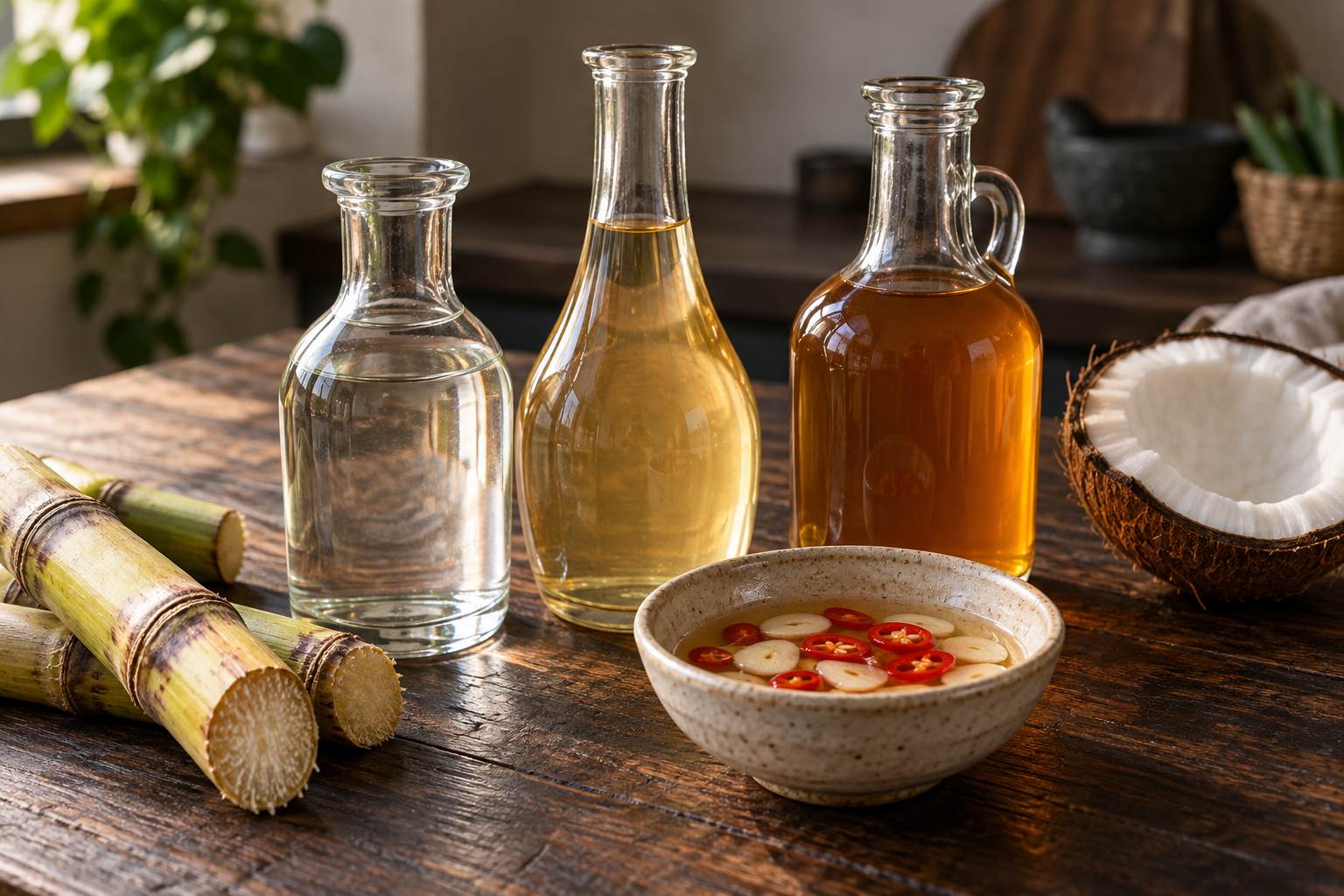
What is Filipino vinegar? The short answer
Filipino vinegar is called suka. It is not one single recipe or flavour: it is a broad family of fermented vinegars made from locally available sources such as sugar cane, coconut water, coconut palm sap and nipa palm sap. Depending on the raw material, producer and region, a bottle may taste clean and sharply sour, mellow and rounded, lightly sweet or distinctly aromatic.
Suka is both a cooking ingredient and a table condiment. It brings acidity to adobo and paksiw, seasons marinades and pickles, and forms the base of sawsawan—dipping sauces mixed to suit a particular dish or diner. SBS Food identifies sourness as central to Filipino cuisine and lists four main native vinegar types: sugar cane, coconut water, coconut palm and nipa palm. That variety is why choosing a Filipino vinegar by its base ingredient is more useful than treating every bottle as interchangeable.
Start with our beginner’s guide to Filipino food →Learn why Filipino food balances more than chilli heat →
What does suka mean?
Suka is the Filipino word commonly used for vinegar. On a grocery label, you may also see a more specific name beginning with sukang, which links the vinegar to its ingredient, place or style. Sukang niyog refers to coconut vinegar; sukang tuba to vinegar made from fermented coconut palm sap; and sukang Paombong to the nipa-sap vinegar associated with Paombong in Bulacan. Product wording varies, so the ingredient list remains the best guide to what is actually in the bottle.
The Philippine Food and Drug Administration’s draft revised vinegar guidance distinguishes vinegar made through alcoholic and subsequent acetous fermentation and recognises source-specific categories, including nipa-sap vinegar. That technical language matters because vinegar production happens in stages: sugars first become alcohol and are then converted into acetic acid. The finished liquid is valued in the kitchen for its acidity and flavour—not because every vinegar from the Philippines is made from the same crop or by one universal process.
The word can also describe a plain bottled vinegar or a seasoned table condiment. Ask which kind is meant when a recipe says only suka. A cook may want neutral cane vinegar for a braise, a fragrant coconut vinegar for dipping, or a ready-spiced vinegar whose garlic and chilli already change the dish.
The main types of Filipino vinegar
Filipino vinegar reflects agriculture and food traditions across an archipelago. The categories below are a practical starting point, not a complete map of every regional vinegar or household preparation. Fermentation time, filtration, ageing and added spices can make two bottles from the same raw material taste noticeably different.
Sugar-cane vinegar
Sugar-cane vinegar is often sold as sukang maasim or simply cane vinegar. It is a useful all-round choice for adobo, marinades and dipping sauces because many commercial versions have a direct, clean acidity. Read the ingredients rather than judging by colour: processing and brand style influence whether the vinegar is clear, pale gold or darker.
Coconut-water and coconut-sap vinegar
SBS distinguishes vinegar made from coconut water, sukang niyog, from coconut palm or tuba vinegar, sukang tuba. Coconut-sap vinegar begins with liquid collected from the coconut flower rather than the flesh of the coconut. The Philippine Coconut Authority describes coconut sap, or tuba, being allowed to ferment into vinegar. These products may be aromatic, but flavour and strength still depend on the maker.
Nipa-palm vinegar
Nipa-palm vinegar is associated particularly with Paombong in Bulacan and may be labelled sukang sasa, sukang nipa or sukang Paombong. In March 2026, the Provincial Government of Bulacan announced Project S.A.S.A., a community initiative intended to preserve authentic Sukang Paombong and the nipa-palm farming behind it. The regional name therefore points to living agricultural knowledge, not merely a flavour label.
How does Filipino vinegar taste?
The shared characteristic is acidity, but the experience is not identical to white distilled vinegar, apple-cider vinegar or malt vinegar. Cane vinegar can be relatively straightforward and bright. Coconut and palm vinegars can carry softer fermented aromas or faint fruit and sap notes. Unfiltered bottles may be more complex than highly refined commercial versions. None of those descriptions guarantees a particular brand’s flavour, so taste a small amount before committing it to a whole pot.
Filipino cooking often uses sourness alongside saltiness, sweetness and savoury depth. Vinegar can cut through fried or fatty food, sharpen a dipping sauce and keep a rich braise from tasting heavy. It should not automatically dominate. When following a recipe, begin with the specified vinegar and quantity; when adjusting at the table, add small amounts so the balance remains yours rather than becoming simply more acidic.
Colour is not a reliable quality score. A clear vinegar is not necessarily harsher, and a cloudy or amber bottle is not automatically more traditional. Look at the base ingredient, whether it is filtered or seasoned, the stated acidity when provided, the ingredient list and the maker’s storage directions.
How Filipino vinegar is used in cooking
Adobo is the most familiar example for many Australians. Vinegar, soy sauce or salt, garlic, bay leaf and pepper create a savoury-sour braising liquid, although proportions and additions vary widely between families and regions. The vinegar is part of the dish’s structure, not a splash added only at the end. Our Filipino chicken adobo recipe uses an SBS-tested method and explains how to balance the sauce without claiming one version is definitive.
Paksiw is another broad family of dishes cooked with vinegar, while marinades use suka to bring acidity before grilling or frying. Vinegar also appears in pickled preparations and in mixtures served with noodles, seafood, vegetables and grilled meats. SBS describes Filipino vinegar as being used to marinate, pickle, cure and braise. Those are culinary roles; they are not permission to improvise shelf-stable preservation or assume acid makes raw animal foods automatically safe.
For a first bottle, use it in a recipe written for Filipino vinegar. That provides a reference for its intensity. Once you know the product, try it in a small dipping sauce or use a measured amount to brighten a stew. Substituting freely in preservation recipes is different from seasoning dinner and requires a tested recipe with the correct acidity.
Cook Filipino chicken adobo →See how patis seasons Filipino food →
Sawsawan: vinegar at the table
Sawsawan is a general term for dipping sauce rather than one fixed formula. SBS notes common combinations including vinegar with crushed garlic or chillies, as well as fish sauce or soy sauce with calamansi. A vinegar sawsawan might be plain, spiced, salty or citrusy depending on the dish and the person mixing it. That freedom is part of its usefulness: the main food can be shared while each diner adjusts the dip.
For a simple home version, pour a small amount of cane or coconut vinegar into a clean bowl and add only the aromatics you enjoy, such as finely chopped garlic, sliced chilli or cracked pepper. Soy sauce adds salt and must be checked for wheat when allergies or gluten avoidance matter. Make only what you plan to serve, use clean utensils and refrigerate any prepared sauce promptly rather than returning a garlic- or chilli-infused mixture to the original bottle.
A sharp vinegar dip is especially useful with crisp and rich foods. Try it alongside lumpiang Shanghai, Filipino pork barbecue or pork crackle, keeping the dip separate so the fried surface stays crisp.
Make crispy lumpiang Shanghai →Order Hernandez pork crackle →
How to choose Filipino vinegar in Australia
Start with the purpose. For adobo or a recipe that names cane vinegar, choose an unseasoned cane vinegar so extra chilli, garlic or sugar does not alter the sauce. For dipping, coconut, palm or ready-spiced vinegar may offer more aroma. If a recipe names a specific type, matching the base ingredient is more dependable than choosing whichever bottle has the most dramatic label.
Read the ingredient list in full. Confirm whether the product is brewed or fermented vinegar, whether it contains added water, sugar, colour, salt or flavourings, and whether it is already spiced. Check the best-before date, seal and storage directions. Sediment or cloudiness can be expected in some unfiltered products, but do not assume every change is harmless; follow the producer’s advice and discard a bottle if the seal is damaged or its condition is doubtful.
Australian Filipino grocers are the simplest place to compare bottles because you can inspect the labels before buying. Hernandez Asian Delights stocks a changing range of Filipino groceries in Bunbury, so check the current store selection rather than relying on an article to promise a particular brand. Staff may also help explain which vinegar customers commonly choose for a dish.
Browse the Hernandez store →Use our Filipino grocery guide for Bunbury →
Can you substitute another vinegar?
For everyday cooking, an unseasoned rice vinegar can be a practical fallback when Filipino cane vinegar is unavailable, but it will not reproduce every flavour. White distilled vinegar may taste more forceful, while apple-cider, malt, wine and balsamic vinegars contribute their own fruit, grain or ageing character. A substitution is an adaptation, not proof that the products are identical.
Compare the acidity on the label when it is stated and avoid flavoured or sweetened vinegar unless the recipe is designed for it. Add a substitute gradually in sauces where adjustment is possible. For pickling, bottling or any food intended for long storage, use a tested recipe and the vinegar strength it specifies; changing the vinegar can change both flavour and safety.
Allergens, labels and food-safety checks
Plain vinegar may have a short ingredient list, but seasoned products and dipping sauces can be more complicated. Food Standards Australia New Zealand requires prescribed allergens to be declared in plain English when present. Check each bottle for ingredients such as soy or wheat-containing soy sauce, and check any companion seasoning rather than assuming the word vinegar describes the whole product.
Follow the label’s directions for storage before and after opening. Keep the cap and bottle neck clean and avoid dipping used spoons into the bottle. Once fresh garlic, chilli, onion or herbs are mixed into a separate sauce, treat that mixture as prepared food: make a small quantity, keep it cold if not serving immediately and do not use acidity as a substitute for good hygiene or temperature control.
If ordering Filipino vinegar from overseas or carrying it into Australia, check the current Biosecurity Import Conditions system before purchase. The Australian Department of Agriculture says travellers must declare specified food and that mailed goods must be accurately described; products that do not meet import conditions may be treated, exported or destroyed. Buying an Australian-stocked bottle avoids guessing about border rules.
Filipino vinegar is a category worth tasting
Understanding suka changes the question from “Which vinegar is Filipino?” to “Which Filipino vinegar suits this dish?” Cane, coconut-water, coconut-sap and nipa-palm vinegars come from different raw materials and regional traditions. Spiced varieties add another layer. There is no need to rank them as one authentic winner.
For an Australian pantry, an unseasoned cane vinegar is a versatile starting point. Add a coconut or nipa vinegar when you want to explore a more particular aroma or regional story. Taste deliberately, respect the recipe and read the label every time you change brands. That approach is more useful than chasing unsupported health claims or assuming any sour liquid will behave exactly the same.
Explore Hernandez catering →Plan a Filipino catering menu in Bunbury →
Frequently asked questions
What is Filipino vinegar called?
Filipino vinegar is commonly called suka. More specific names identify the source or style, such as sukang niyog for coconut vinegar, sukang tuba for coconut-palm-sap vinegar and sukang Paombong for nipa-palm vinegar associated with Paombong in Bulacan.
What is the best Filipino vinegar for adobo?
An unseasoned cane vinegar is a versatile choice and suits many published adobo recipes, but families use different vinegars. Follow the recipe you have chosen, avoid a pre-spiced product unless requested and adjust only after you understand the vinegar’s strength and flavour.
Is coconut vinegar made from coconut flesh?
Not necessarily. Filipino coconut vinegar may be made from coconut water or from coconut palm sap, also called tuba. SBS treats these as distinct native vinegar types. Read the ingredient list to learn which liquid was fermented in the bottle you are buying.
What is the difference between Filipino vinegar and white vinegar?
White distilled vinegar is usually neutral and direct, while Filipino cane, coconut and palm vinegars can retain flavours from their raw material and fermentation. The exact difference depends on the products, so compare ingredients and stated acidity rather than relying only on colour.
Can I bring Filipino vinegar into Australia?
Do not assume every product is permitted. Check the current Australian BICON requirements for the product and all its ingredients before travelling or ordering from overseas. Declare food when required and describe mailed goods accurately. Australian-stocked products are the simpler option.
Keep exploring Filipino food and culture



Taste it in Bunbury
Bring Filipino flavour to your next gathering.
Explore catering from Hernandez Asian Delights or visit Michael and the team at 36 Charles Street, Bunbury.