· 9 min read
Why Is Filipino Spaghetti Sweet? An Australian Guide
Why is Filipino spaghetti sweet? Learn what shapes its sauce, why hotdogs and cheese belong, how versions vary and what Australians can expect.
Why is Filipino spaghetti sweet? The short answer
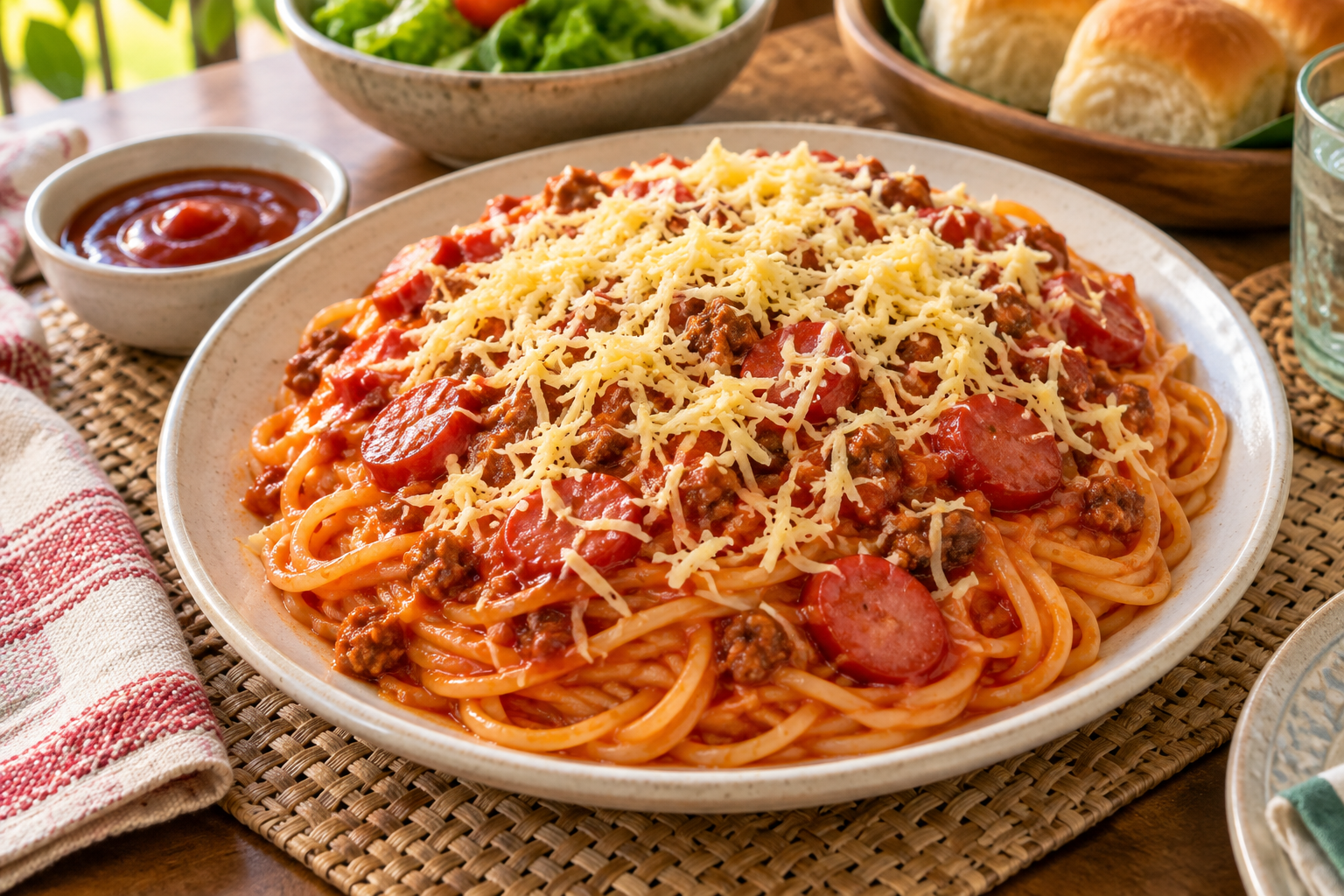
Filipino spaghetti is sweet because its sauce is deliberately built that way. Many versions combine a tomato-based sauce with Filipino-style spaghetti sauce, banana ketchup or added sugar, then balance that sweetness with browned minced meat, garlic, onion, savoury seasoning and cheese. Sliced red hotdogs or other sausages are also common. The result is not intended to imitate an Italian ragù exactly; it is a Filipino dish with its own familiar flavour and party-table identity.
An SBS Food account by Filipino-Australian writer Nikki Alfonso-Gregorio describes the dish as bright red, sweet, topped with minced meat and sliced hotdogs, and closely connected with children’s parties. Her accompanying recipe uses Filipino-style spaghetti sauce, banana ketchup, minced beef and pork, hotdogs, cheese and optional sugar. That is a useful documented example, not a rule for every household. Families adjust sweetness, meat, sauce, cheese and noodle texture to suit their own table.
Start with the beginner’s guide to Filipino food →Read whether Filipino food is usually spicy →
Filipino spaghetti is a distinct dish, not a mistake
The quickest way to misunderstand Filipino spaghetti is to judge it only against the expectations of Italian pasta. Its sweetness, red colour, hotdog slices and cheese can surprise an Australian diner who expects a herb-forward tomato sauce or a long-simmered beef ragù. Those differences are the point. The dish has developed a recognisable Filipino profile and should be introduced by its own name rather than presented as a faulty version of something else.
That does not mean taste is compulsory. Some diners love the sweet-savoury combination immediately; others need a few bites to understand it, and some will simply prefer another pasta. Respectful curiosity allows all three reactions. Describe the dish before serving it, avoid promises that it tastes like conventional bolognese, and let guests approach it as they would any unfamiliar regional or family food: on its own terms.
Where the sweetness comes from
There is no single formula. In the SBS version, sweetness can come from Filipino-style spaghetti sauce, banana ketchup and sugar added to taste. Other household recipes may rely more heavily on one of those elements, use a sweeter commercial tomato sauce, or add less sugar. This is why two plates that look similar can taste noticeably different. The label matters more than assumptions: check the ingredient list and nutrition information on any prepared sauce you buy in Australia.
Banana ketchup is often central to the explanation, but its name can mislead first-time diners. It is a Filipino condiment made in styles that combine fruit, acidity, sugar, salt and spices; commercial formulas vary. In spaghetti sauce it contributes sweetness, tang, seasoning and body rather than making the meal taste simply like fresh banana. Some cooks use it alongside tomato sauce, while prepared Filipino-style spaghetti sauces may already supply the sweet profile.
Use the Filipino grocery guide for Bunbury →Visit Hernandez Asian Delights in Bunbury →
Why it still tastes savoury
Sweetness is prominent, but a satisfying Filipino spaghetti sauce is not just sugar on noodles. Garlic and onion create an aromatic base. Minced beef, pork or a mixture adds browned flavour and richness. Hotdogs or sausages bring salt and a springy texture. Stock seasoning, pepper and cheese can deepen the savoury side. Tomato and vinegar-containing condiments contribute acidity, which helps keep the sauce lively rather than flat.
The useful tasting question is therefore not ‘how do I remove every trace of sweetness?’ but ‘is the sweet-savoury balance working?’ A sauce can taste cloying when it lacks salt, acidity or browned meat flavour, just as it can lose its Filipino party-food character when treated exactly like an Italian ragù. Make adjustments gradually and taste the complete spoonful with pasta and cheese before deciding what the sauce needs.
What hotdogs and cheese contribute
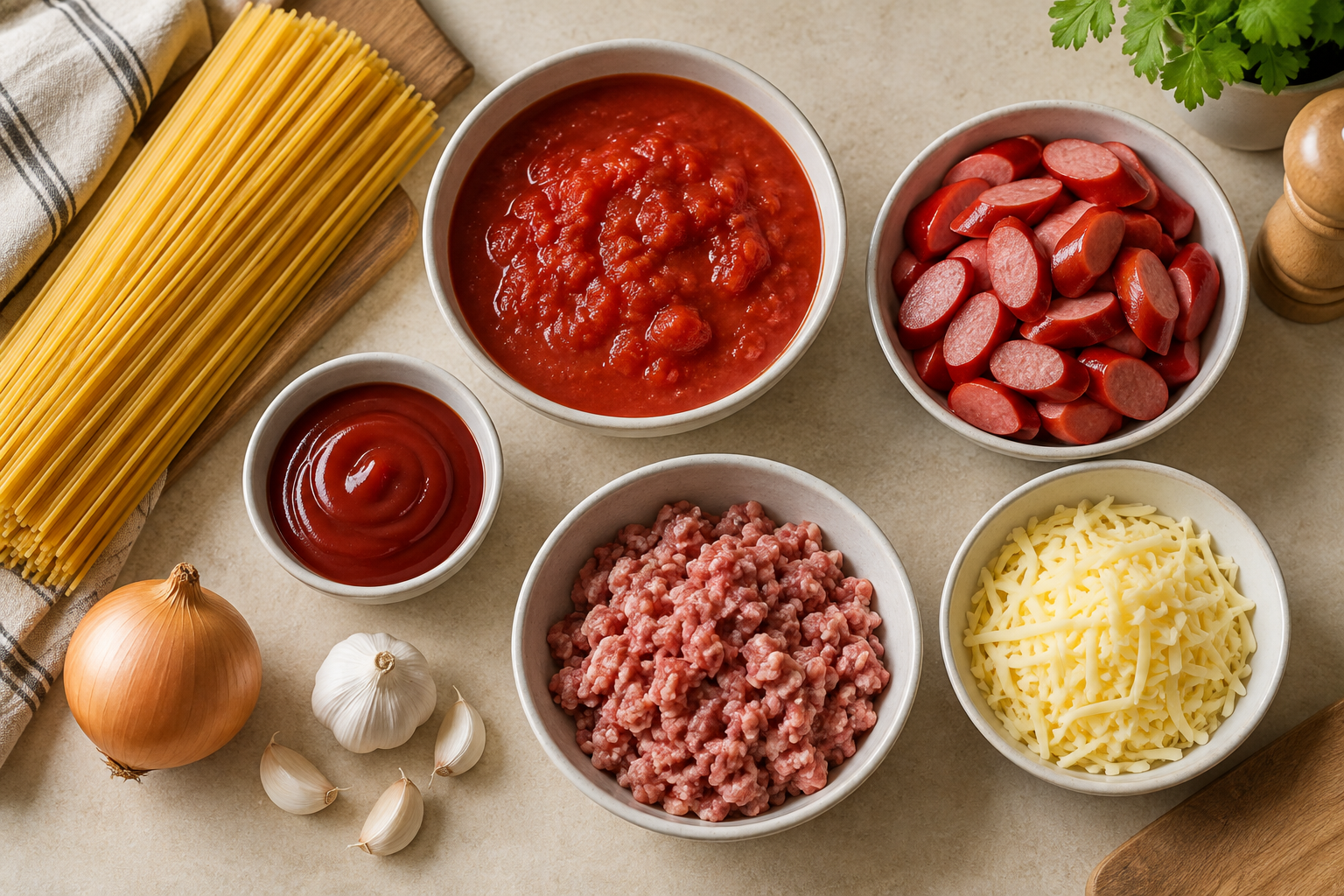
Sliced red hotdogs are among the dish’s most recognisable features. They add colour, salt, meatiness and a soft, bouncy bite that contrasts with minced meat and noodles. The SBS recipe simmers them in the sauce rather than serving them only as a garnish. Other families use different sausages or omit them, so the presence of hotdogs is common without being a test of whether every plate is legitimate.
Grated cheese adds a salty, creamy finish. It may be scattered over each serving or stirred partly into the sauce. A mild cheddar-style or processed cheese can soften the tomato’s acidity and make the dish feel especially generous. Australians should not assume parmesan is the automatic choice: the familiar Filipino presentation often uses a milder, easily melting cheese. Read labels because both sausages and cheese vary in salt, allergens and ingredients.
Is there one authentic Filipino spaghetti recipe?
No single recipe represents every family, region or generation. The shared pattern is more useful than a rigid checklist: spaghetti noodles with a noticeably sweet red meat sauce, frequently including banana ketchup or Filipino-style sauce, hotdogs and grated cheese. Within that pattern, cooks make practical decisions about available ingredients, budget, the age of guests and the flavour remembered from home.
One kitchen may combine beef and pork mince; another may use only one meat. Some cooks want a thick sauce that clings firmly to the noodles, while others prefer it looser. Sweetness ranges from gentle to unmistakable. Even noodle texture can reflect family preference. When learning from a Filipino cook, ask what their version means to them rather than using the internet to announce that one variation is the only correct one.
Explore Filipino fiesta traditions →Learn about Filipino merienda →
Why the dish is associated with celebrations
Filipino spaghetti is widely recognised as party food, particularly in the childhood memories described by Filipino writers. Alfonso-Gregorio recalls it as a focal point at birthday spreads alongside fried chicken, sandwiches, pork barbecue and hotdogs on sticks. Her story explains why sweetness cannot be separated neatly from emotion: for many people, the flavour points to birthdays, cousins, busy tables and food prepared to please a crowd.
Personal memory is evidence of lived experience, not proof that every Filipino celebration looks the same. Some households serve spaghetti at birthdays; others choose pancit, rice dishes, barbecue, stews or foods linked to their region. The safest cultural explanation is specific: sweet spaghetti is a familiar Filipino celebration dish and a strong source of nostalgia for many people, but it is neither mandatory nor the whole story of Filipino party food.
What should an Australian diner expect?
Expect a comforting, approachable plate rather than a chilli-hot one. The dominant impression is usually sweet tomato-like sauce, followed by savoury mince, sausage and cheese. Garlic and onion sit underneath, and the noodle may be softer than an al dente Italian serving. The sauce is often vivid red. None of those observations guarantees a particular recipe, but they prepare a newcomer better than calling it ordinary spaghetti.
Try a modest portion first and include the intended topping. Cheese and hotdog change the balance, so tasting plain sauce does not give the full experience. If a Filipino host explains how their household makes it, listen before comparing. A useful response is descriptive—sweet, tangy, cheesy, meaty—rather than ranking one culture’s comfort food by another cuisine’s standards. Curiosity makes the table easier for everyone.
Choosing ingredients in Australia
For home cooking, begin with a recipe from a trusted Filipino source and buy by function. You need pasta, a sweet red sauce component, aromatics, minced meat if used, sausages if used and cheese. Banana ketchup and Filipino-style spaghetti sauce may be stocked by Asian grocers, but brands and availability change. Hernandez Asian Delights can help Bunbury shoppers explore Filipino pantry ingredients; contact the store for current stock rather than relying on an article as a product guarantee.
If you substitute, say what changed. Tomato ketchup is not identical to banana ketchup, and a standard Australian pasta sauce may be less sweet than a Filipino-style sauce. Different sausages also change salt, smoke and texture. Add sweetness in small stages, keep enough acidity and savouriness, and avoid disguising the result as a family recipe you have not learned. A transparent adaptation is more respectful—and easier to improve—than a claim of universal authenticity.
Allergens and dietary questions
Filipino spaghetti is not automatically suitable for any special diet. Wheat is typical in conventional spaghetti. Cheese contains milk. Soy may appear in sauces, stock products or sausages, while egg, gluten-containing cereals, sulphites and other prescribed allergens can occur depending on the brand. FSANZ requires prescribed allergens to be declared using required names on packaged foods sold in Australia, so compare every label instead of relying on the dish name.
Vegetarian, halal, gluten-free and dairy-free versions require deliberate ingredient choices and honest communication. Removing mince does not make a dish vegetarian if the sauce, stock or sausage contains animal ingredients. A gluten-free pasta does not solve allergens elsewhere in the meal. For catering, tell the provider about needs before ordering and ask what can be confirmed. Do not promise an allergen-free serving unless cross-contact controls and every ingredient have been checked.
Plan a Filipino catering menu in Bunbury →Request catering from Hernandez →
Cook, cool and reheat it safely
Brown minced meat thoroughly, cook sausages according to their package directions and keep raw meat utensils away from cooked food. When catering or serving vulnerable people, use a clean thermometer and follow current Australian guidance rather than judging safety by colour alone. Serve hot food hot. If spaghetti will remain on a buffet, time and temperature control matter because cooked pasta and meat sauce are potentially hazardous foods.
For leftovers, divide a large batch into shallow containers so it cools quickly, cover and refrigerate. FSANZ’s business guidance requires potentially hazardous food to cool from 60°C to 21°C within two hours and then to 5°C within a further four hours. Reheat rapidly until steaming hot, and avoid repeated cycles of warming and cooling. Those standards are especially useful for party-sized pots, where a deep container can hold heat for a long time.
Serving Filipino spaghetti at a Bunbury gathering
Tell guests what the dish is before they reach the table: Filipino-style sweet spaghetti with meat, sausage and cheese, if that is what you are serving. Place allergen information where it can be checked and provide clean utensils. For a varied menu, balance the soft, saucy pasta with crisp or grilled items, vegetables and other shared dishes. Hernandez catering options and the dedicated pork crackle page can help you explore a wider Filipino spread, subject to current menu details and dietary discussions.
The best introduction is confident and accurate. Filipino spaghetti does not need to apologise for being sweet, and it does not need a dramatic origin story to justify itself. It is a contemporary comfort food shaped by Filipino ingredients, preferences and family practice. Serve it generously, explain that versions vary, and let the combination of sweet sauce, savoury meat, hotdogs and cheese answer the question at the table.
See Hernandez catering and experiences →Order Hernandez pork crackle →
Frequently asked questions
Why does Filipino spaghetti use banana ketchup?
Banana ketchup can add sweetness, tang, seasoning and body to the red sauce. It is commonly combined with tomato-based sauce rather than used as the only ingredient. Recipes and commercial products vary, so read the label and follow a trusted Filipino recipe when cooking it for the first time.
Does Filipino spaghetti taste like banana?
Usually it tastes primarily sweet, tangy, tomato-like, meaty and cheesy rather than like a fresh banana. Banana ketchup is a seasoned condiment, and its flavour is integrated with tomato sauce, garlic, onion, mince, sausage and cheese. The exact result depends on the recipe and brand used.
Are hotdogs essential in Filipino spaghetti?
Sliced red hotdogs are a very recognisable and common ingredient, but family versions differ. Some cooks use another sausage, change the meat or omit it. It is more accurate to describe hotdogs as characteristic of many versions than to make them a universal rule.
Is Filipino spaghetti spicy?
It is usually known for sweetness rather than chilli heat. Pepper, spicy sausage or hot sauce can make a particular version hotter, but diners should not assume that from the dish name. Ask the cook or caterer about the actual sauce and ingredients.
Can I buy ingredients for Filipino spaghetti in Bunbury?
Asian grocers may carry banana ketchup, Filipino-style spaghetti sauce and suitable sausages, but stock changes. Visit or contact Hernandez Asian Delights for current availability. Standard pasta, mince, onion, garlic and cheese are widely available, while substitutions should be labelled honestly because they change the flavour.
Keep exploring Filipino food and culture



Taste it in Bunbury
Bring Filipino flavour to your next gathering.
Explore catering from Hernandez Asian Delights or visit Michael and the team at 36 Charles Street, Bunbury.