· 9 min read
Filipino Pork Sinigang Recipe: A Sour Soup for Australian Kitchens
Cook a Filipino pork sinigang recipe with tamarind, tender pork and vegetables. Includes Australian ingredient options, clear steps and troubleshooting.
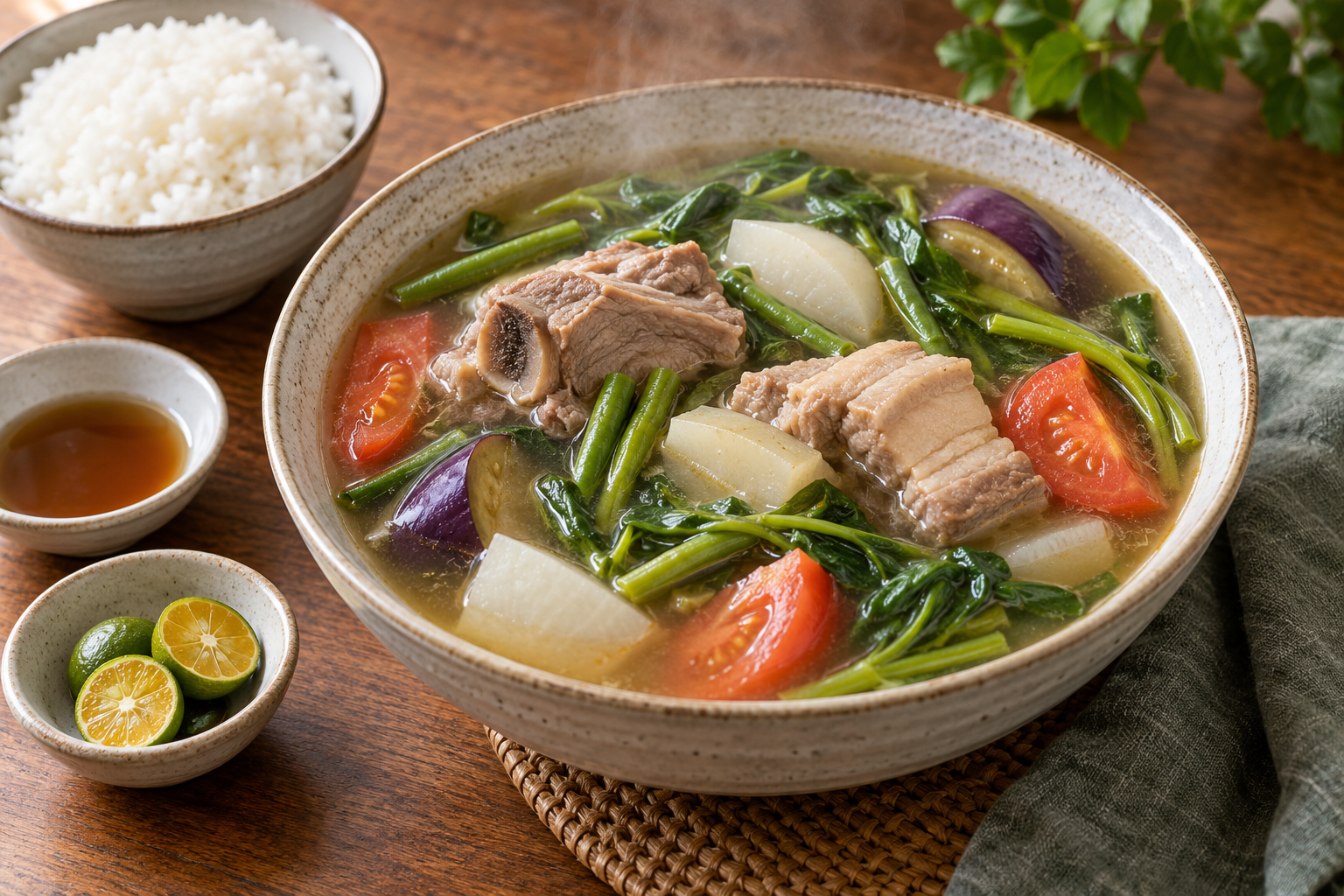
What is pork sinigang?
Pork sinigang, or sinigang na baboy, is a Filipino soup in which pork and vegetables are cooked in a distinctly sour broth. Tamarind, called sampalok in Filipino, is one of the best-known souring agents, although Filipino cooks also use fruits and leaves that suit their region, season and family preference. The aim is not sourness alone: a satisfying bowl balances tartness, savoury pork broth and salt, with vegetables providing freshness and texture.
This Filipino pork sinigang recipe follows the practical shape of Yasmin Newman’s SBS Food version: pork ribs and belly, onion, tomatoes, tamarind, eggplant and long beans. It is written for an Australian kitchen with metric quantities and realistic shopping alternatives. It makes four to six servings and takes about 20 minutes to prepare and 45 minutes to cook. Treat it as a dependable starting point rather than the only authentic version; sinigang changes across households and regions.
Understand patis before seasoning the broth →Browse the Filipino pantry guide for Bunbury →
Why sinigang tastes sour—and why that matters
Sourness is the organising flavour of sinigang, not an accidental sharp note added at the end. Tamarind pulp gives the broth a rounded fruit acidity that works with the richness of pork. Tomato contributes gentler acidity and body. Salt or patis makes those flavours clearer, while plain rice softens each spoonful. A good broth can make your mouth water without tasting harsh, thin or aggressively salty.
The Philippine Forest Management Bureau’s guide to plants used in urban greening describes sampaloc as Tamarindus indica and specifically connects its fruit with sinigang. Kew Science recognises Tamarindus indica as an accepted species used for food. These botanical facts are useful, but they do not make tamarind the only correct choice. Guava, green mango, kamias and other sour ingredients appear in different sinigang traditions; what is familiar depends on place and family.
Ingredients for Filipino pork sinigang
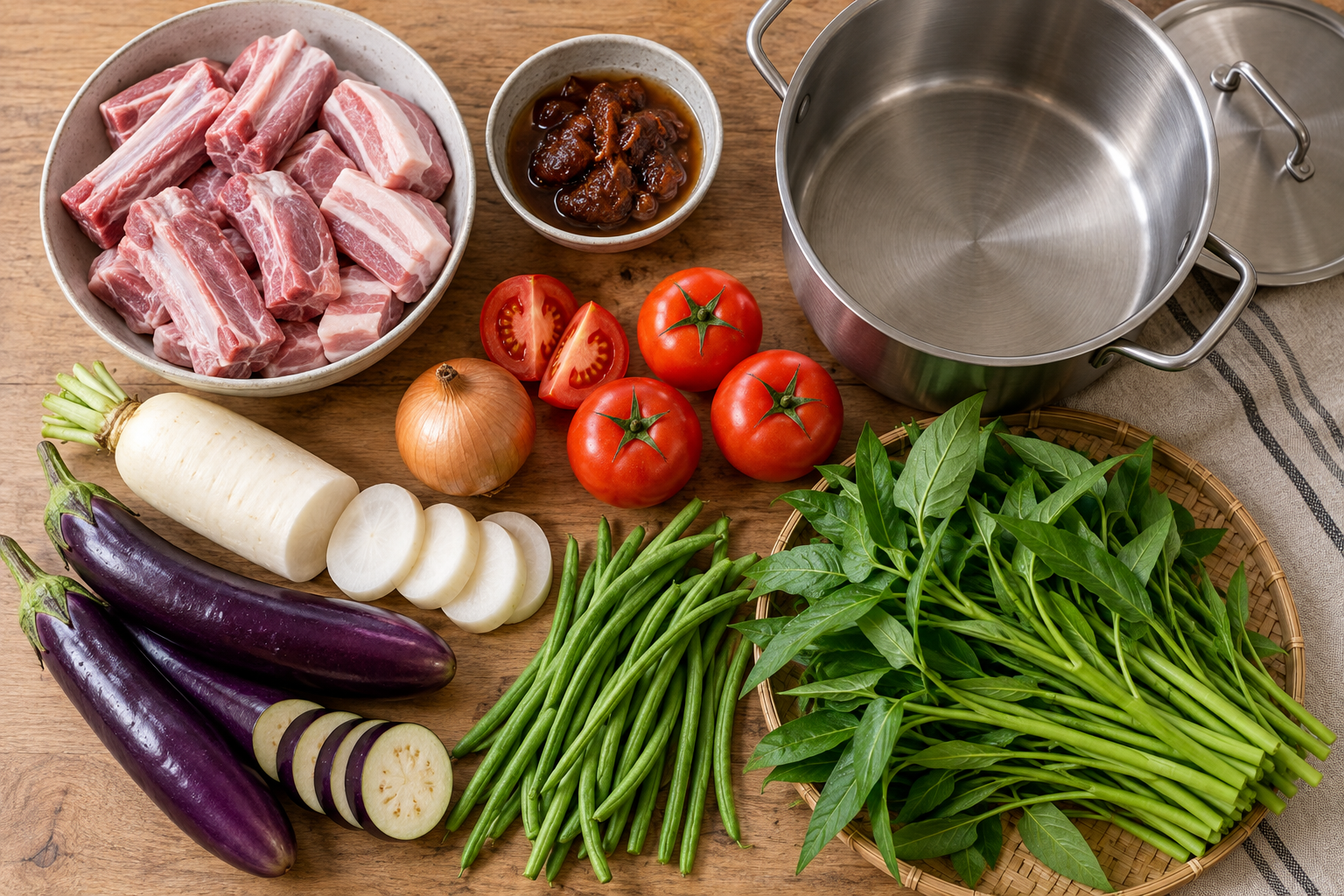
For four to six servings, use 60 ml neutral vegetable oil; 500 g pork ribs separated into individual ribs; 500 g skinless pork belly cut into roughly 4 cm pieces; one large brown onion cut into wedges; three ripe tomatoes cut into wedges; one small red capsicum cut into wedges; 100 g packaged tamarind pulp; 250 ml boiling water; and 1.5 litres water for the broth. For the vegetables, use one Japanese eggplant sliced thickly, 200 g snake beans or green beans, and about 150 g daikon radish cut into bite-sized wedges. Have salt, black pepper, spring onion, steamed rice, patis and calamansi or lemon ready for serving.
SBS’s source recipe includes fresh horseradish, while many familiar sinigang bowls use labanos, or radish. This version uses daikon because it is widely recognisable in Australian greengrocers and provides a mild, juicy vegetable component. You may also add a small bunch of kangkong or water spinach for the final minute of cooking if available. Do not assume a packet soup base, tamarind concentrate and compressed pulp have equal strength: follow the product directions, check allergens and sodium, then adjust by tasting.
Learn about calamansi and Australian alternatives →Visit the Hernandez Asian Delights store →
Choosing pork and a souring agent in Australia
Ribs contribute bone and connective tissue to the broth, while belly adds richness and soft, substantial pieces of meat. Ask a butcher to cut the ribs small enough for a soup bowl, or use meaty spare-rib sections that fit your pot. Keep the belly pieces even so they tenderise at a similar rate. Pork shoulder is a leaner alternative, but it may require a longer gentle simmer; judge doneness by tenderness rather than the clock alone.
Compressed tamarind pulp is the clearest option for reproducing the SBS method. Soak it in boiling water, mash it thoroughly and strain away seeds and fibres. Bottled concentrate is convenient but strength varies, so add a small amount, simmer, taste and repeat. A commercial sinigang mix can be useful when fresh or compressed tamarind is unavailable, yet its ingredients may include salt, flavour enhancers or allergens. Never add the full packet and extra salt before tasting.
How to cook pork sinigang step by step
First, prepare everything before the pot gets hot. Separate the ribs, cut the belly and vegetables, wash the produce under running water, and keep raw pork utensils away from rice and garnishes. Heat two teaspoons of the oil in a large heavy-based saucepan over medium-high heat. Brown the ribs for about four minutes, turning for colour, then move them to a clean plate. Add another two teaspoons of oil, brown the belly for about four minutes and transfer it beside the ribs.
Reduce the heat to medium and add the remaining oil. Cook the onion for two minutes, scraping up the browned savoury bits. Add tomatoes and capsicum and cook for about four minutes until they begin to soften. Return the pork, add 1.5 litres water and bring to a boil. Lower the heat to a steady simmer, skim excessive foam if necessary and cook for 15 minutes.
While the pork simmers, place the tamarind pulp in a heatproof bowl and pour over 250 ml boiling water. Leave it for 15 minutes, mash well, then push the liquid through a fine sieve into a clean bowl. Discard the seeds and fibres. Stir the strained tamarind liquid into the pot and simmer for five minutes. Add radish and eggplant and cook for about five minutes; add beans and cook for a further three to five minutes, or until the pork and vegetables are tender.
Taste the broth before adding salt. Season gradually with salt, patis or a combination, then add black pepper. If using kangkong, stir in the leaves and tender stems for the final minute, just until wilted. Ladle into a large bowl, scatter with spring onion and serve hot with steamed rice, citrus and patis at the table. Diners can adjust their own bowl without making the whole pot too salty.
How to balance the broth
Taste in a deliberate order. First ask whether the broth is sour enough to feel refreshing. If not, add a little more strained tamarind or diluted concentrate and simmer for two minutes. Next assess salt: add patis or salt in small increments. Finally, consider body. If the broth seems watery, simmer uncovered briefly; if it is too intense, add hot water in 60 ml amounts and let the pot return to a simmer before tasting again.
Do not try to correct everything with sugar. Some tomatoes and commercial souring products bring sweetness, but classic sinigang is defined by a savoury-sour profile rather than a sugary one. If acidity seems sharp, more broth, properly cooked pork and a little salt may create balance more naturally. Remember that rice and table condiments change the eating experience, so taste a spoonful with rice before making the final adjustment.
Vegetables, substitutions and regional variation
Eggplant, long beans, radish and kangkong are a useful combination because they cook at different speeds and absorb the broth differently. Add firm radish first, eggplant next, beans near the end and leafy greens last. Australian green beans can replace snake beans without changing the cooking logic. Baby spinach may stand in for kangkong in a practical home version, although its texture and flavour are not identical, so name the substitution honestly.
Sinigang is a family of sour soups rather than one locked ingredient list. Pork can be replaced by fish, prawns or beef in other versions, and the souring fruit can change. Those are not small variations to conceal under one recipe: seafood timing and allergy considerations differ, and a guava-soured broth tastes unlike tamarind. Learn this pork version first, then explore deliberately. Variation is part of the dish’s living tradition, not evidence that accuracy does not matter.
Common sinigang problems and fixes
Tough pork usually needs time, not higher heat. Keep the broth at a gentle simmer and test another piece after 10 minutes; hard boiling can make the liquid cloudy and break delicate vegetables before connective tissue softens. Greasy broth can be improved by skimming fat from the surface with a shallow spoon. For a make-ahead pot, chill it safely and lift away the firm fat before reheating.
Mushy vegetables come from adding everything together. Stage them from firmest to most delicate and stop when each is just tender. If the soup is bland despite enough salt, it may need more tamarind rather than more patis. If it is too salty, add unsalted hot water and extra vegetables; more acid will not remove sodium. Keep a note of the exact tamarind product and quantity that worked because concentration varies between brands and formats.
Serving sinigang as a complete Filipino meal
Serve sinigang in a deep communal bowl with plain steamed rice in a separate dish. Each person can spoon broth, meat and vegetables over or beside their rice. A small saucer of patis with calamansi or lemon allows individual seasoning, but fish sauce contains fish and can be high in sodium, so it should remain clearly identified rather than mixed invisibly into a shared condiment.
For a larger gathering, pair the soup with contrasting textures rather than another heavy stew. A vegetable dish, noodles or crisp pork can make a generous spread, but confirm menu choices, portions and dietary needs with the caterer. Hernandez offers Filipino catering in Bunbury and the South West; the current packages and inclusions are the authoritative guide for what is available, not assumptions made from a recipe article.
Plan Filipino catering in Bunbury →Request catering from Hernandez →Order Hernandez pork crackle →
Food safety, storage and reheating
FSANZ advises using clean equipment, separating raw meat from ready-to-eat food and cooking food thoroughly. For this soup, simmer until the pork is tender and cooked through, then serve piping hot. Anyone using a thermometer should check a representative thick piece without touching bone. Wash fresh vegetables under running water, and check every packaged souring mix or condiment for its ingredient and allergen statement.
Cool leftovers quickly in shallow containers rather than leaving a large, deep pot on the bench. FSANZ’s food-business standard specifies cooling potentially hazardous food from 60°C to 21°C within two hours and then to 5°C within another four hours; its home guidance says to refrigerate perishables at 5°C or colder and use leftovers within a few days. Reheat rapidly until piping hot, stir so meat and broth heat evenly, and avoid repeated cooling and reheating.
A dependable sour soup worth learning
A good Filipino pork sinigang recipe is built on judgement as much as measurements. Brown the meat for savoury depth, simmer it gently, extract tamarind carefully, add vegetables in stages and season only after tasting. These habits produce tender pork, distinct vegetables and a broth that is bright without being one-dimensional.
Once you understand that sequence, you can adjust the vegetables and sourness to suit the ingredients available in Australia while still naming your changes. Keep the rice plain, place patis and citrus at the table, and let the broth remain the centre of the meal. That combination of comfort, acidity and shared serving explains why sinigang is so memorable without reducing a diverse Filipino dish to one supposedly definitive version.
Frequently asked questions
What does sinigang taste like?
Sinigang tastes distinctly sour, savoury and brothy. In pork sinigang, tamarind and tomato cut through the richness of the meat, while salt or patis sharpens the flavour. The ideal intensity is personal, so add the souring agent gradually and taste with rice before final seasoning.
Can I make pork sinigang without fresh tamarind?
Yes. Packaged tamarind pulp, tamarind concentrate or a labelled sinigang mix can be used, but they are not equal in strength or composition. Follow the packet directions, add less than you think you need, simmer and taste. Check sodium and allergen information before adding extra salt or patis.
Which cut of pork is best for sinigang?
A combination of meaty ribs and pork belly gives both flavourful broth and tender meat. Shoulder can provide a leaner alternative but may need extra simmering. Whichever cut you choose, use evenly sized pieces and continue the gentle simmer until the pork is fully cooked and tender.
Is pork sinigang spicy?
It does not have to be chilli-hot. Its defining sensation is sourness. Some cooks or diners add green chillies for heat, but chilli can remain optional at the table. For more context, read the Hernandez guide to whether Filipino food is spicy.
Can sinigang be made ahead?
Yes. The broth and pork reheat well, although leafy vegetables are best added fresh so they stay bright. Divide the soup into shallow containers, refrigerate promptly at 5°C or colder, use within a few days and reheat rapidly until piping hot. Avoid cooling and reheating the same batch repeatedly.
Keep exploring Filipino food and culture



Taste it in Bunbury
Bring Filipino flavour to your next gathering.
Explore catering from Hernandez Asian Delights or visit Michael and the team at 36 Charles Street, Bunbury.