· 9 min read
What Is Pandan? An Australian Guide to the Fragrant Southeast Asian Leaf
What is pandan? Learn how the fragrant leaf tastes, how Filipinos use it, how fresh leaves differ from extracts and what Australian shoppers should check.
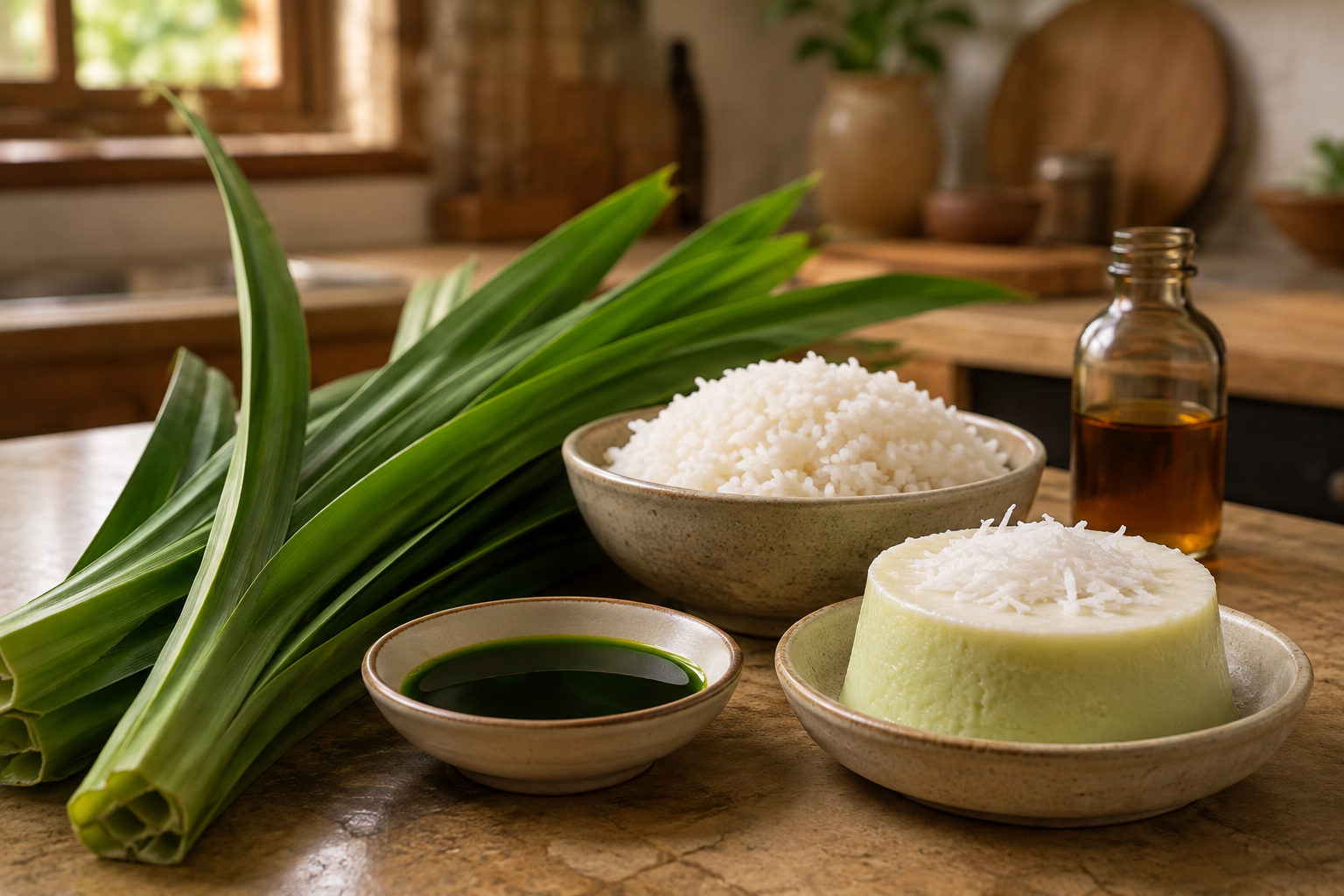
What is pandan? The short answer
Pandan is a fragrant tropical leaf used to perfume rice, drinks, cakes, puddings and other foods across Southeast Asia. The culinary plant usually meant by the name is Pandanus amaryllifolius. Its long green leaves contribute aroma and, when crushed or juiced, some natural green colour. Whole leaves are normally removed before the food is served.
In Filipino cooking, pandan is familiar in coconut desserts, rice-based sweets, syrups, cakes and drinks. Buko pandan—young coconut commonly combined with pandan-flavoured jelly and a creamy mixture—is one recognisable example, but it is not the only use. Recipes and family methods differ, and pandan is shared across many Southeast Asian cuisines rather than belonging to one country.
Australian shoppers may find fresh or frozen leaves, extract, paste, flavouring, powder and pandan-flavoured products. These forms are not automatically interchangeable. A recipe written for knotted fresh leaves may need aroma without strong colour, while a concentrated bottled product may supply flavour, colour or both. Read its label and follow the recipe rather than substituting by appearance alone.
Start with the beginner’s guide to Filipino food →Build a Filipino pantry in Bunbury →
Pandan is a plant, not simply a green flavour
Kew Science accepts Pandanus amaryllifolius as a distinct species in the Pandanaceae family and records its native range as Maluku, in present-day Indonesia. Singapore’s National Parks Board describes it as a perennial shrub or small tree with long, narrow leaves and lists food use as an herb or spice. It is one member of the much larger Pandanus genus.
That botanical detail matters because the common word ‘pandan’ can refer to different plants and non-food uses. Pandanus leaves are also woven into mats, baskets and other objects in several cultures. A decorative plant or woven item is not evidence that the material is the culinary P. amaryllifolius or suitable for eating. Buy leaves sold for food from a reputable grocery source.
The culinary leaf is sometimes called fragrant pandan, scented pandan or screwpine in English. Product labels may also say daun pandan, the Malay and Indonesian expression for pandan leaf. The scientific name is useful when comparing plant information, while cooks usually need the shorter everyday word.
What does pandan taste and smell like?
Pandan is valued mainly for aroma. People describe it with words such as grassy, floral, nutty, warm, sweet or reminiscent of fragrant rice. Those comparisons help a first-time shopper, but none is a precise substitute for smelling the leaf or tasting a food made with it. The leaf does not taste like a spoonful of sugar even when it appears in sweets.
It is often nicknamed ‘Southeast Asian vanilla’. That phrase communicates its importance in desserts, but it can also mislead. Pandan and vanilla are different plants with different aromas, and they are not a one-for-one substitution. Pandan is also used in savoury rice and drinks, while the intensity changes with the form, age and preparation of the ingredient.
Coconut and pandan are a particularly familiar pairing because pandan’s aroma can lift rich coconut milk or young coconut without replacing it. Glutinous rice, ordinary rice, cassava, gelatine or agar, dairy ingredients and bakery batters may also carry the flavour. A successful dish should still taste like its other ingredients rather than fluorescent colour alone.
Fresh leaves, frozen leaves, extract and paste
Fresh culinary pandan leaves are flexible green blades. Cooks may wash them, tie them into a knot and simmer or steam them with rice, syrup or coconut milk, then remove them. They can also be cut and processed with a small amount of liquid before the fibrous solids are strained out. The method depends on the dish and the strength of the leaves.
Frozen leaves can be a practical Australian option when fresh supply is limited. They are still leaves rather than a ready-to-use concentrate. Follow the package directions for storage and thawing, rinse if directed, and inspect the leaves after thawing. Do not assume a frozen packet requires the same quantity or timing as a specific fresh-leaf recipe.
Bottled pandan extract, essence or flavouring is concentrated and convenient, but names are not standard recipes. One product may be clear, another green; one may contain natural leaf extract, another permitted flavourings, colours, sweeteners or preservatives. A pandan paste may be more concentrated than an extract. The ingredients list tells you more than the colour of the bottle.
Pandan powder can be made or formulated in different ways, so check whether a product contains ground leaf, an extract carried on another ingredient or a dessert mix with sugar and starch. Use the form specified by a reliable recipe. If substituting, start with the manufacturer’s directions and adjust only after tasting.
How pandan appears in Filipino food
Buko pandan is among the most recognisable Filipino uses. The name combines buko, young coconut, with pandan. Versions may include pandan-flavoured jelly, young coconut strips and a chilled creamy mixture; some add other ingredients. It is better understood as a flexible dessert family than a formula that every household makes identically.
The Philippine Department of Science and Technology has documented buko pandan as a flavour in locally developed food products, demonstrating how familiar the pairing is in commercial as well as home cooking. Pandan may also perfume syrups used with taho, flavour cakes and breads, or add aroma to rice and coconut-based sweets.
Kakanin is a broad Filipino category of rice-based delicacies, and pandan may appear in some contemporary or family versions. However, green colour alone does not prove that a rice cake contains pandan: it could come from another ingredient or added colouring. Likewise, not every traditional rice cake is supposed to taste of pandan.
Pandan’s Philippine story sits within a wider Southeast Asian one. Singapore’s National Parks Board records its use in teas, desserts, rice dishes and jams, along with culinary practices from Indonesia and Thailand. Respectful explanation acknowledges this shared regional ingredient while naming the Filipino dish actually being discussed.
Learn what merienda means →Learn why rice matters in Filipino culture →Compare pandan with Filipino ube →
How to use fresh pandan leaves at home
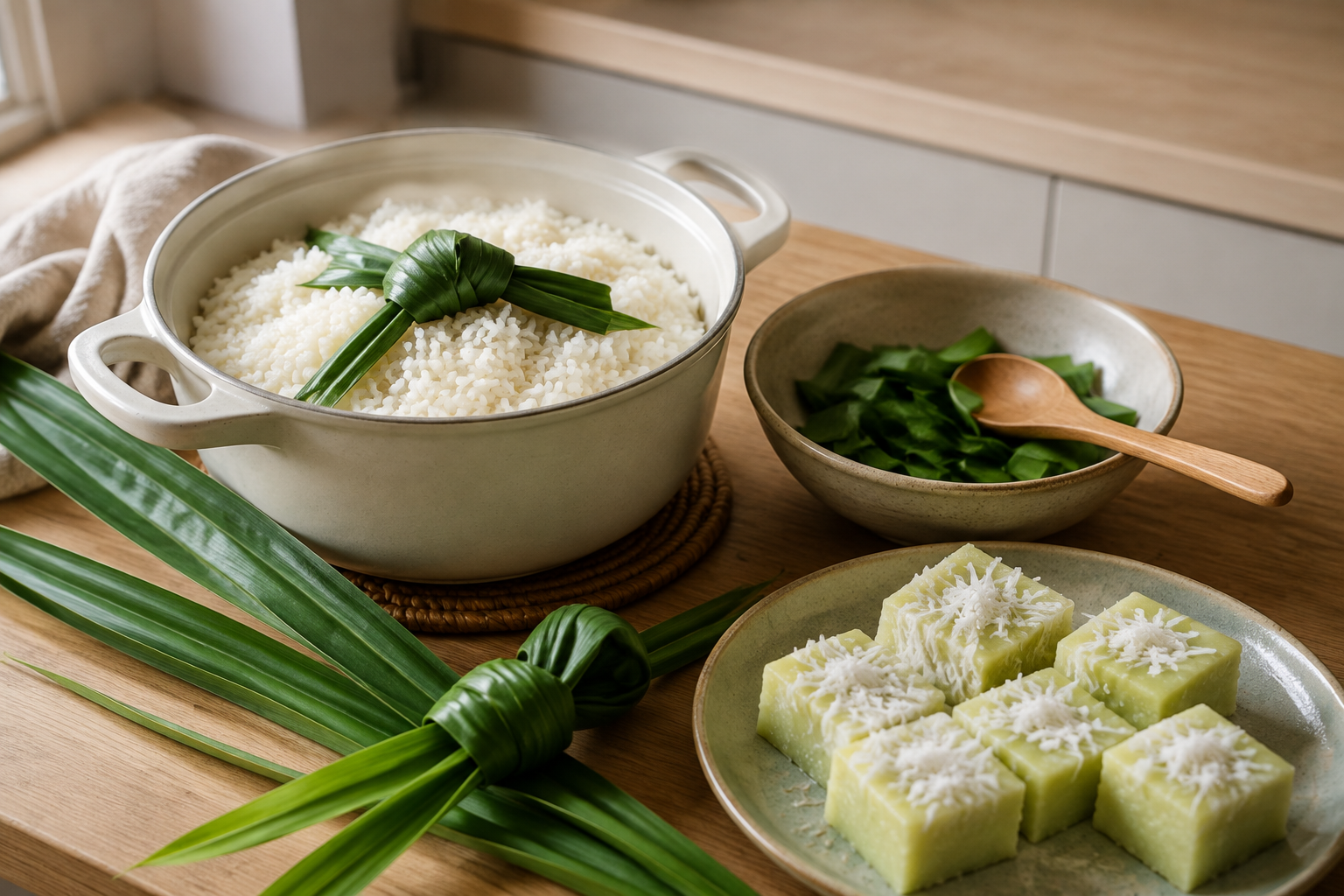
For a simple infusion, buy leaves intended for culinary use, keep them refrigerated or frozen as directed and wash fresh leaves under running water before preparation. Trim damaged ends. Tying one or more leaves into a loose knot makes them easier to retrieve from rice, coconut milk or syrup after they have released aroma.
Add the knot during the cooking stage directed by the recipe, then remove it before serving. Pandan leaves are fibrous; the National Parks Board notes that leaves used to flavour food are removed. Do not cut tough strips into a finished dish unless a tested recipe specifically instructs you to process and strain them.
For homemade pandan liquid, some recipes cut or blend leaves with water or another liquid and strain the pulp through a fine sieve or cloth. Use a recipe with measured quantities because extra liquid can change a cake, custard or jelly. Natural leaf juice can colour food green, but the result is often softer than commercial colouring.
A first experiment does not need to be elaborate. Infuse a pot of rice, a measured coconut syrup or a plain jelly recipe from a reliable source. Taste the finished food beside an unflavoured version. That comparison teaches more than adding several teaspoons of concentrated essence to an unfamiliar dessert.
Why pandan foods are sometimes bright green
Pandan leaves contain chlorophyll, and processed leaf juice can give food a natural green colour. Singapore’s National Parks Board specifically notes this effect. The exact shade depends on leaf concentration, processing, heat, acidity and the other ingredients, so natural pandan foods can range from barely tinted to a noticeable green.
A very bright dessert may contain added food colour, but colour alone cannot reveal the recipe. In Australia, packaged foods must list ingredients according to labelling rules, including additives where required. Check the label rather than assuming ‘green means natural’ or, conversely, that every vivid product is unsafe.
Flavour and colour should be considered separately. A clear essence can smell strongly of pandan, while green colouring has no reason to reproduce the leaf’s aroma. When baking or making jelly, choose a product for the function the recipe needs and measure carefully.
Buying pandan in Australia
Look in the refrigerated or frozen section for leaves and in the baking, dessert or flavouring aisle for bottled products. Asian and Filipino grocers may carry several forms, but stock, brands and pack sizes change. Phone the store if a particular form is essential rather than travelling on the assumption that it is always available.
For leaves, confirm that the package identifies them as food and gives storage instructions. For extract, essence, paste or powder, compare the product name, concentration directions and full ingredients list. Check the use-by or best-before date and make sure the container is intact. A green bottle is not enough information.
Do not bring fresh leaves or a live pandan plant into Australia from overseas without checking the rules. The Australian Department of Agriculture, Fisheries and Forestry directs travellers and importers to BICON because requirements depend on the plant material, country of origin and intended use. Live nursery stock generally needs an import permit and inspection.
Commercially packaged food already offered by an Australian retailer is the simplest purchasing route for most home cooks. If ordering from overseas, verify the current BICON conditions before paying or shipping. This article cannot determine permission for an individual consignment.
Allergens, dietary claims and safe storage
Pandan leaf itself is not one of the allergens that Food Standards Australia New Zealand lists among the foods causing most allergies locally. That does not make every pandan dessert allergy-safe. Cakes, breads, jellies, ice creams and buko pandan-style desserts may contain milk, egg, wheat, soy, nuts or other allergens depending on the recipe.
Read the complete ingredients list and bold ‘Contains’ statement on packaged food. FSANZ requires declared allergens to use plain English formatting. For unpackaged food, ask the business about ingredients and cross-contact. Never describe a green pandan dessert as vegan, dairy-free, gluten-free or nut-free from appearance alone.
Follow the label for refrigerating leaves, extracts and prepared desserts. Perishable coconut- or dairy-based foods should be kept at 5°C or colder, while hot food should remain above 60°C. FSANZ’s two-hour/four-hour guidance counts all time potentially hazardous food spends between those temperatures, including preparation, transport and display.
Finding Filipino ingredients and catering in Bunbury
Hernandez Asian Delights is at 36 Charles Street, Bunbury. Phone 08 9768 0755 to ask which pandan leaves, flavourings or pandan foods are currently available. This guide explains the ingredient; it does not promise a product, brand, price or dietary suitability.
When planning a catered event, ask what pandan desserts or drinks are available at that time and request ingredient information for your guests. A balanced Filipino menu might include savoury mains, rice, vegetables and a dessert, but pandan is optional rather than a requirement for a Filipino meal.
If the gathering also includes Hernandez pork crackle, keep it separately labelled and served with its own utensil. That lets guests distinguish a pork dish from pandan-flavoured sweets and makes the service plan easier to understand.
Explore Filipino catering packages →Request a tailored catering quote →Discover Hernandez pork crackle →
Frequently asked questions
Is pandan the same as vanilla?
No. Pandan and vanilla come from different plants and have different aromas. Pandan is sometimes nicknamed ‘Southeast Asian vanilla’ because it is important in desserts, but it also perfumes rice and drinks and should not be substituted for vanilla one-for-one.
Can you eat pandan leaves?
Culinary pandan leaves are used to flavour food, but whole leaves are fibrous and are normally removed before serving. When leaves are processed for juice or extract, the tough solids are strained out. Follow a tested recipe and buy leaves sold for food use.
Is pandan Filipino?
Pandan is important in Filipino cooking, including buko pandan and some rice, coconut and bakery foods. It is also used across Southeast Asia. It is more accurate to call it a shared regional ingredient and then name the specific Filipino dish or preparation.
Are pandan extract and pandan essence the same?
Not necessarily. Product names, concentration, ingredients and colouring vary between manufacturers. One bottle may contain leaf extract, while another uses flavouring and colour. Read the ingredients and directions, and use the form specified by your recipe.
Where can I buy pandan in Bunbury?
Ask a Filipino or Asian grocery store about fresh or frozen leaves, extract, essence, paste or powder. Hernandez Asian Delights is at 36 Charles Street, Bunbury; phone 08 9768 0755 before travelling if you need a specific pandan product because stock changes.
Keep exploring Filipino food and culture



Taste it in Bunbury
Bring Filipino flavour to your next gathering.
Explore catering from Hernandez Asian Delights or visit Michael and the team at 36 Charles Street, Bunbury.