· 9 min read
Office Catering Bunbury: A Filipino Food Guide for Workplace Events
Planning office catering in Bunbury? Build a practical Filipino menu for meetings, team lunches and workplace celebrations with this local guide.
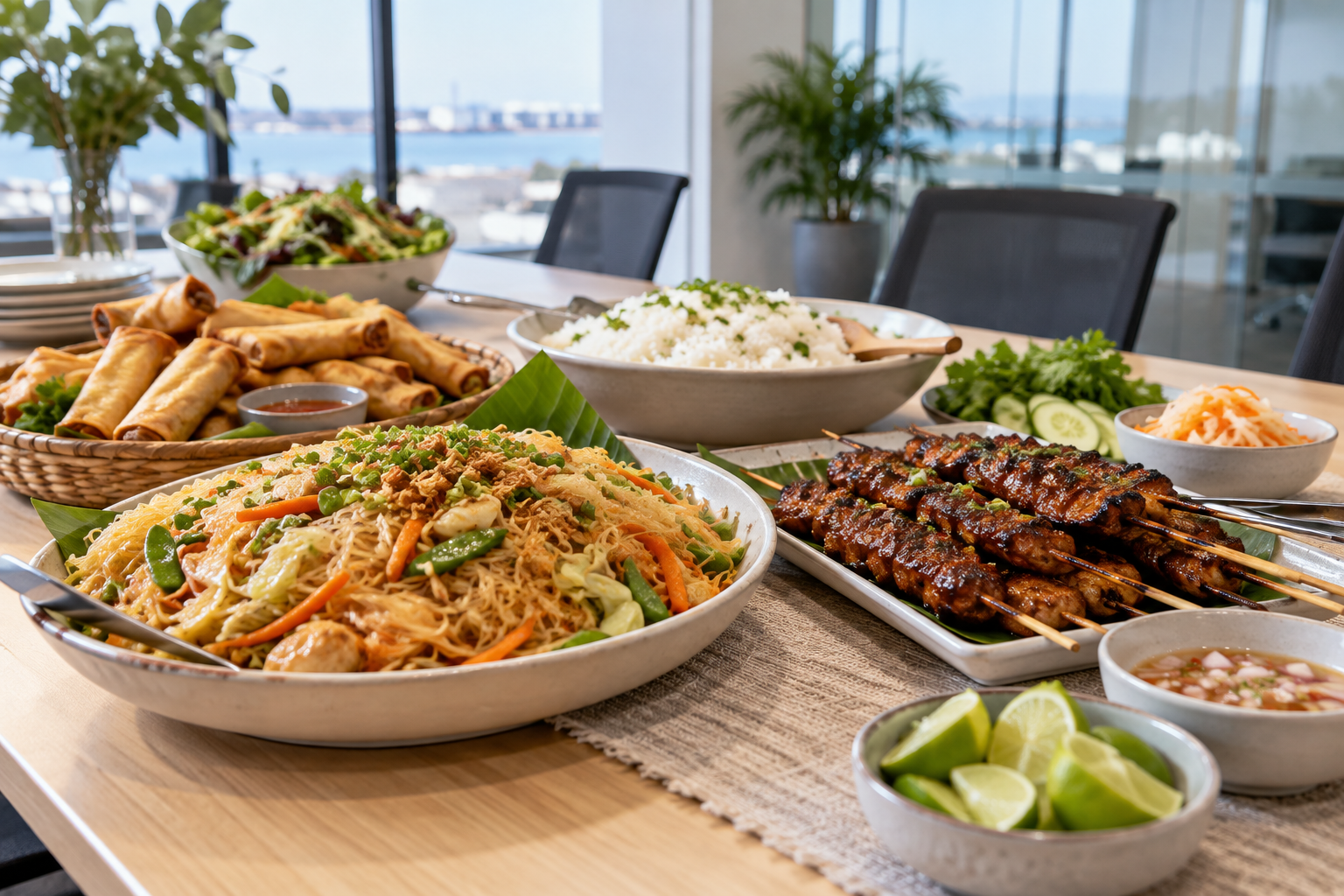
Office catering in Bunbury: the practical starting point
Good office catering in Bunbury begins with the working day, not with a long list of dishes. A useful order fits the event’s purpose, arrives when the room is ready, gives guests clear dietary information and can be served without turning the office kitchen into a bottleneck. Filipino food suits this style of gathering because a menu can combine substantial shared dishes with easy-to-handle finger food, rice, noodles and bright dipping sauces.
Start by telling the caterer what is actually happening: a short morning meeting, a seated training day, a relaxed team lunch, a client presentation or an after-work celebration. Include the confirmed headcount, serving time, workplace address, access instructions, available tables and whether people will eat seated or standing. Those details influence the right format far more than choosing a favourite dish in isolation.
This guide explains how to plan a Filipino-inspired workplace menu without assuming every guest knows the cuisine. It does not promise particular dishes, prices, delivery areas or dietary options from Hernandez Asian Delights; confirm the current menu and service arrangements directly when requesting a quote.
Explore Hernandez catering →See the beginner’s guide to Filipino food →
Match the catering format to the workplace event
A boardroom lunch needs a different service plan from a staff celebration. For a meeting with a tight agenda, choose food that can be plated quickly and eaten with minimal cutting. A buffet can work well for a longer team lunch because guests can choose their own combination, but it needs a clear serving route and enough space around the table. Finger food is useful when people are standing, networking or moving between presentations.
Morning and afternoon events usually need a lighter menu than lunch. Rather than ordering a full feast by habit, discuss whether the food is a snack, a complete meal or a social extra after the formal program. For all-day training, consider how the menu will feel across several hours: a substantial lunch, water and a modest later snack may be more useful than placing everything out at once.
The room matters too. Check whether the office has a lift, loading bay, visitor parking, stairs, security sign-in or a reception desk that closes at a particular time. Decide who will meet the caterer and where the food can be placed. If the event is in a hired venue or public space, ask the venue and the City of Bunbury about any applicable access, waste, event or food-service requirements before finalising the order.
Build a balanced Filipino office menu
A reliable shared menu has roles rather than a random collection of crowd favourites. Begin with one substantial centrepiece, add a carbohydrate that carries flavour, include one or two easy shared items, then use vegetables, fresh garnishes or a lighter side to keep the table varied. A dipping sauce can add brightness, but it should be served separately and labelled when it contains allergens.
For example, noodles such as pancit bihon can provide a familiar starting point for guests who have not eaten much Filipino food. A braised dish can anchor a buffet, while lumpiang Shanghai or grilled skewers can provide a crisp or smoky contrast. Steamed rice is useful with saucy dishes. These are planning examples, not a statement of current availability; ask which combinations the caterer recommends for your group and service format.
Choose dishes that work together
Avoid ordering several rich mains with no contrast. Think about texture as well as flavour: a tender braise, springy noodles, crisp finger food and a fresh or vegetable element create a more satisfying plate than four similar fried items. If the event includes unfamiliar food, keep the menu focused enough that labels and explanations remain clear.
Plan sauces and condiments deliberately
Filipino meals may include sawsawan, or dipping sauces, mixed for particular foods and personal tastes. Keep sauces in stable containers with their own utensils and place them where a queue will not block the main dishes. Ask what each sauce contains; soy sauce may contain wheat, while patis and some other seasonings contain fish. Heat from chilli should also be identified rather than assumed.
Read the pancit bihon guide →Learn what patis adds to Filipino food →
Make the menu welcoming for first-time guests
A workplace event often brings together people with very different food knowledge. You do not need to dilute Filipino flavour to make the meal approachable. Instead, give each dish a plain-language label that states what it is, its main protein or vegetable and any important flavour cue. “Rice noodles with chicken and vegetables” is more helpful to a newcomer than a name alone, while the Filipino name preserves the dish’s identity.
Tell guests before the event that Filipino food will be served and invite dietary information by a clear deadline. That simple message lets people ask questions privately rather than at the buffet. During service, arrange the table in an intuitive order—plates, rice or noodles, mains, sides, sauces, then cutlery and napkins—so people can move without repeatedly crossing paths.
If chilli is present, label it. Filipino food is not uniformly hot, and many dishes build flavour through sour, salty, sweet and savoury elements rather than strong chilli. Serving hot condiments separately lets people adjust their own plate and helps a mixed group enjoy the same meal.
Give the caterer a usable headcount
Separate invited people from confirmed attendees and state which number the order is based on. Then identify anyone who will arrive late, leave early or attend online, because calendar invitations can exaggerate the number actually eating. Ask the caterer how its current menu is portioned instead of applying a universal serve-per-person formula to every dish.
Explain the event timing and appetite context. A noon meal after a physical morning may need a different mix from food served at 3 pm after lunch. Also mention whether other snacks, desserts or drinks will be provided. This prevents two common errors: treating finger food as a complete lunch without enough substance, or ordering several full meal components that create avoidable waste.
Handle allergies and dietary requests before ordering
Ask attendees to disclose allergies and dietary requirements early, and pass the information to the caterer accurately. Do not turn “vegetarian”, “gluten free”, “no pork”, “seafood allergy” and “personal preference” into one vague note. Each affects ingredients, preparation or service differently, and some requests may require separate utensils, containers or menu choices.
Food Standards Australia New Zealand says food-service businesses should provide clear, current and accurate allergen information and help consumers who disclose an allergy with appropriate menu choices. Prescribed allergens can appear directly in ingredients or indirectly through cross-contact. Filipino dishes may include soy, wheat, fish, crustaceans, egg, sesame or other declarable allergens depending on the recipe, sauce and commercial ingredient used.
Never promise a dish is allergy-safe on the organiser’s own assumption. Ask the caterer what information can be provided and share that answer with the affected guest. Keep labels with the correct containers and do not swap serving utensils between dishes. For a severe or complex allergy, direct communication between the guest and caterer may be the safest way to clarify what can realistically be accommodated.
Plan delivery, setup and the serving window
Work backwards from the moment people should eat. Allow time for building access, unloading, reception sign-in and arranging the table, but avoid having hot or chilled food waiting unnecessarily. Confirm whether the order is collected, delivered or set up, who supplies serving utensils, and what must be returned. These arrangements vary, so put the agreed details in the booking rather than relying on assumptions from a previous event.
Clear a suitable surface before the food arrives. Move laptops, paperwork and power boards away from the serving area, provide accessible waste and recycling bins, and keep the main walkway open. If guests need to return to a meeting promptly, invite one table or small group at a time instead of creating a single rush.
The Australia New Zealand Food Standards Code requires potentially hazardous food to be kept under temperature control during receipt, storage, processing, display and transport unless the business can demonstrate another safe system. The organiser should follow the caterer’s serving directions, avoid extending the agreed service period and promptly deal with leftovers according to professional advice.
Check the food business and venue responsibilities
WA Health states that food businesses generally need to register with the relevant local government before operating. It specifically notes that a temporary business such as catering must register where food is processed or stored and notify other local governments where it intends to operate. This is a business responsibility, but an organiser can still ask who is supplying the food and avoid informal arrangements that provide no clear food-safety accountability.
An ordinary lunch inside your workplace is different from a public promotion, market stall or event on council-managed land. If clients or the public are invited, alcohol is served, a road or public area is affected, or external infrastructure is installed, ask the venue and City of Bunbury what approvals may apply. Do not assume that booking food automatically covers the wider event.
For South West workplaces outside the Bunbury urban area, give the full address and realistic travel information before requesting a quote. Distance, access and serving time can affect whether a proposed menu and service method are practical.
Reduce mess and food waste without making service awkward
A tidy event comes from planning the flow, not from choosing food that produces no dishes at all. Confirm plate, bowl, cutlery and napkin requirements; decide whether the workplace supplies water and cups; and check where used items will go. Place bins near the exit from the food area but far enough from uncovered dishes to keep the table pleasant.
Keep backup food covered rather than displaying every container immediately. Ask before combining trays, because separate containers may have different allergen status or serving instructions. At the end, nominate someone to check what the caterer wants retained, returned, refrigerated or discarded. Do not send unlabelled leftovers home simply because they look fine after sitting in a meeting room.
Your office catering enquiry checklist
A useful enquiry includes the event date, workplace address, desired eating time, event type, confirmed and expected attendance, dietary information, preferred service style, room access and a contact number for the day. State whether you need delivery, collection or setup information and whether the event is inside Bunbury or elsewhere in the South West.
Describe the group rather than trying to design the whole menu alone. Tell the caterer if guests are new to Filipino food, if finger food must be eaten standing, if a complete lunch is required, or if the event celebrates a milestone. Ask for the current menu, lead time, inclusions, payment terms and any limits relevant to the location. This produces a much more accurate answer than asking only, “How much is catering for twenty people?”
Hernandez Asian Delights offers Filipino catering from Bunbury, and its published packages give a starting point for different gathering sizes. Package details and availability can change, so use the catering enquiry to confirm what suits your workplace today. The Bunbury store is also a useful place to explore Filipino groceries and flavours before planning a larger event.
View the Hernandez catering options →Visit the Hernandez Asian Delights store →See the pork crackle page →
Frequently asked questions
What information should I provide for an office catering quote in Bunbury?
Provide the date, full address, serving time, event type, confirmed or expected headcount, dietary requirements, service format, access instructions and whether you are asking about collection, delivery or setup. A current phone contact for the day is also helpful.
Is Filipino food suitable for a workplace lunch?
Yes, Filipino food can be planned as a shared buffet, plated meal or finger-food spread. The right choice depends on the room, agenda and current catering menu. Combining a substantial dish with rice or noodles, easy shared items and clear labels can suit both familiar and first-time guests.
How early should office catering be ordered?
Lead times vary with the caterer, menu, group size and date. Ask about current availability as soon as the event is known, then agree on a deadline for final attendance and dietary details. Do not rely on a lead time quoted for an earlier booking.
Can a caterer accommodate food allergies?
Ask the caterer directly and provide the exact allergy information before ordering. Food businesses should supply accurate allergen information, but a particular request may depend on ingredients, preparation areas and cross-contact controls. Never declare a dish allergy-safe without confirmation.
Does Hernandez Asian Delights deliver office catering across the South West?
Service areas and delivery arrangements can change. Provide the complete workplace address when enquiring so Hernandez Asian Delights can confirm current availability, travel arrangements and the most practical menu format for that location.
Keep exploring Filipino food and culture



Taste it in Bunbury
Bring Filipino flavour to your next gathering.
Explore catering from Hernandez Asian Delights or visit Michael and the team at 36 Charles Street, Bunbury.