· 9 min read
Filipino Garlic Fried Rice Recipe: Sinangag for Australian Kitchens
Make Filipino garlic fried rice with crisp toasted garlic, separate grains and safe chilled rice using this practical Australian kitchen guide.
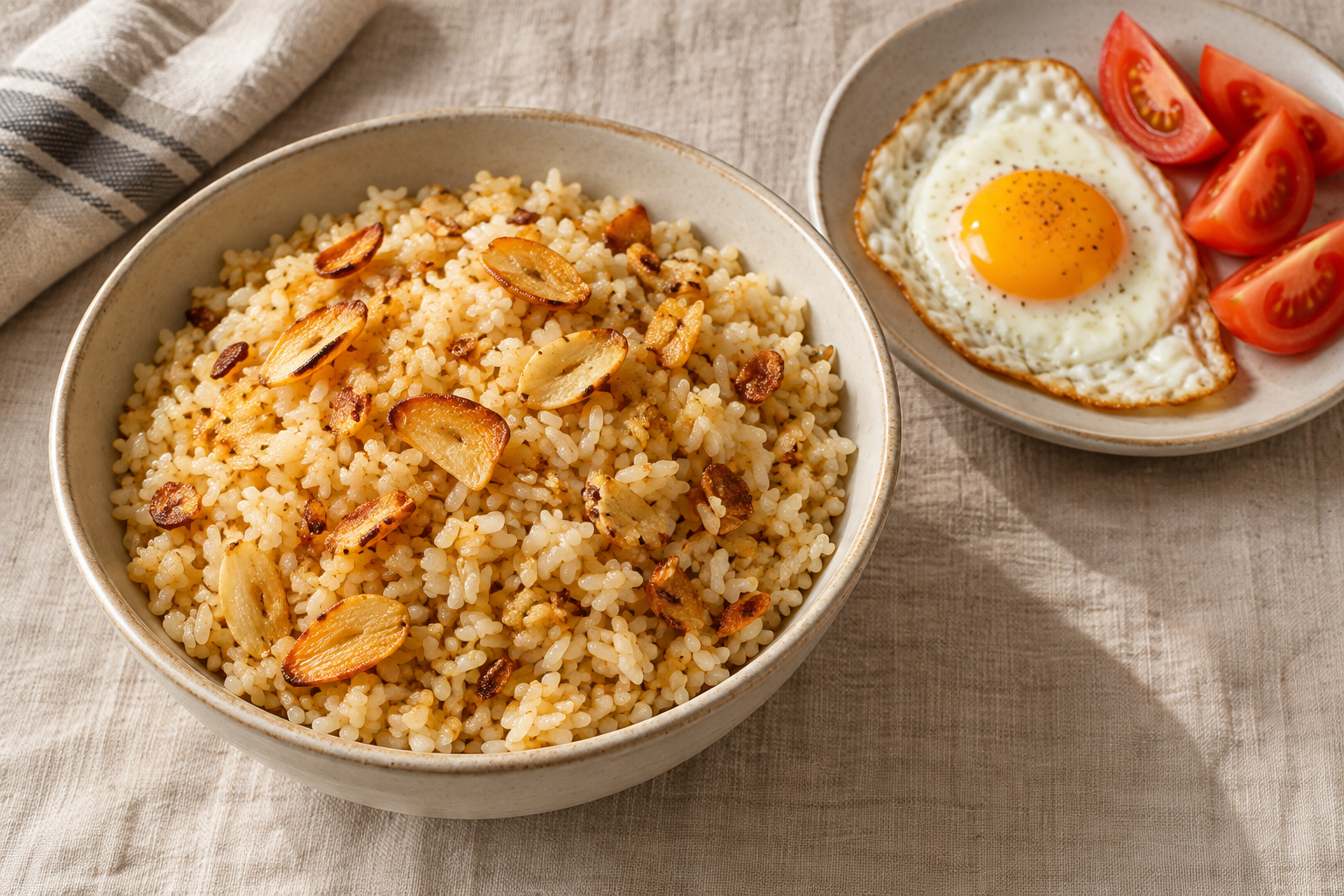
Filipino garlic fried rice in one sentence
Filipino garlic fried rice, or sinangag, is cooked rice stir-fried with plenty of garlic, a little oil and salt until the grains are hot, separate and fragrant. It is simple by design: the garlic should be clearly tasted, the rice should not be wet or heavily sauced, and the crisp golden pieces on top should provide contrast rather than bitterness.
This Filipino garlic fried rice recipe makes four generous side servings from ingredients available in Australian supermarkets. It is especially useful with safely chilled leftover rice, but you can also cook rice specifically for it if you cool that rice correctly. The method below separates the garlic chips from the garlic-infused oil, which makes it easier to control colour and keep every bite savoury rather than burnt.
What is sinangag?
Sinangag is Filipino garlic fried rice. In many homes it appears at breakfast beside eggs, fish, tocino, longganisa, tapa or another savoury dish, although it can be served at any meal. The Associated Press describes it as a way of using the previous day’s rice by cooking it with deeply browned garlic and garlic-flavoured oil. That captures the practical character of the dish without claiming every household uses an identical recipe.
The name is sometimes encountered in breakfast combinations ending in silog. In those portmanteau names, the si refers to sinangag and the log to itlog, the Filipino word for egg; the first part identifies the accompanying protein. You do not need to build a full silog breakfast to enjoy garlic rice. It works equally well beside adobo, grilled skewers, vegetables or a simple fried egg and tomatoes.
Family versions vary. Some cooks mince the garlic very finely; others use slices and reserve some as a crisp topping. Some season only with salt, while others add pepper, spring onion or a small splash of soy sauce. This recipe keeps the base restrained so it can sit beside strongly flavoured Filipino dishes.
Ingredients for four servings
You need 800 g cooked, thoroughly chilled long-grain white rice, which is about four firmly packed cups; 10 garlic cloves; 60 ml neutral cooking oil; 1 teaspoon fine salt, plus more to taste; and ¼ teaspoon ground black pepper. Optional garnishes are two thinly sliced spring onions, fried eggs and tomato wedges. Choose canola, rice bran, sunflower or another neutral oil that will not overpower the garlic.
Fresh garlic is the defining ingredient. Ten cloves may look generous, but gentle frying mellows their raw sharpness. Garlic granules cannot create the same crisp chips or aromatic oil. If the cloves are unusually large, use eight; if they are small, use up to twelve.
Build a Filipino pantry in Bunbury →Visit the Hernandez store →
Prepare the rice and garlic
Break cold rice into small clumps with clean fingers or a fork before heating the pan. Do this while the rice is cold, when the grains are firmer and easier to separate without becoming mashed. If the surface seems damp, spread the rice on a clean tray for a few minutes while you prepare the garlic; do not leave it at room temperature for an extended period.
Slice six garlic cloves very thinly to make chips. Finely mince the remaining four cloves so their flavour disperses through the rice. Keep the slices and mince separate because they brown at different speeds. Have the salt, pepper and optional spring onion ready before the pan is hot. Fried rice cooks quickly, and stopping to chop after the garlic has started colouring is how it burns.
A wide frying pan, wok or sauté pan gives steam room to escape. A crowded saucepan traps moisture and encourages soft, clumped rice. If your pan is smaller than about 28 cm across, cook the rice in two batches and divide the garlic oil between them.
How to make Filipino garlic fried rice
First, place the oil and sliced garlic in a cold, wide pan. Set it over medium-low heat and cook gently, stirring more often as the garlic begins to colour. When the slices are pale gold and crisp—usually four to six minutes—lift them out with a slotted spoon onto a plate lined with absorbent paper. They will darken slightly after leaving the oil, so do not wait until they look deep brown in the pan.
Second, add the minced garlic to the warm garlic oil and cook for about 30 seconds, just until aromatic. Increase the heat to medium-high, add the chilled rice and immediately press the larger clumps apart with a wooden spoon or flexible spatula. Toss and scrape so the oil coats the grains evenly.
Third, spread the rice across the pan and let it make contact with the hot surface for 30 to 45 seconds before turning it. Repeat for five to seven minutes, moving the rice often enough to prevent scorching but allowing brief pauses for light toasting. It should steam, become fully hot and feel drier and looser—not hard or brittle.
Finally, season with the salt and black pepper. Taste alongside the food you plan to serve, because a salty main needs a gentler rice. Fold through half the garlic chips and optional spring onion, transfer to a warm bowl, then scatter the remaining chips over the top. Serve immediately.
Why cold rice gives a better texture
Freshly cooked rice contains more surface moisture and is soft from steaming. When it goes straight into a crowded pan, the grains can compress into sticky clumps before the excess water evaporates. Chilling firms the cooked grains and dries the surface, helping them separate as they are tossed through the garlic oil. That is a texture advantage, not permission to leave cooked rice on the bench overnight.
If you are cooking rice for this recipe, follow the packet or rice-cooker directions, then cool it promptly and refrigerate it. Spread it between clean shallow containers rather than leaving one deep pot to cool slowly. Once the rice is cold, cover it. The goal is both a loose fried-rice texture and safe temperature control.
For an immediate version, spread just-cooked rice thinly on a clean tray so steam can escape, then refrigerate it until properly cold. Do not put a large, tightly covered pot of steaming rice in the fridge, where the centre can remain warm and the heat may affect other chilled food.
Cooked-rice safety in an Australian kitchen
HealthyWA explains that uncooked rice can contain Bacillus cereus spores that survive cooking. If cooked rice spends too long between 5°C and 60°C, the bacteria can grow and produce toxins. Unsafe rice may look, smell and taste normal, and reheating does not reliably remove spores or toxins that have already formed. Safe storage matters more than judging leftovers by appearance.
Keep cooked rice above 60°C if it will be served hot, or cool it as quickly as possible and refrigerate it below 5°C. HealthyWA recommends dividing rice into clean, shallow containers less than 10 cm deep and keeping those containers separate rather than stacked while cooling. Food Standards Australia New Zealand also advises refrigerating food as soon as it stops steaming, using smaller containers and keeping the fridge at 5°C or colder.
FSANZ advises disposing of refrigerated leftovers if they are not eaten within three to four days, or within one day for vulnerable people. Use only rice that you know was handled safely; when its time and temperature history are uncertain, discard it. Fry the rice until it is steaming hot throughout, serve it promptly and refrigerate any new leftovers quickly rather than repeatedly cooling and reheating them.
How to avoid burnt garlic and soggy rice
Burnt garlic is the most common problem. Start the slices in cool oil over medium-low heat, watch continuously once they turn straw-coloured and remove them while pale gold. If they become dark brown and bitter, discard them and the scorched oil; adding more rice will not hide the flavour. Minced garlic cooks faster, which is why it enters only shortly before the rice.
Soggy rice usually means the grains were warm or damp, the pan was overcrowded, or the heat dropped too far after the rice was added. Use thoroughly chilled rice, preheat after making the chips and work in batches when necessary. Avoid pouring in stock, water or a large amount of sauce. If using soy sauce as a family variation, add no more than a teaspoon or two around the hot edge of the pan and reduce the salt.
Stop when the rice is hot, separate and aromatic; prolonged frying can make the grains hard.
What to serve with sinangag
For breakfast, add a fried egg and sliced tomato, then choose a savoury accompaniment if you want a larger meal. At dinner, sinangag is excellent with chicken adobo because the plain garlic rice catches the vinegar-soy braising sauce. It also suits Filipino pork barbecue, grilled fish, sautéed vegetables or lumpiang Shanghai. Keep the portions balanced: the rice should support the main food rather than crowd every other element from the plate.
For a shared Bunbury meal, place the rice in a warm serving bowl just before people sit down and keep the crisp garlic separate until the last moment. Hernandez catering can help plan a Filipino menu for a larger gathering; confirm the current dishes, dietary information, portions and availability directly rather than assuming this home recipe appears on the catering menu.
Cook Filipino chicken adobo →Try Filipino pork barbecue →Explore Hernandez catering →
Useful variations without losing the garlic-rice idea
Once the basic method works, small additions can turn sinangag into a more substantial meal. Scramble one or two eggs in the empty pan after making the garlic chips, remove them, then fold them back through at the end. Diced leftover vegetables can be added if they were refrigerated safely and are cut small enough to heat rapidly. Cooked chicken or pork should also be reheated thoroughly and not allowed to cool slowly in the finished rice.
Sinangag is flexible because it is a practical household food, but it does not need to become generic takeaway-style fried rice. Let garlic remain the main aroma, season carefully and use additions that make sense with the rest of the plate.
A final kitchen checklist
Use cooked rice with a known, safe storage history. Chill it quickly below 5°C, loosen it before cooking and have every ingredient ready. Brown sliced garlic gently, reserve it, perfume the oil with minced garlic, then fry the rice in a wide hot pan. Season only after the grains are separated and fully heated. Finish with the crisp chips immediately before serving.
That sequence delivers what this Filipino garlic fried rice recipe promises: a deeply garlicky aroma, separate savoury grains and crisp golden contrast, with no unnecessary sauce. It is simple enough for breakfast, useful enough for leftovers and versatile enough to sit beside many Filipino dishes.
Order Hernandez pork crackle →Explore more Filipino recipes →
Frequently asked questions
What is the difference between sinangag and ordinary fried rice?
Sinangag is Filipino garlic fried rice with garlic as its defining flavour. A basic version uses cooked rice, garlic, oil and salt, while other fried-rice styles may centre soy sauce, egg, meat or mixed vegetables. Filipino family versions still vary.
Can I make sinangag with freshly cooked rice?
Yes, but cool the rice quickly and safely first. Fresh hot rice is moist and soft, so it tends to clump. Spread it in clean shallow containers, refrigerate it promptly below 5°C and fry it only after it is properly chilled.
Which rice is best for Filipino garlic fried rice?
Chilled jasmine or ordinary long-grain white rice gives separate, aromatic grains. Medium-grain or brown rice can work, but the texture and flavour will differ. Safe cooling and a wide hot pan matter more than buying a specialised variety.
Does Filipino garlic rice contain soy sauce?
It does not have to. Many simple versions are seasoned with salt so the garlic remains prominent. Some families add a little soy sauce. If you do, reduce the salt and check allergen information because soy sauce may contain wheat as well as soy.
How long can cooked rice stay in the fridge?
FSANZ advises disposing of refrigerated leftovers if they are not eaten within three to four days, or within one day for vulnerable people. That limit assumes the rice was cooled quickly and kept at 5°C or colder. Discard rice when its storage history is uncertain.
Keep exploring Filipino food and culture



Taste it in Bunbury
Bring Filipino flavour to your next gathering.
Explore catering from Hernandez Asian Delights or visit Michael and the team at 36 Charles Street, Bunbury.