· 9 min read
Why Is Philippine Independence Day Celebrated on 12 June?
Why is Philippine Independence Day on 12 June? Follow the 1898 declaration, the 1946 republic and the decision that established today’s national day.
Why is Philippine Independence Day on 12 June? The short answer
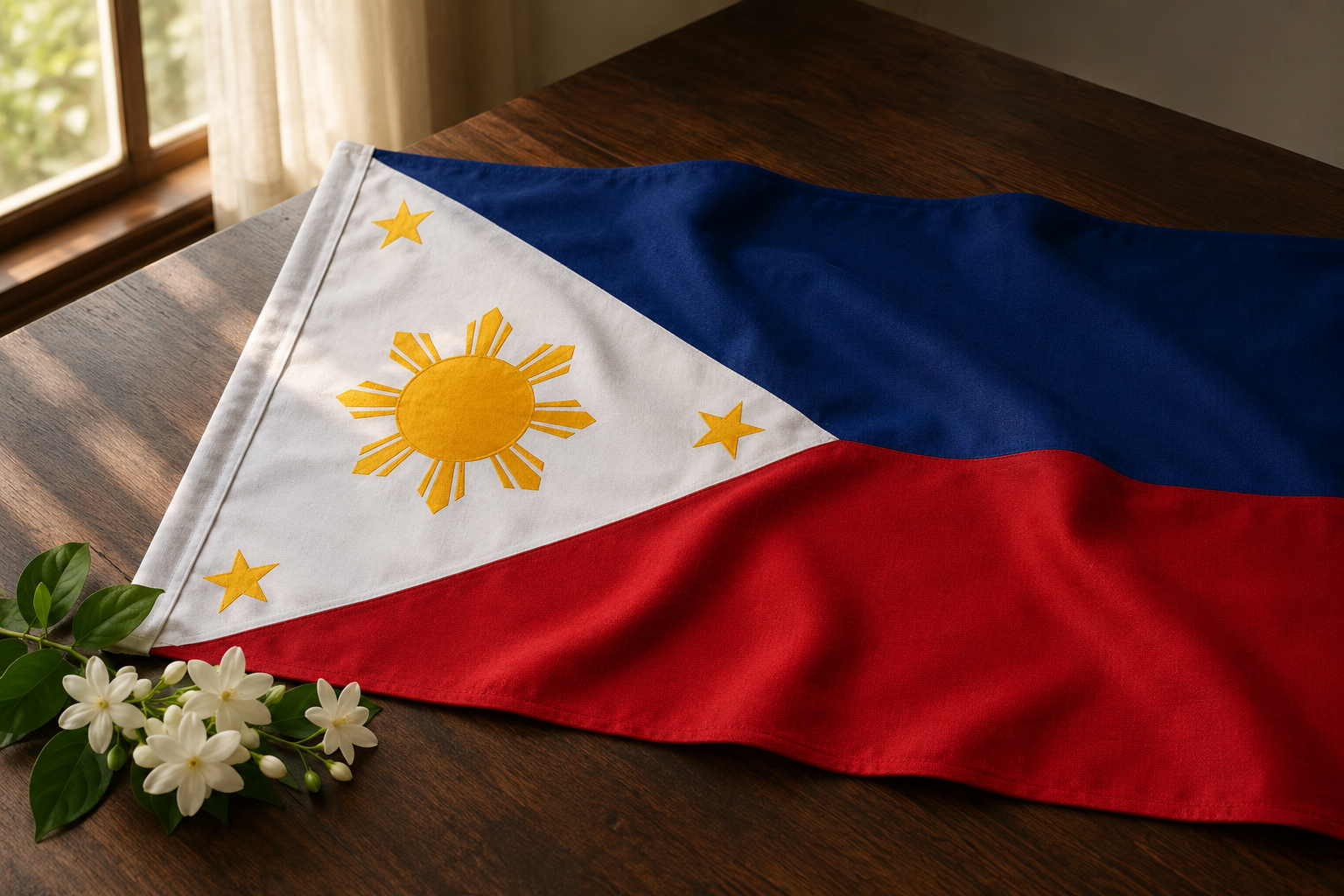
Philippine Independence Day is celebrated on 12 June because that is the date in 1898 when Filipino revolutionary leaders proclaimed independence from Spanish colonial rule at Kawit, Cavite. The occasion publicly asserted the Filipino nation’s right to govern itself. The national flag was unfurled and the music that became the national anthem was played.
The history does not finish there. Spain did not recognise the declaration, and the Treaty of Paris later transferred the Philippines to the United States. The United States formally recognised the independent Republic of the Philippines on 4 July 1946, so 4 July was observed as Independence Day for years. President Diosdado Macapagal shifted the national commemoration to 12 June in 1962, and Republic Act No. 4166 made the change law in 1964.
That means 12 June and 4 July refer to different milestones. The first centres the Filipino proclamation of 1898; the second marks formal US recognition and the end of American sovereignty in 1946. Modern Independence Day gives priority to the date on which Filipinos themselves declared freedom.
Explore 12 common questions about Philippine culture →Read the beginner’s guide to Filipino food →
What happened on 12 June 1898?
The National Library of the Philippines records that the Acta de la Proclamación de la Independencia del Pueblo Filipino—the Act of the Proclamation of the Independence of the Filipino People—was read on 12 June 1898 at the home of General Emilio Aguinaldo in Kawit, Cavite. Ambrosio Rianzares Bautista wrote the Spanish-language proclamation between May and June, and 98 people signed it.
The event came during the Philippine Revolution and the Spanish–American War. Aguinaldo had returned from exile in Hong Kong, believing the United States would help remove Spanish rule. In the declaration, the revolutionary government asserted the country’s independence from Spain. It was an act of Filipino political will, even though control and international recognition remained contested.
The present-day Aguinaldo Shrine is associated with that proclamation, but understanding the event requires more than picturing a single balcony or ceremony. Independence was the product of a wider revolutionary struggle involving many leaders, organisers, fighters and communities. A national day condenses a complex movement into one commemorative date; it does not mean every part of the struggle began or ended that afternoon.
The declaration was a document as well as a ceremony
The Acta matters because it put a claim to sovereignty into written form. The National Library preserves the declaration and provides a digital exhibit, allowing readers to treat it as a historical source rather than a slogan. Its wording belongs to its time and political circumstances, so translations and summaries should be read with care.
The document stated a desire for freedom from Spanish colonisation and presented the revolutionary government’s case for independence. It also reflected assumptions and alliances current in 1898. Historical documents can be nationally significant without every phrase becoming a timeless statement or every expectation in them being fulfilled.
For an Australian reader, the useful distinction is between a declaration and universal recognition. A people can proclaim sovereignty before other states accept it or before effective control is secure. The 1898 declaration therefore remains a foundational assertion even though another colonial period followed.
The flag and anthem at Kawit
The National Library states that the Philippine flag displayed on 12 June had been sewn in Hong Kong by Marcela Agoncillo, Lorenza Agoncillo and Delfina Herboza. It also records that the Marcha Filipina Magdalo was played. The composition by Julián Felipe later became known as Lupang Hinirang, the national anthem.
These details explain why flags, anthem performances and formal ceremonies remain central to Independence Day. They are not merely decorations added to a food festival. They connect a modern gathering with symbols publicly presented during the 1898 proclamation.
Visitors should treat the flag and anthem respectfully and follow the organisers’ lead. Avoid using the flag as disposable table covering, costume fabric or a generic graphic whose colours and symbols can be rearranged. At a formal program, stand or participate as directed rather than talking over the anthem or using the moment only for photographs.
Why did independence not take effect in 1898?
The 1898 declaration did not receive recognition from Spain or the United States. In the Treaty of Paris signed on 10 December 1898, Spain ceded the Philippine archipelago to the United States. The treaty text also provided for a US payment of 20 million dollars to Spain. Filipino representatives were not parties to that transfer.
Conflict followed between the Philippine Republic and the United States. The US Department of State’s historical account identifies the Philippine–American War as running from 1899 to 1902, while resistance continued in some places beyond the formal dates. The archipelago later became a US-administered commonwealth in 1935.
This is why saying that the Philippines simply ‘became independent’ on 12 June 1898 leaves out essential history. The day marks a declaration and revolutionary claim; it was not followed by an uninterrupted period of internationally recognised sovereignty. Respectful commemoration can celebrate the act while acknowledging the colonial conflict and losses that followed.
What happened on 4 July 1946?
On 4 July 1946, the United States recognised the Republic of the Philippines as an independent state. The US Office of the Historian records that President Harry S. Truman issued the recognition and that the two countries signed a Treaty of General Relations on the same date. Under that treaty, the United States renounced its claims to sovereignty over the Philippines.
The ceremony followed the Second World War and the restoration of the Commonwealth government after Japanese occupation. It was a decisive legal and diplomatic milestone: the independent republic received formal recognition, with Manuel Roxas as president. For that reason, 4 July was observed as Philippine Independence Day from 1946 through 1961.
Calling 4 July unimportant because the national day later moved would be another oversimplification. It marks formal recognition and the end of American sovereignty. The historical question is not which date is ‘real’ in every possible sense, but which event the nation chooses to place at the centre of its annual commemoration.
How 12 June became the official national day
On 12 May 1962, President Diosdado Macapagal issued Proclamation No. 28. It declared 12 June 1962 a special public holiday and described the establishment of the revolutionary republic in 1898 as the Filipino people’s declaration and exercise of self-determination, liberty and independence. Officials across the country were asked to arrange appropriate ceremonies.
The proclamation changed that year’s observance, but legislation made the date permanent. Republic Act No. 4166, approved on 4 August 1964, changed Philippine Independence Day from 4 July to 12 June and renamed 4 July Philippine Republic Day. Its wording directed citizens to observe 12 June with rites befitting Independence Day.
The choice shifted emphasis from independence recognised by a former colonial power to independence proclaimed by Filipinos. That does not erase 1946. It establishes a national narrative in which the initiating act of self-determination, rather than later external recognition, supplies the anniversary date.
What does Araw ng Kalayaan mean?
Araw ng Kalayaan is commonly translated as ‘Day of Freedom’ or ‘Independence Day’. Kalayaan carries the idea of freedom, while araw means day. The expression appears in public programs, community events and Filipino-language reporting, alongside the English name Philippine Independence Day.
A translation is helpful but cannot supply the whole meaning of a national commemoration. For some people, the day foregrounds revolutionary history and sacrifice. For others, it prompts reflection on citizenship, democracy, sovereignty, migrant identity or responsibilities to future generations. Official themes also change over time.
At the Philippine Embassy in Canberra’s 2026 commemoration, the theme was ‘Kalayaan. Kinabukasan. Kasaysayan.’—freedom, future and history. The Embassy described flag raising, wreath laying, speeches, community participation and a Filipino luncheon. That combination shows remembrance, civic reflection and fellowship rather than a celebration defined by food alone.
How Philippine Independence Day is observed today
Observances in the Philippines often include flag ceremonies, the national anthem, wreath laying, speeches, cultural programs and public gatherings. The exact program varies by national administration, local government, school, community organisation and venue. A parade or concert is one possible format, not a requirement everywhere.
Food naturally accompanies many gatherings because people meet with family, friends and community. A shared table may include regional dishes, party food or familiar favourites, but there is no single official Independence Day menu. Calling one dish mandatory would flatten the diversity of Philippine regions and households.
The most useful way to participate is to learn what a particular event is commemorating. Read the organisers’ program, listen during formal elements and ask respectful questions at an appropriate time. Celebration and critical history can coexist: national pride does not require pretending that the path from 1898 to the present was simple.
Learn what a Filipino fiesta is →Learn why rice matters in Filipino culture →
Philippine Independence Day in Australia
Filipino communities across Australia organise commemorations in June. SBS Filipino reported that 2026 flag-raising ceremonies were led by Philippine diplomatic posts in Canberra, Sydney, Brisbane, Darwin and Melbourne. Community gatherings can also include cultural performances, speeches, heritage displays and food.
The Philippine Embassy’s Canberra event on 12 June 2026 brought together more than 150 guests and members of the Filipino-Australian community. Its account emphasised history, national identity, solidarity and the long relationship between the Philippines and Australia. An Australian Embassy message has likewise described 12 June as a day of national celebration and pride for Filipinos.
For people growing up or settling in Australia, Independence Day can create a public space for language, family memory and cultural education. Non-Filipino friends are often welcomed, but attendance should begin with respect for the commemoration—not an expectation that every Filipino person explain the nation’s entire history.
Planning a respectful Filipino gathering in Bunbury
A Bunbury gathering can honour Philippine Independence Day without pretending to reproduce the 1898 event. Begin with the purpose: is it a family meal, a community ceremony, a school activity or a public cultural program? Invite Filipino community members into the planning and separate formal remembrance from entertainment where appropriate.
If food is included, label dishes accurately, collect allergy information early and offer a balanced selection rather than presenting one menu as representative of the whole Philippines. Hernandez Asian Delights can discuss current catering options for Bunbury and South West events; package details and availability should be confirmed directly.
The Hernandez store can also help visitors explore Filipino pantry foods and familiar celebration dishes. Pork crackle may suit some shared menus, but it is not an Independence Day symbol or requirement. Keep commercial food service secondary to the meaning of the occasion and give guests enough context to understand why 12 June matters.
Explore Filipino catering packages →Request a tailored catering quote →Visit the Hernandez store →Discover Hernandez pork crackle →
Frequently asked questions
When is Philippine Independence Day?
Philippine Independence Day is observed annually on 12 June. It commemorates the 1898 declaration of independence from Spain at Kawit, Cavite. In Filipino it is commonly called Araw ng Kalayaan.
Why was Philippine Independence Day once celebrated on 4 July?
The United States formally recognised the independent Republic of the Philippines on 4 July 1946 and renounced its sovereignty through the Treaty of General Relations. That anniversary was observed as Independence Day from 1946 through 1961.
Who changed Philippine Independence Day to 12 June?
President Diosdado Macapagal issued Proclamation No. 28 in 1962, making 12 June that year’s Independence Day holiday. Republic Act No. 4166, approved in 1964, permanently changed the date from 4 July to 12 June.
What happened during the 1898 proclamation?
The Act of the Proclamation of the Independence of the Filipino People was read at Emilio Aguinaldo’s home in Kawit, Cavite. The Philippine flag was displayed and music that became the national anthem was played. The declaration asserted freedom from Spanish colonial rule.
How do Filipino communities celebrate Independence Day in Australia?
Programs vary, but recent Australian commemorations have included flag raising, wreath laying, speeches, cultural activities and shared meals. Philippine diplomatic posts and community organisations arrange events in several Australian cities, with a focus on history, identity and community connection.
Keep exploring Filipino food and culture



Taste it in Bunbury
Bring Filipino flavour to your next gathering.
Explore catering from Hernandez Asian Delights or visit Michael and the team at 36 Charles Street, Bunbury.